
Moving out is an exciting milestone, but it’s also one of the biggest financial changes many Canadians experience. While most people focus on rent, the true cost of living on your own includes groceries, utilities, insurance, transportation, furniture, and many other everyday expenses.
Preparing financially before moving out can help you avoid unnecessary debt, reduce stress, and make the transition much smoother.
In this guide, you’ll learn how to prepare financially before moving out in Canada, what expenses to expect, and how to build a realistic financial plan before signing a lease.
Quick Answer
Before moving out in Canada, make sure you can afford rent, utilities, food, insurance, transportation, and basic living costs without relying on credit cards.
A good goal is to have:
- First month’s rent ready
- Moving costs saved
- Basic furniture budget
- Starter emergency fund
- Monthly budget that actually works
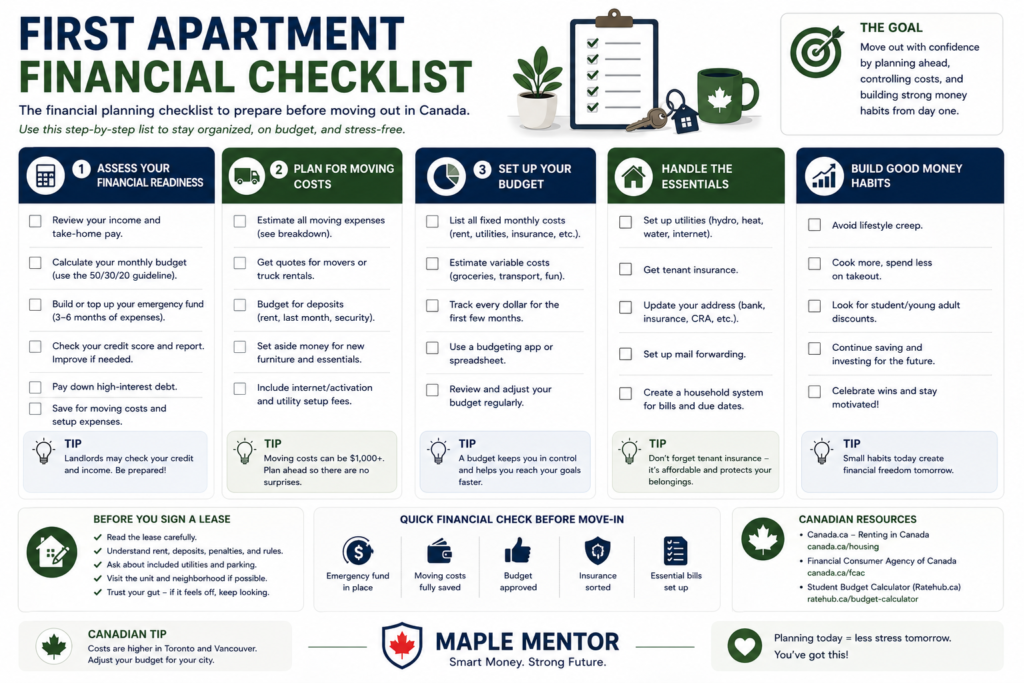
Quick Checklist
- Estimate your monthly housing budget.
- Calculate all monthly living expenses.
- Save for moving costs.
- Build an emergency fund.
- Buy only essential furniture.
- Organize your bank accounts.
- Use credit cards carefully.
What Does It Really Cost to Move Out?
Many first-time renters assume rent is the biggest expense.
While rent is usually the largest monthly bill, it’s only one part of the total cost of living independently.
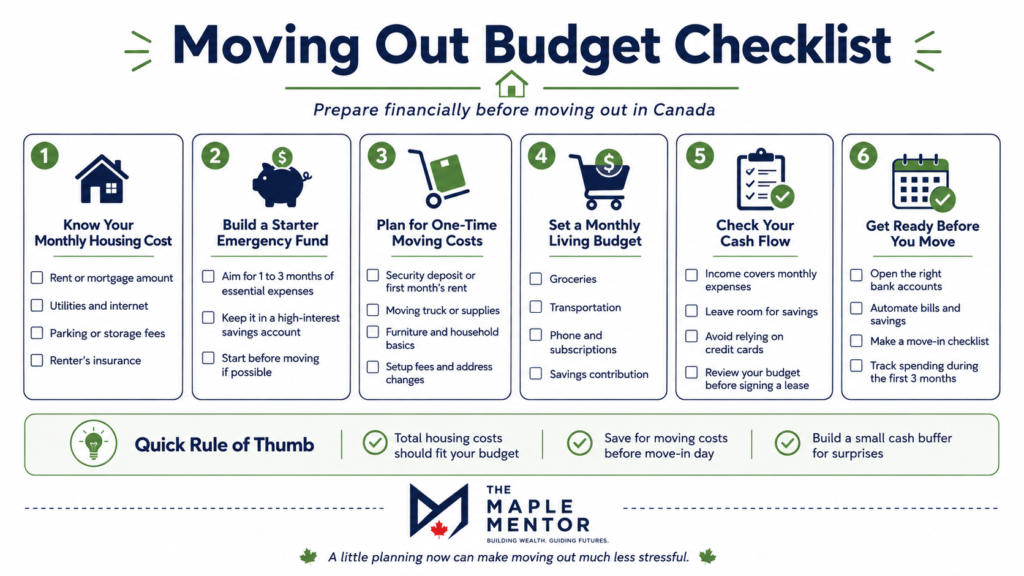
You’ll also need to budget for:
- Utilities
- Internet
- Tenant insurance
- Groceries
- Furniture
- Kitchen supplies
- Cleaning supplies
- Transportation
- Laundry
- Household items
- Unexpected repairs
- Moving expenses
Many of these costs arrive during the first month, making moving out more expensive than most people expect.
Learning how to prepare financially before moving out in Canada means planning for every expense—not just rent.
Why Moving Out Is More Expensive Than People Expect
Your first apartment often requires many one-time purchases.
Even if you find an affordable place, you’ll likely need:
- Pots and pans
- Dishes
- Towels
- Bedding
- Garbage bins
- Cleaning products
- Basic tools
- Furniture
- Lamps
- Shower curtain
- Extension cords
- Storage containers
These purchases may seem small individually, but together they can easily total several hundred—or even several thousand—dollars.
That’s why creating a complete moving budget is far more effective than only calculating rent.
Step 1 Estimate Your Monthly Rent Budget
The first step is deciding how much rent you can comfortably afford.
Base your housing budget on your actual, consistent income—not overtime, bonuses, or your best month.
A cheaper apartment often gives you much more financial flexibility.
Lower rent means more room to:
- Build emergency savings
- Invest consistently
- Handle unexpected expenses
- Pay down debt
- Enjoy life without constant financial pressure
A beautiful apartment isn’t worth it if it forces you to rely on credit cards every month.
Step 2 Add Up Your Monthly Living Costs
After estimating rent, calculate every recurring monthly expense.
Include:
- Groceries
- Phone bill
- Internet
- Hydro or electricity
- Tenant insurance
- Transportation
- Streaming subscriptions
- Debt payments
- Personal spending
- Laundry
- Household supplies
Many people underestimate groceries and household items during their first few months living alone.
Creating a realistic monthly budget before moving helps prevent unpleasant surprises.
Learn how to build one in How to Create a Monthly Budget in Canada.
The Financial Consumer Agency of Canada also recommends creating a detailed budget before making major financial decisions. Their budgeting guide can help estimate your monthly expenses.
Step 3 Save for Upfront Moving Costs
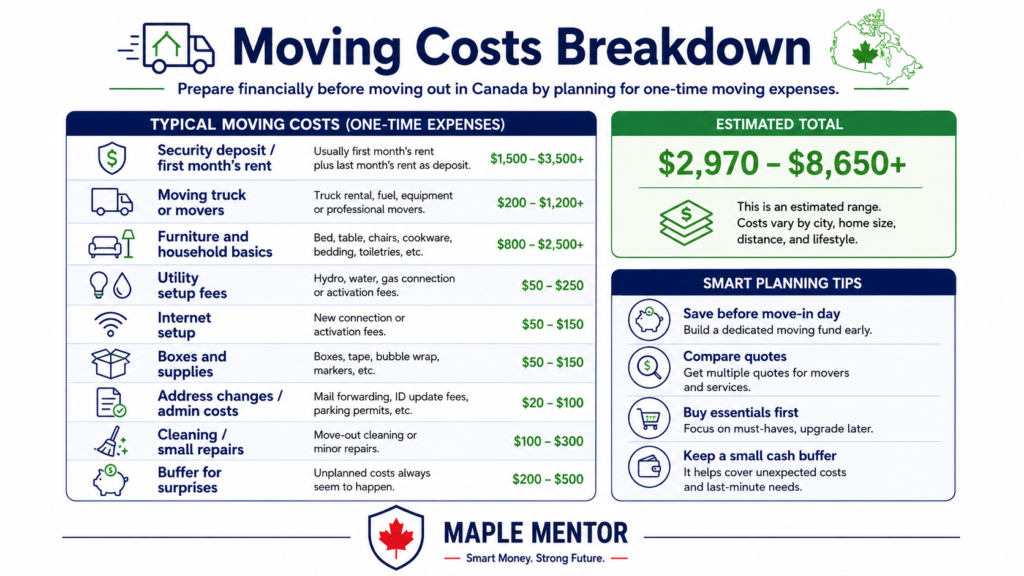
Besides your monthly expenses, you’ll need enough cash for the initial move.
Common upfront costs include:
- First month’s rent
- Possible deposits (depending on provincial rules)
- Moving truck rental or movers
- Furniture
- Kitchen essentials
- Cleaning supplies
- Basic tools
- Utility setup fees
- Internet installation
- Parking permits
These costs can easily reach several thousand dollars.
Saving beforehand is much less stressful than financing everything after moving in.
Step 4 Build a Starter Emergency Fund
Moving out without emergency savings leaves very little room for unexpected expenses.
Imagine your refrigerator stops working during your first month or your hours at work are temporarily reduced.
Without savings, many people turn to high-interest credit cards.
A better goal is to have:
- At least $1,000 saved before moving.
- One month of living expenses if possible.
- Three to six months of expenses as your long-term goal.
- More if your income is unpredictable.
Learn how much to save in How Much Emergency Savings Do You Really Need in Canada?
Read Where to Keep Your Emergency Fund in Canada to choose the best place to keep your emergency savings.
The Financial Consumer Agency of Canada recommends building an emergency fund that can cover unexpected expenses and reduce reliance on borrowing.
Step 5 Avoid Furnishing Everything at Once
One of the biggest mistakes people make after moving out is trying to create their dream apartment immediately.
Remember:
You don’t need everything on day one.
Start with essentials like:
- Mattress
- Bed frame (optional initially)
- Basic kitchen supplies
- Table or desk
- Chair
- Cleaning products
- Towels
- Shower curtain
- Basic cookware
Decor, nicer furniture, and luxury items can come later.
Avoid financing furniture if monthly payments will strain your budget.
Saving first is usually the safer option.
Learn more in How to Save for Big Purchases in Canada Without Going Into Debt.
Step 6 Set Up the Right Bank Accounts
Keeping all of your money in one account can quickly become confusing.
A simple banking setup makes it much easier to stay organized.
For example:
- Bills account
- Spending account
- Emergency savings account
- Long-term savings account
Separating your money reduces the chance of accidentally spending rent or bill money.
Read How to Organize Your Bank Accounts in Canada.
Compare options in Best No-Fee Chequing Accounts in Canada.
Find higher savings rates in Best High-Interest Savings Accounts in Canada.
Step 7 Be Careful With Credit Cards
Credit cards can help build credit history when they’re used responsibly.
However, moving out often creates many unexpected expenses.
It can be tempting to charge:
- Furniture
- Groceries
- Kitchen supplies
- Electronics
- Home décor
The problem is that carrying balances quickly becomes expensive because of high interest rates.
Whenever possible:
- Pay the full balance every month.
- Avoid financing everyday living expenses.
- Use credit for convenience—not because your budget doesn’t work.
Learn more in Best Credit Cards for Beginners in Canada.
The Financial Consumer Agency of Canada explains how credit card interest works and why paying your balance in full each month can help you avoid costly interest charges.
Simple Moving Out Budget Example
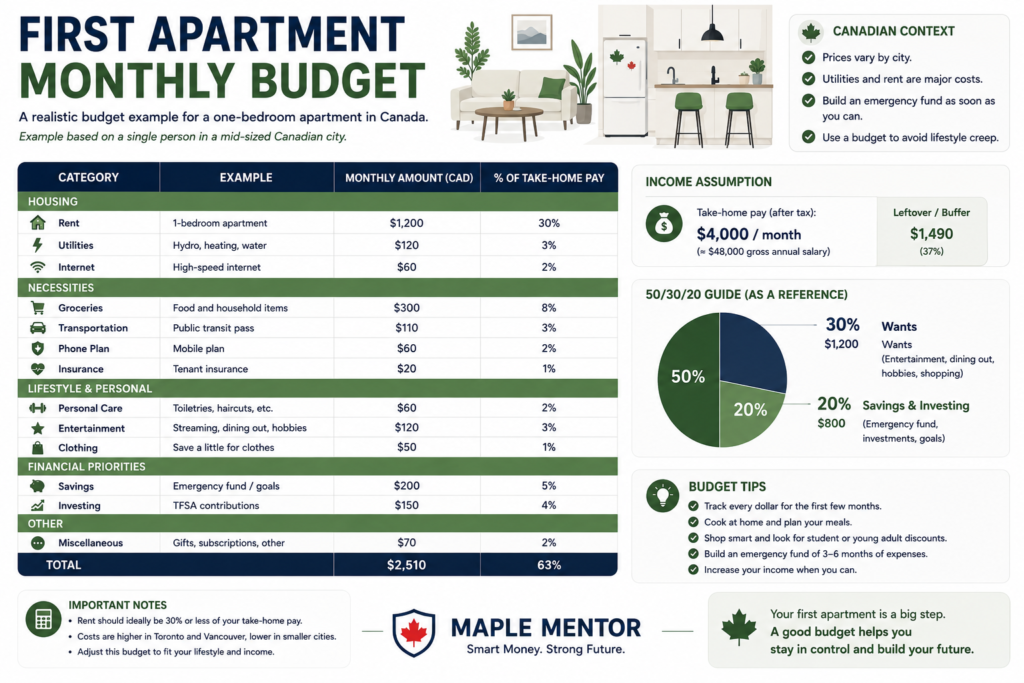
Every situation is different, but a sample budget can help you estimate the true monthly cost of living on your own.
| Expense | Monthly Estimate |
|---|---|
| Rent | $1,200 |
| Utilities | $100 |
| Internet | $60 |
| Groceries | $400 |
| Transportation | $250 |
| Tenant Insurance | $25 |
| Phone | $50 |
| Spending Money | $250 |
| Total | $2,335 |
Remember that this example does not include irregular expenses like car repairs, gifts, vacations, or annual insurance renewals. Those should be planned for separately.
Signs You May Not Be Ready to Move Out Yet
There’s nothing wrong with waiting a little longer if it helps you build a stronger financial foundation.
You may want to postpone moving if:
- Rent would consume most of your monthly income.
- You don’t have any emergency savings.
- You would rely on credit cards to buy furniture.
- Your income is unstable or unpredictable.
- You don’t have a realistic grocery budget.
- You’re already struggling with high-interest debt.
- You haven’t calculated your monthly living expenses.
Waiting a few extra months to save money can make your first year living independently much less stressful.
Common Mistakes to Avoid
Avoiding these common mistakes can save you thousands of dollars during your first year on your own.
Only Budgeting for Rent
Rent is only one part of your monthly housing costs.
Don’t forget about:
- Utilities
- Internet
- Tenant insurance
- Groceries
- Household supplies
- Transportation
Buying Too Much Furniture Immediately
You don’t need a fully furnished apartment during your first week.
Buy essentials first, then gradually add other furniture as your budget allows.
Ignoring Tenant Insurance
Tenant insurance is usually inexpensive, but replacing your belongings after theft, fire, or water damage can be extremely costly.
Insurance provides valuable protection for a relatively small monthly cost.
Learn more about tenant insurance from the Insurance Bureau of Canada.
Not Checking Utility Costs
Some apartments include utilities in the rent.
Others don’t.
Ask before signing the lease so you know what your actual monthly housing cost will be.
Moving Out With No Savings
Unexpected expenses happen quickly after moving.
Without emergency savings, many people immediately begin relying on debt.
Underestimating Grocery Costs
Food is one of the easiest expenses to underestimate.
Planning meals and cooking at home can significantly reduce your monthly spending.
Canada’s Food Price Report provides useful insights into grocery costs and food price trends.
Using Credit Cards for Everything
Credit cards can be helpful tools, but they shouldn’t become part of your monthly survival plan.
If you’re regularly carrying balances to cover living expenses, your housing budget is probably too high.
Final Answer
Learning how to prepare financially before moving out in Canada is about much more than saving enough for rent.
Before signing a lease, make sure your monthly budget works, you’ve started an emergency fund, and you have enough money saved for moving costs, basic furniture, and unexpected expenses.
Taking the time to prepare financially before moving out in Canada can reduce financial stress, help you avoid unnecessary debt, and make your transition to independent living much smoother.
You don’t need to have everything perfect before moving out. However, having a realistic plan, a working budget, and some savings will give you a much stronger financial start.
Frequently Asked Questions
How much money should I save before moving out in Canada?
A good starting point is enough to cover your first month’s rent, moving costs, basic furniture, and at least a small emergency fund of around $1,000. If possible, having one month of living expenses saved provides even more financial security.
What bills should I expect after moving out?
Besides rent, you’ll likely pay for utilities, internet, tenant insurance, groceries, transportation, your phone bill, subscriptions, and personal spending. Depending on your situation, you may also have debt payments or parking fees.
Should I move out if I have debt?
It depends on the type of debt and your budget. If you’re carrying high-interest credit card debt and your finances are already tight, reducing that debt before moving out may be the better choice.
Do I need an emergency fund before moving out?
Yes. Even a small emergency fund can help you cover unexpected expenses without relying on credit cards or loans.