
Creating a monthly budget in Canada is one of the best ways to take control of your finances. Whether you’re trying to save money, stop living paycheck to paycheck, or start investing, a simple budget can make a huge difference. In this guide, you’ll learn how to create a monthly budget in Canada step-by-step, even if you’re a complete beginner.
How to Create a Monthly Budget in Canada
- Calculate your monthly income
- Track your expenses
- Separate needs vs wants
- Set savings goals
- Review your budget every month
- Key takeaway: A simple budget creates awareness and improves financial control over time
Why Budgeting Matters More Than Ever in Canada
Budgeting has become increasingly important.
Inflation
Higher prices reduce purchasing power quickly.
Rising living costs
Housing, groceries, and transportation continue to rise across Canada.
Financial stress
Without a plan, money problems often become overwhelming.
Lack of savings
Many Canadians struggle to build emergency funds or invest consistently.
According to Statistics Canada inflation data, inflation continues to affect everyday expenses significantly.
Because of this, learning how to create a monthly budget in Canada is one of the most valuable financial skills today.
Step 1 Calculate Your Monthly Income
Start by understanding exactly how much money comes in each month.
Salary
Use your after-tax income, not gross income.
Side hustles
Include freelance work or additional income streams.
Government benefits
Add any regular government payments you receive.
After-tax income
Focus on the actual money available to spend or save.
This gives you the foundation for your monthly budget.
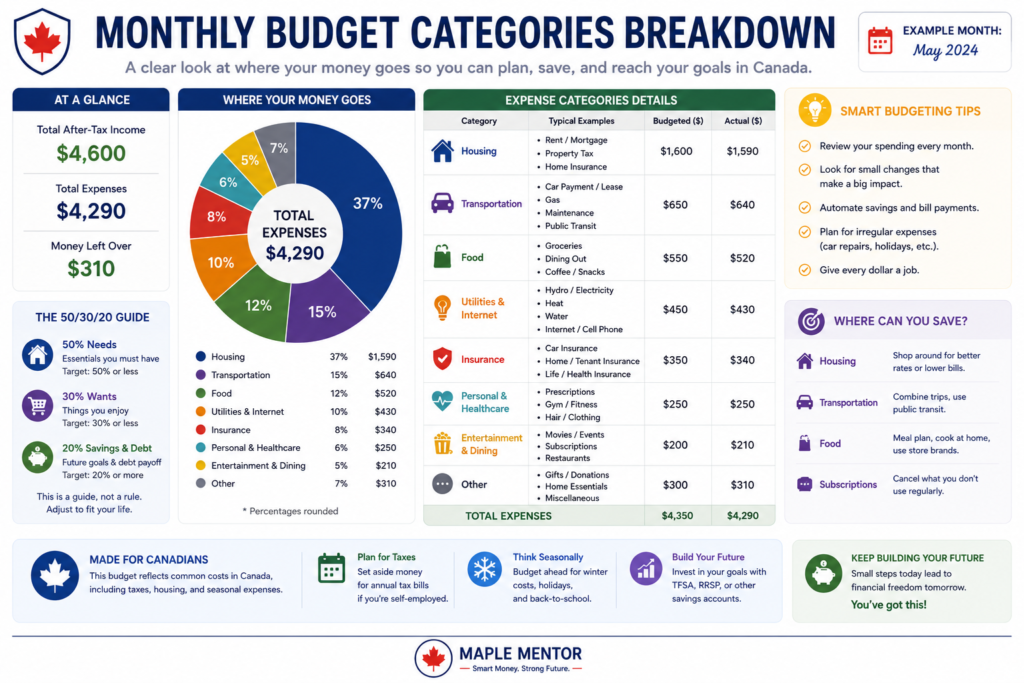
Step 2 Track Your Monthly Expenses
Next, track where your money is going.
Rent
Usually the largest monthly expense.
Groceries
Food spending can fluctuate significantly.
Transportation
Include gas, insurance, transit, or car payments.
Subscriptions
Streaming services and memberships add up over time.
Need help reducing expenses? Read How to Save Money Fast in Canada
According to Investopedia’s budgeting guide, tracking expenses is one of the most important parts of successful budgeting.
Step 3 Separate Needs vs Wants
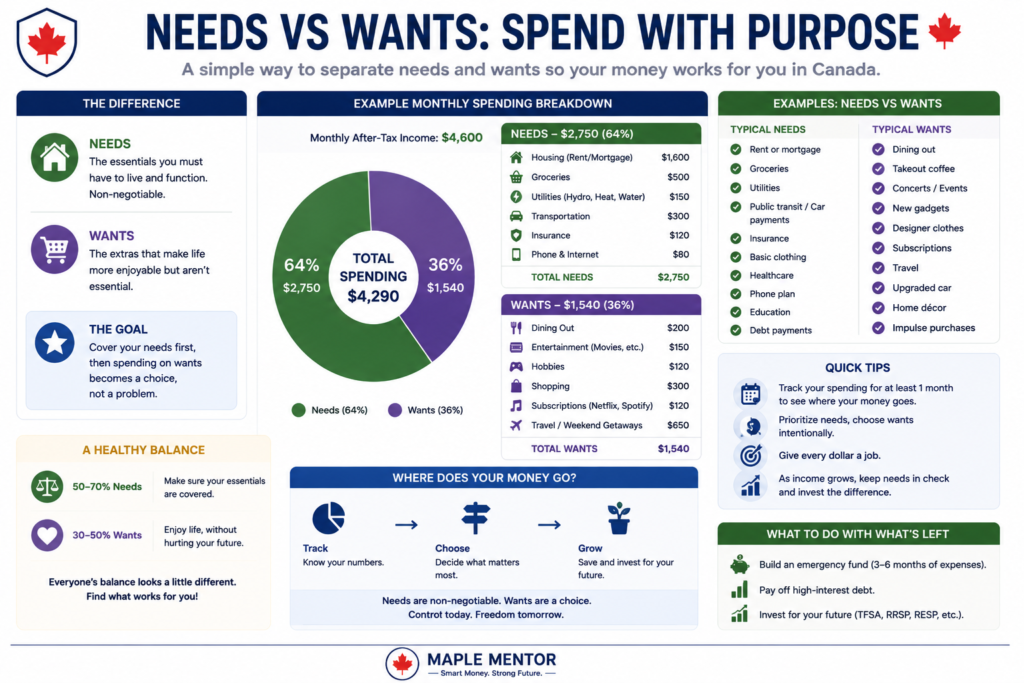
This step helps you prioritize spending.
Essentials
- rent
- groceries
- utilities
- transportation
Discretionary spending
- dining out
- entertainment
- shopping
Lifestyle inflation
As income rises, unnecessary spending often increases too.
Avoid lifestyle creep How to Build Better Money Habits in Canada
As a result, separating needs from wants makes budgeting much easier.
Step 4 Set Savings Goals
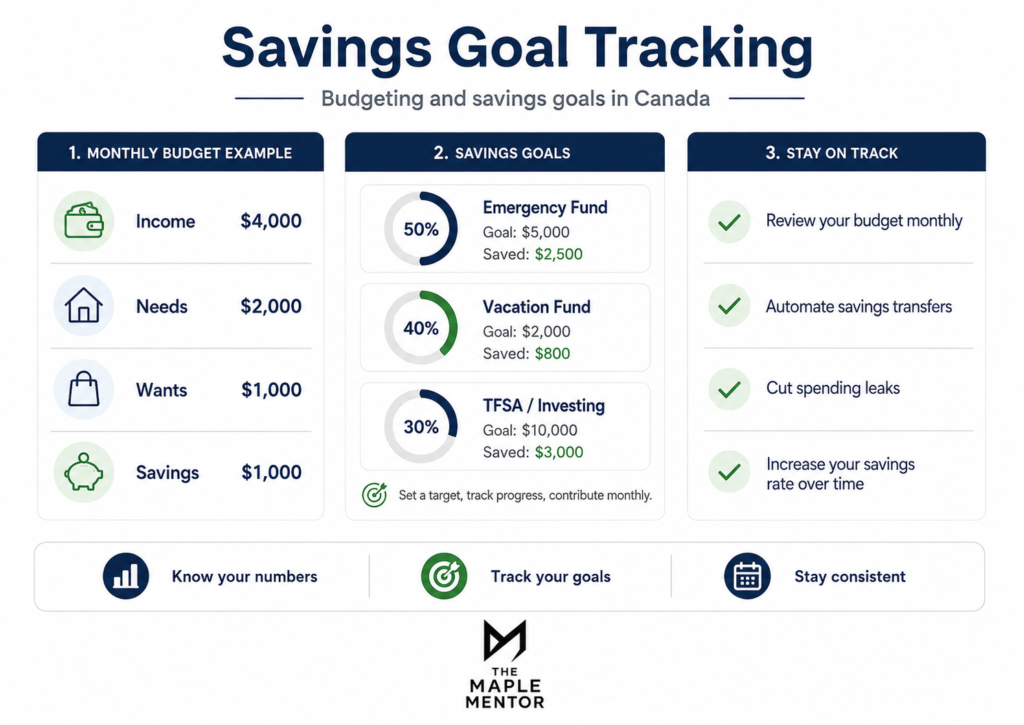
A budget without goals usually fails.
Emergency fund
Start by building a basic financial safety net.
Investing
Long-term investing creates future financial freedom.
Debt repayment
Reducing debt improves cash flow and lowers stress.
Build your safety net Best Ways to Build an Emergency Fund in Canada
Setting clear goals gives your budget purpose and direction.
Step 5 Use a Simple Budgeting Method
You don’t need a complicated system.
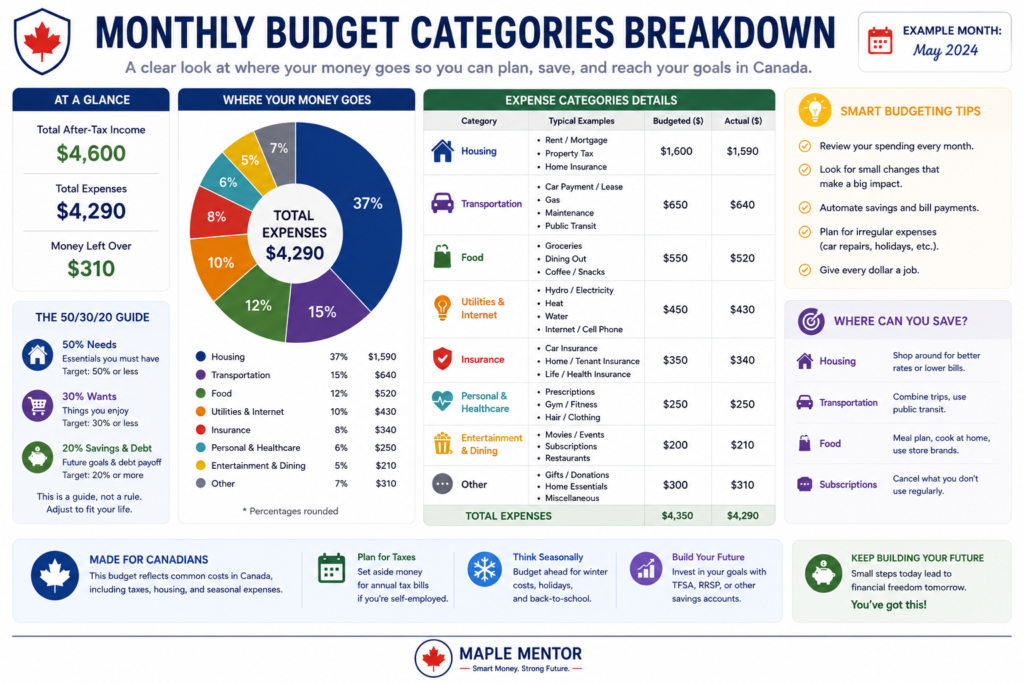
50/30/20 rule
- 50% needs
- 30% wants
- 20% savings/debt
Zero-based budgeting
Assign every dollar a purpose.
Automation
Automating bills and savings reduces mistakes.
Because of this, simple systems usually work better long term.
Best Budgeting Apps for Canadians
Technology can simplify budgeting significantly.
Budgeting apps
Apps automatically track spending categories.
Spreadsheets
Simple spreadsheets work well for manual tracking.
Banking tools
Many banks now include built-in budgeting features.
Compare tools Best Budgeting Apps in Canada
According to Consumer Financial Protection Bureau budgeting guidance, using budgeting tools consistently improves financial awareness.
Common Budgeting Mistakes to Avoid
Many beginners make the same mistakes.
Unrealistic budgets
Overly restrictive budgets rarely last.
Forgetting annual expenses
Car repairs, holidays, and insurance can disrupt your plan.
Not tracking spending
Without tracking, budgets quickly fail.
Avoiding these mistakes makes your budget more sustainable.
How Long Does It Take for a Budget to Work?
Budgeting is a process, not an instant fix.
Consistency
Results improve when you stick with the system.
Adjusting monthly
Most budgets need regular adjustments.
Building habits
Financial habits strengthen over time.
If you’re struggling financially overall, also read How to Stop Living Paycheck to Paycheck in Canada.
Over time, budgeting becomes easier and more natural.
Final Verdict
Learning how to create a monthly budget in Canada is one of the best ways to improve your financial life.
Remember:
- budgeting creates awareness
- small changes compound over time
- consistency matters more than perfection
Ultimately, a simple budget gives you control instead of stress.

FAQ
How do I start a monthly budget in Canada?
Calculate your income, track expenses, and set clear savings goals.
What is the best budgeting method?
The 50/30/20 rule is one of the simplest beginner-friendly methods.
How much should I save each month?
Many experts recommend saving at least 20% when possible.
Are budgeting apps worth it?
Yes, especially for beginners who want automatic tracking and organization.