
Looking to automate finances Canada style and make managing money easier? Many Canadians struggle to save consistently, pay down debt, and invest regularly because they rely on motivation alone. Fortunately, automation can solve that problem. By setting up automatic transfers and payments, you can make progress toward your financial goals without constantly thinking about them.
Quick Picks
Simple Automation Checklist
- Automate bill payments
- Automate emergency fund contributions
- Automate debt payments
- Automate investing contributions
- Review your system once per month
The goal is simple: make good financial decisions happen automatically before you have a chance to spend the money elsewhere.
What Does It Mean to Automate Your Finances?
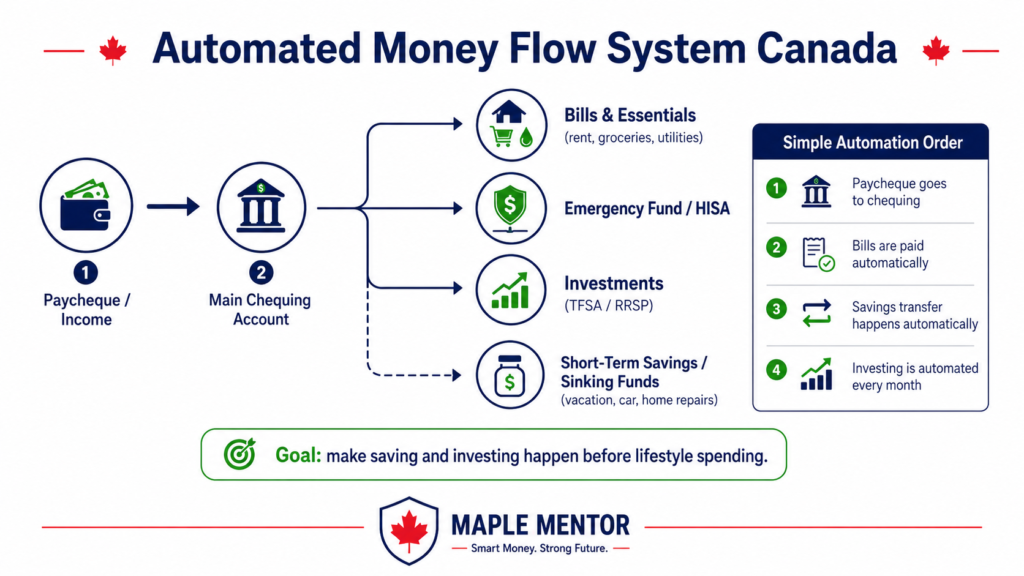
Financial automation means setting up recurring transfers, deposits, and payments so money moves automatically according to your plan.
Instead of manually paying bills, transferring savings, or investing every month, your bank or brokerage handles these tasks for you.
For example, you can:
- Automatically pay your phone bill
- Transfer money into savings every payday
- Make extra debt payments
- Invest into your TFSA or RRSP
As a result, good money habits become part of your routine.
Why Automating Your Money Works
Many financial mistakes happen because people forget, procrastinate, or make emotional decisions.
Automation helps solve these problems.
Reduces Missed Payments
Automatic payments help you avoid late fees and damaged credit.
Eliminates Decision Fatigue
Rather than deciding every payday what to do with your money, the system makes the decision for you.
Helps You Save First
Most people spend what’s left over. However, successful savers often save before they spend.
Makes Investing Consistent
Regular contributions help remove the temptation to time the market.
According to Investopedia’s guide to paying yourself first, automating savings can improve consistency and long-term financial outcomes.
Step 1 Start With a Simple Monthly Budget
Before automating anything, you need to understand your money.
Know:
- Your monthly income
- Your fixed bills
- Your variable expenses
- Your savings goals
- Your debt payments
Otherwise, you risk automating amounts that don’t fit your situation.
If you don’t already have a budget, start with How to Create a Monthly Budget in Canada.
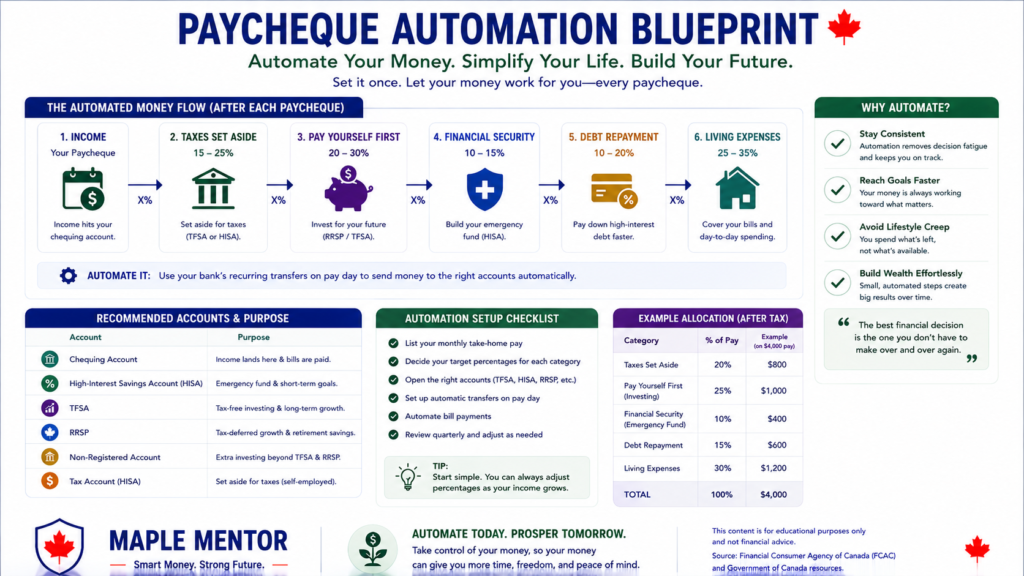
Step 2 Automate Your Bills
Your first automation priority should be recurring bills.
Examples include:
- Rent or mortgage payments
- Utilities
- Cell phone bills
- Internet
- Insurance
- Subscription services
- Credit card payments
However, always keep enough money in your chequing account to avoid overdraft fees or missed payments.
The Financial Consumer Agency of Canada budgeting resources recommend tracking recurring expenses to avoid payment issues.
Step 3 Automate Your Emergency Fund
After bills are covered, automate savings.
A simple approach is to schedule a transfer every payday.
For example:
- Payday arrives
- $50, $100, or $200 automatically moves to savings
Because the money leaves immediately, you’re less likely to spend it.
A high-interest savings account is often the best destination for emergency funds.
Learn how much you need in How Much Emergency Savings Do You Really Need in Canada?
Learn where to keep it in Where to Keep Your Emergency Fund in Canada
Step 4 Automate Debt Payments
Debt repayment becomes much easier when it’s automatic.
At a minimum, automate:
- Credit card minimum payments
- Loan payments
- Line of credit payments
Whenever possible, schedule additional payments toward high-interest debt.
Even small automatic extra payments can make a significant difference over time.
If debt is your main challenge, read How to Pay Off Credit Card Debt Faster in Canada.
Step 5 Automate Investing Contributions
Once you have some emergency savings and high-interest debt under control, begin automating investments.
Options include:
- TFSA contributions
- RRSP contributions
- FHSA contributions
- Robo-advisor deposits
- Brokerage account transfers
You don’t need a large amount to start.
Even $25 or $50 per paycheque can build momentum.
Consistency matters more than size in the beginning.
Learn how to start with How to Invest $100 Per Month in Canada.
If you’re using a TFSA, read TFSA Investing Strategy for Beginners.
For retirement-focused investing, see RRSP Investing Strategy Canada.
According to Vanguard’s investing principles, disciplined and consistent investing often matters more than attempting to time markets.
Step 6 Keep Spending Money Separate
One of the most effective automation strategies is separating spending money from everything else.
A simple setup looks like this:
Account 1: Bills and Savings
Used for:
- Rent
- Utilities
- Insurance
- Savings transfers
- Investing contributions
Account 2: Spending Money
Used for:
- Groceries
- Gas
- Restaurants
- Entertainment
This separation reduces the temptation to spend money intended for bigger goals.
Simple Automated Money Flow
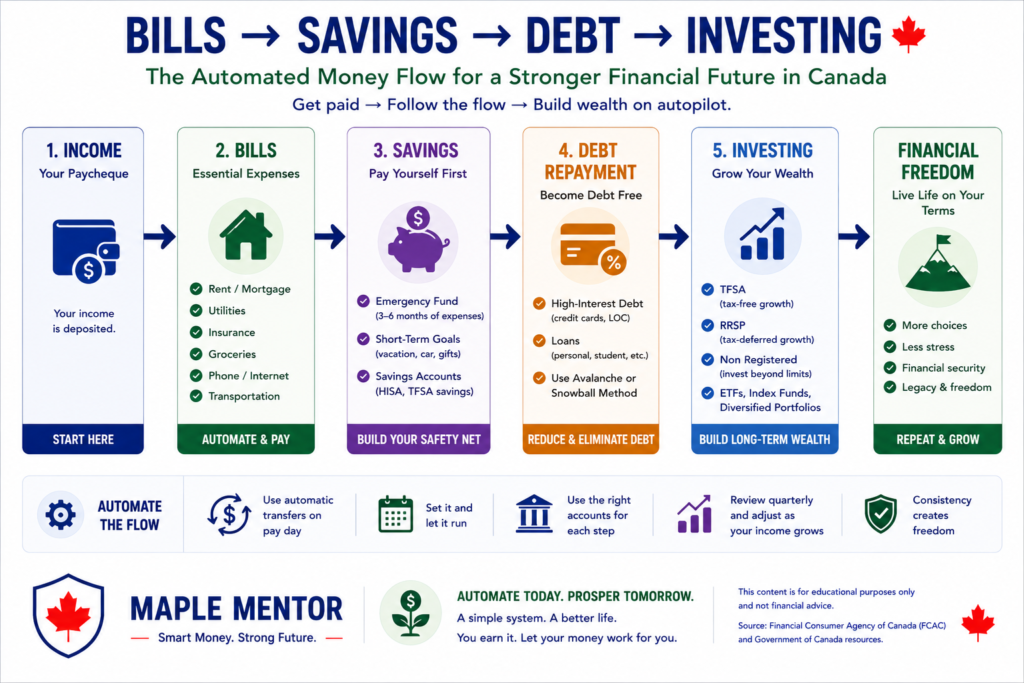
The process is simple, yet it can dramatically improve financial consistency.
Example Automation Setup
Let’s assume someone receives a paycheque of $2,500 every two weeks.
Automatic Allocation
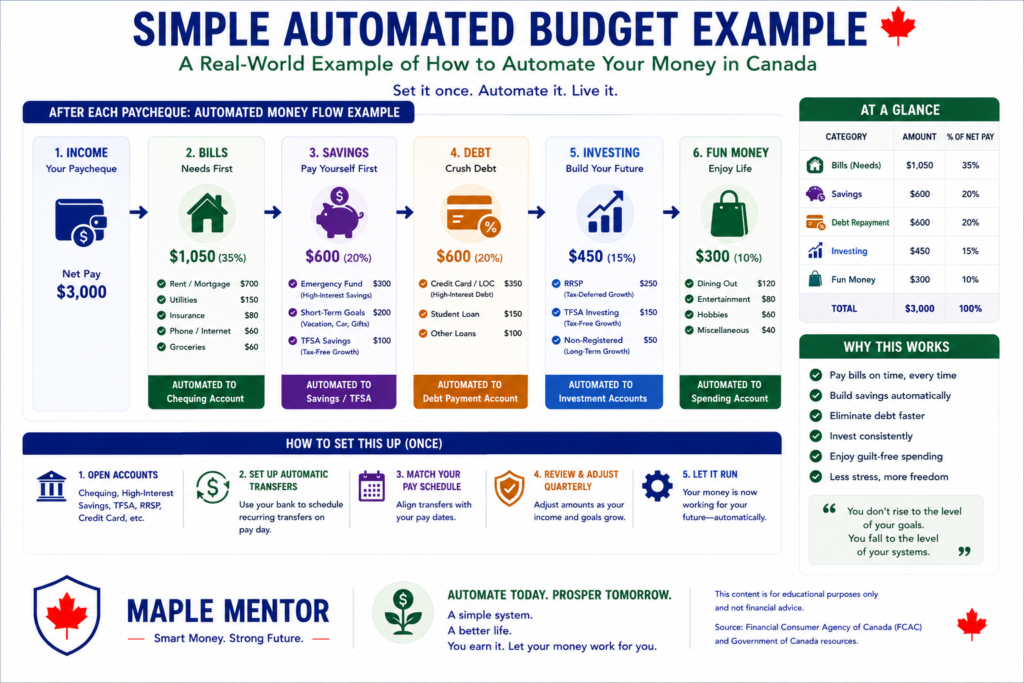
Because each category is funded automatically, there’s less room for emotional decisions.
Common Automation Mistakes
Automating Too Much Too Fast
Start small and expand gradually.
Not Leaving Enough Money in Chequing
Unexpected expenses can create overdraft fees.
Forgetting Annual Bills
Property taxes, insurance renewals, and vehicle registrations can disrupt your plan.
Ignoring Credit Card Balances
Automation helps, but you still need to monitor debt.
Not Reviewing the System Monthly
Life changes. Therefore, your automation system should evolve too.
Investing Before Handling Urgent Debt
High-interest debt often deserves priority before aggressive investing.
If you’re struggling financially, read How to Stop Living Paycheck to Paycheck in Canada.
Final Answer
Learning how to automate finances Canada style is one of the easiest ways to improve your financial life.
By automating bills, savings, debt payments, and investing contributions, you can build wealth without relying on willpower. Moreover, automation reduces mistakes, improves consistency, and helps you reach your goals faster.
Start small. Automate one or two money moves first. Then gradually expand the system as your finances improve.
Over time, those automatic habits can have a surprisingly large impact.
FAQ
Should I automate my finances?
Yes. Automation can make saving, investing, and bill payments more consistent while reducing financial stress.
What should I automate first?
Start with recurring bills and a small emergency fund transfer.
Should I automate investing?
Yes, once you have some emergency savings and high-interest debt is under control.
Can automation help me stop living paycheck to paycheck?
It can help reinforce good habits, but a working budget is still necessary. Automation supports good decisions—it doesn’t eliminate overspending by itself.