
How to Build a Simple Money System in Canada
Looking to build a money system Canada residents can actually stick to? Many Canadians earn a decent income but still feel like they never know where their money goes. The problem usually isn’t a lack of income—it’s a lack of a system. In this guide, you’ll learn how to build a simple money system in Canada that covers bills, savings, debt, investing, and everyday spending so every dollar has a purpose.
Quick Picks
Simple Money System Checklist
- Know your monthly income
- Cover essential bills first
- Build an emergency fund
- Pay off high-interest debt
- Automate saving and investing
- Use separate accounts
- Review your system monthly
A simple money system helps you decide where your money goes before you spend it.
For most Canadians, the system should cover:
- Income
- Bills
- Emergency savings
- Debt payments
- Investing
- Short-term goals
- Spending money
What Is a Money System?
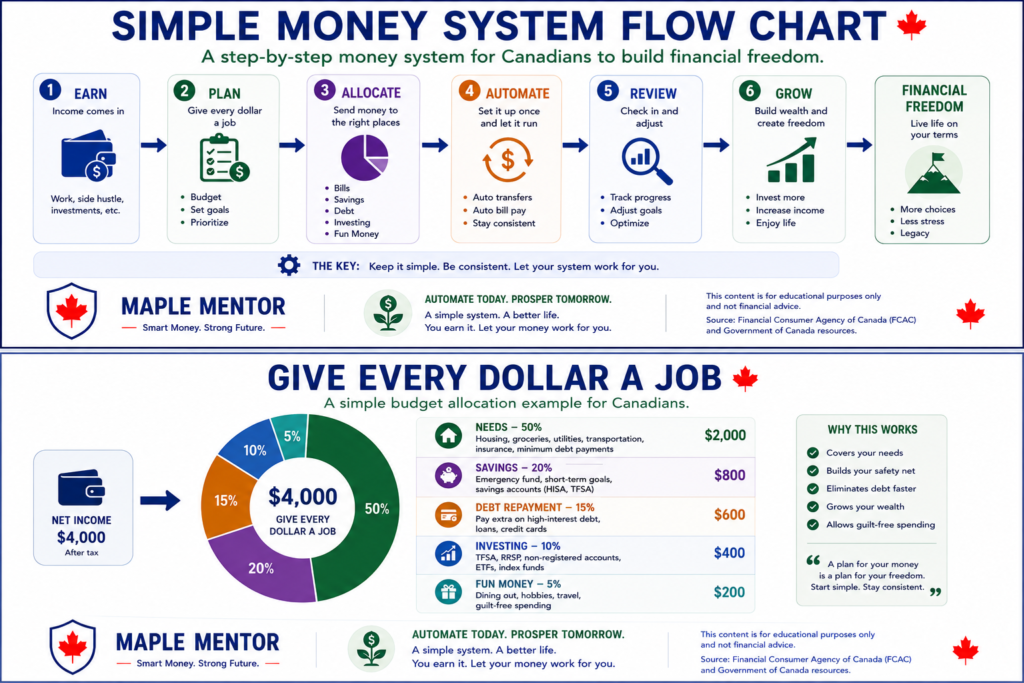
A money system is a simple structure for managing your income every month.
Unlike a budget, which mainly tracks spending, a money system determines where your money goes automatically. In other words, it creates a repeatable process that works every payday.
A complete money system should include:
- Paying bills
- Building savings
- Paying down debt
- Investing for the future
- Setting aside spending money
Rather than making financial decisions every week, your system handles them consistently.
Why Most People Struggle Without a System
Without a money system, it’s easy to make financial decisions randomly.
As a result, many Canadians experience problems such as:
- Missed bill payments
- Overspending
- Inconsistent saving
- Growing debt
- Wondering where their paycheque went
Fortunately, creating a simple system removes much of the guesswork. Instead of relying on motivation, you rely on a process.
According to Investopedia’s guide to paying yourself first, automatically directing money toward savings before spending can improve long-term financial success.
Step 1 Know What Comes In
Every money system starts with knowing exactly how much money you receive.
Include:
- Employment income
- Side hustle income
- Government benefits
- Freelance income
- Any irregular earnings
If your income varies, calculate an average using the last six to twelve months.
Once you know what comes in, you can assign every dollar a job.
Step 2 Separate Fixed Bills From Flexible Spending
Next, divide your expenses into two categories.
Fixed Bills
These rarely change each month.
Examples include:
- Rent or mortgage
- Insurance
- Phone bill
- Internet
- Subscriptions
Flexible Spending
These expenses vary.
Examples include:
- Groceries
- Restaurants
- Fuel
- Shopping
- Entertainment
Separating these categories makes budgeting much easier and helps prevent overspending.
If you need help creating a budget first, read How to Create a Monthly Budget in Canada.
Step 3 Build an Emergency Fund
Every money system needs a financial safety net.
Without emergency savings, unexpected expenses often lead to credit card debt.
Start by saving:
- $500
- Then $1,000
- Eventually 3–6 months of essential expenses
Even small automatic transfers can build your emergency fund surprisingly quickly.
Learn how much you need in How Much Emergency Savings Do You Really Need in Canada?
Find the best place to store it in Where to Keep Your Emergency Fund in Canada.
Step 4 Create a Debt Payoff Plan
If you have high-interest debt, it deserves a clear repayment strategy.
Focus on:
- Credit cards
- Payday loans
- High-interest personal loans
Meanwhile, continue making at least the minimum payments on all debts.
Then direct any extra money toward the highest-interest balance first.
Learn practical strategies in How to Pay Off Credit Card Debt Faster in Canada.
Step 5 Automate Saving and Investing
Once your bills and debt plan are in place, automate your financial goals.
For example, schedule automatic transfers every payday to:
- Emergency savings
- TFSA
- RRSP
- FHSA
- Brokerage account
Even contributing $25 or $50 every paycheque is a great way to start.
Consistency matters much more than trying to invest large amounts occasionally.
Build your system with How to Automate Your Finances in Canada.
According to Vanguard’s investing principles, investing consistently over long periods is one of the most effective ways to build wealth.
Step 6 Use Separate Accounts for Different Jobs
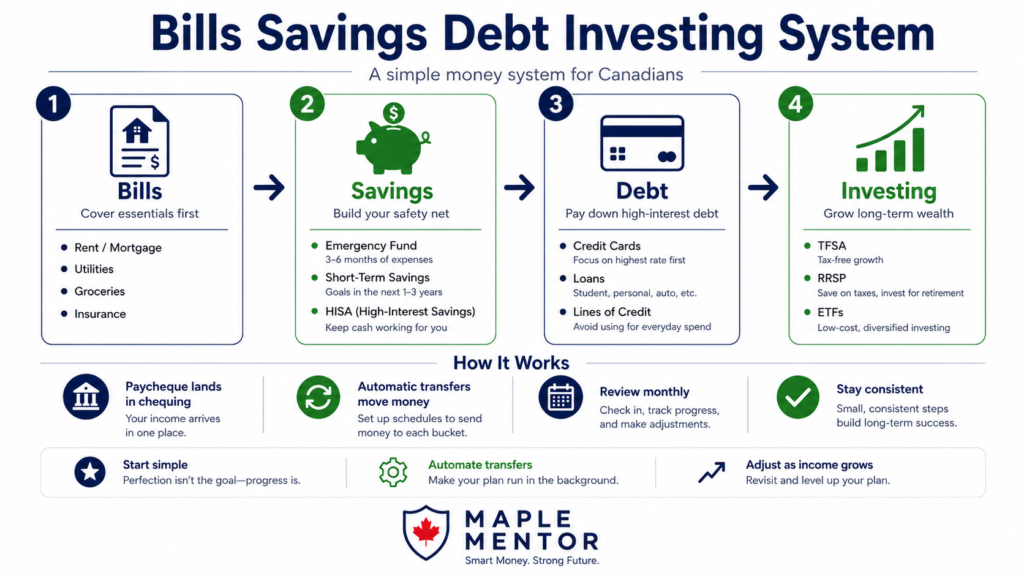
One of the simplest ways to stay organized is to give each account a specific purpose.
A common setup includes:
Chequing Account
For:
- Bills
- Income deposits
- Everyday banking
High-Interest Savings Account
For:
- Emergency fund
- Short-term savings goals
Investment Account
For:
- TFSA
- RRSP
- FHSA
- Non-registered investments
Keeping these accounts separate reduces the temptation to spend money meant for future goals.
Compare options in Best No-Fee Chequing Accounts in Canada.
You can also explore Best High-Interest Savings Accounts in Canada.
Step 7 Review Your System Once a Month
Even the best money system needs regular maintenance.
Once each month, review:
- Bills
- Savings progress
- Debt balances
- Investment contributions
- Spending habits
The objective isn’t perfection.
Instead, focus on making small improvements over time.
The Financial Consumer Agency of Canada’s budgeting resources recommend reviewing your finances regularly to stay on track with your goals.
Simple Money System Example
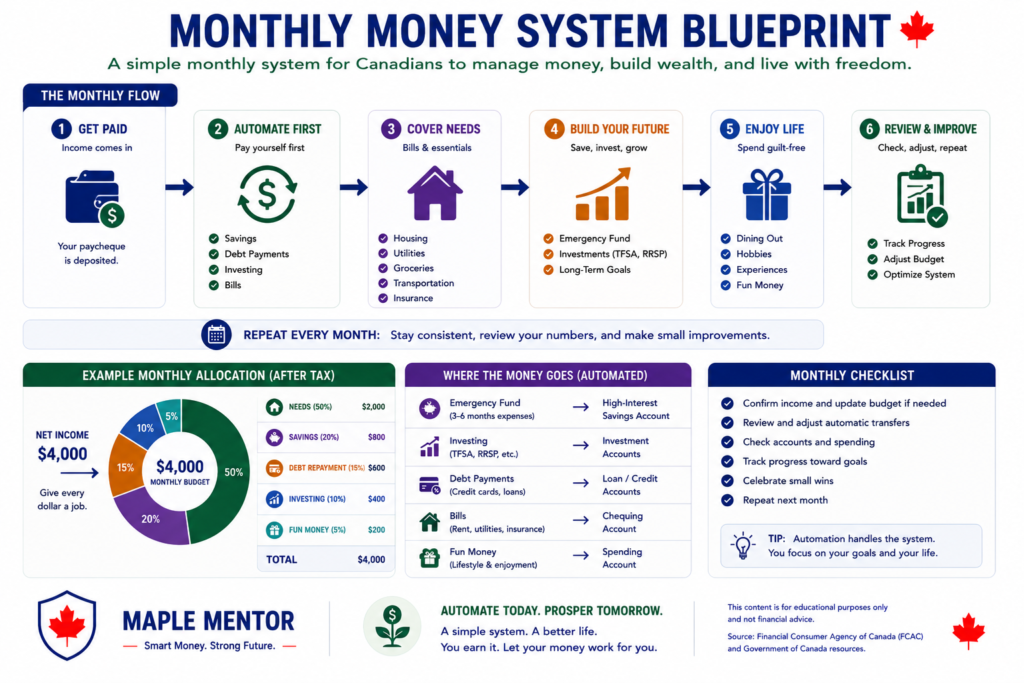
This type of structure is simple, easy to maintain, and flexible enough for most households.
Common Mistakes to Avoid
Making the System Too Complicated
Simple systems are easier to follow consistently.
Not Leaving Enough Money for Bills
Always leave enough in your chequing account to cover automatic payments.
Mixing Emergency Savings With Spending Money
Separate accounts help avoid accidental spending.
Saving Without Addressing High-Interest Debt
Expensive debt can erase much of your financial progress.
Investing Without a Cash Buffer
An emergency fund should come before aggressive investing.
Never Reviewing the System
Life changes. Therefore, your money system should change too.
Final Answer
A successful money system Canada beginners can follow gives every dollar a purpose before it’s spent.
Start by covering your bills, then build emergency savings, create a debt repayment plan, automate your investing, and review your progress each month.
You don’t need a complicated financial plan to build wealth. Instead, you need a simple system that you can follow consistently for years.
FAQ
What is a money system?
A money system is a simple plan that tells your income where to go each month for bills, savings, debt, investing, and spending.
Is a money system the same as a budget?
Not exactly. A budget tracks your money, while a money system determines how your money moves automatically.
How many bank accounts should I have?
Most Canadians can start with three: a chequing account, a high-interest savings account, and an investment account.
Should I automate my money system?
Yes. Once your budget works, automation helps you stay consistent and reduces the chance of missing important financial goals.