
Learning how to plan for annual expenses in Canada is one of the simplest ways to avoid financial stress throughout the year. Many expenses don’t happen every month, but they aren’t surprises either. Insurance renewals, holiday shopping, property taxes, and vehicle maintenance are all predictable costs that can easily derail your budget if you don’t prepare for them.
The good news is that you don’t need a complicated budgeting system. Once you plan for annual expenses in Canada by listing your yearly bills, estimating the total, and saving a little each month, those once-overwhelming expenses become much easier to manage.
Quick Answer
To plan for annual expenses in Canada, list your predictable yearly costs, estimate the total, divide by 12, and save that amount monthly in a separate account.
This helps you avoid using credit cards or emergency savings for expenses you knew were coming.
Quick Steps
- List your yearly expenses.
- Estimate the annual total.
- Divide the total by 12.
- Save monthly in a separate account.
- Automate your transfers.
- Review your plan every few months.
What Are Annual Expenses?
Annual expenses are costs that don’t occur every month but still need to be planned for. Because they happen less frequently, they’re easy to overlook until the bill arrives.
Common examples include:
- Car maintenance
- Insurance renewals
- Property taxes
- Income taxes
- Gifts
- Holiday spending
- School expenses
- Annual subscriptions
- Driver’s licence renewals
- Passport renewals
- Home maintenance
Although these expenses don’t appear on your monthly budget, they’re still part of your yearly spending.
When you plan for annual expenses in Canada, you’re simply turning irregular bills into manageable monthly savings goals.
Why Annual Expenses Wreck Monthly Budgets
Many people believe they’re doing a great job sticking to their monthly budget.
Then an insurance renewal arrives.
Or property taxes become due.
Or the holidays approach.
Suddenly, the budget feels like it has fallen apart.
The reality is that these weren’t emergencies.
They were predictable expenses that simply weren’t included in the monthly plan.
If an expense happens every year, it deserves a place in your budget.
Treating predictable bills like emergencies often leads to:
- Credit card debt
- Using lines of credit
- Draining emergency savings
- Feeling like you’re constantly starting over financially
The better approach is to prepare for these costs long before they’re due.
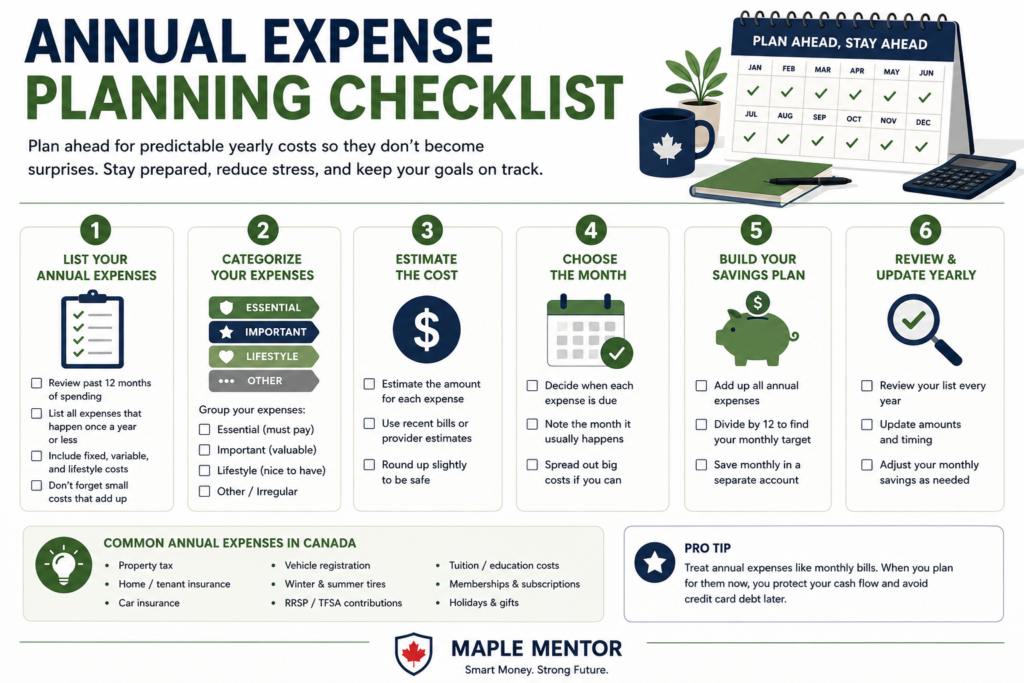
Step 1 List Your Yearly Expenses
The first step is creating a complete list of expenses that happen throughout the year.
Don’t rely on memory.
Instead, review:
- Last year’s bank statements
- Credit card statements
- Your online banking history
- Your calendar
- Insurance renewal notices
Grouping expenses by category makes them easier to organize.
For example:
Car
- Oil changes
- Tires
- Maintenance
- Registration
Home
- Property taxes
- Home repairs
- Furnace servicing
Family
- School supplies
- Children’s activities
- Birthdays
Holidays
- Christmas
- Travel
- Gifts
Taxes
- Income tax payments
- Accountant fees
Insurance
- Auto insurance
- Home insurance
- Life insurance
Subscriptions
- Annual memberships
- Streaming services
- Software renewals
Travel
- Flights
- Hotels
- Travel insurance
Taking the time to build this list once makes future budgeting much easier.
Step 2 Estimate the Annual Total
Once you’ve listed your expenses, estimate how much each one will cost.
Don’t worry about being perfectly accurate.
In fact, it’s usually better to estimate slightly higher than you expect.
For example, if your car maintenance normally costs around $900 each year, budgeting $1,100 provides a small cushion in case prices increase.
Likewise, holiday spending often costs more than people expect.
Giving yourself a little extra room helps prevent overspending later.
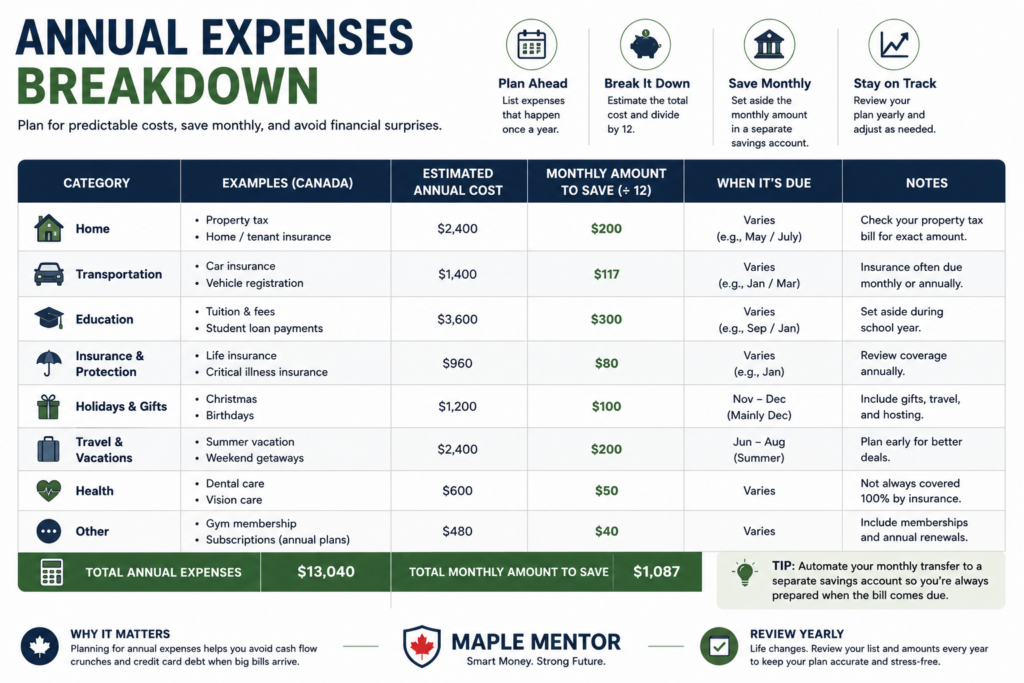
Step 3 Divide by 12
Now comes the easiest part.
Add your estimated annual expenses together.
Then divide the total by 12.
For example:
If your annual expenses total $3,600, you’ll need to save $300 per month.
Instead of scrambling when each bill arrives, you’ll already have the money waiting.
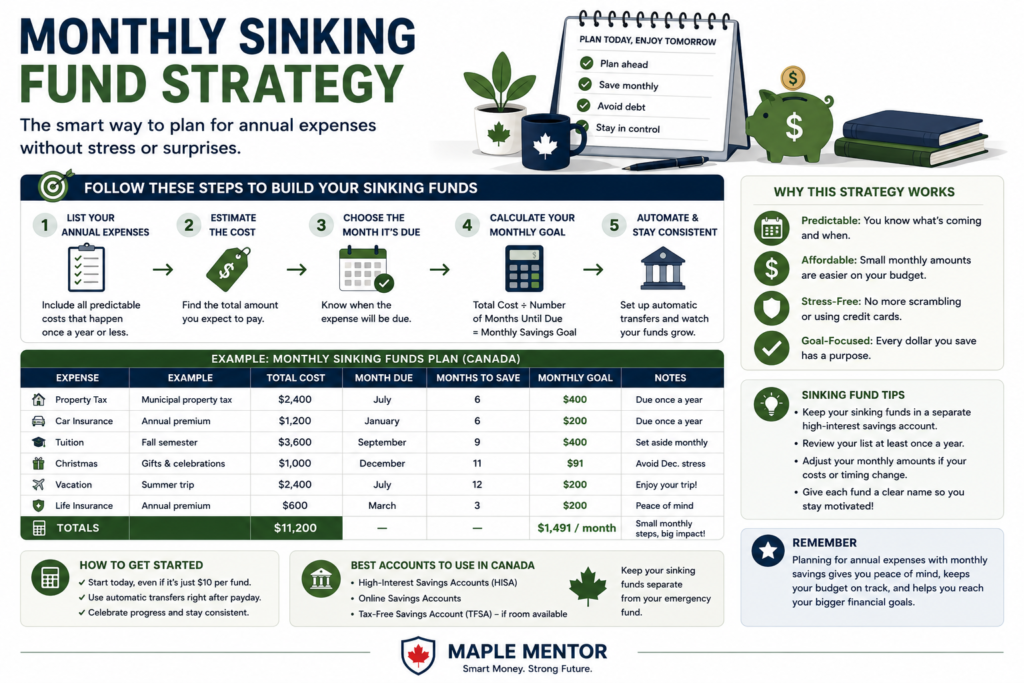
This simple strategy is often called a sinking fund, and it’s one of the easiest ways to plan for annual expenses in Canada without relying on debt.
Step 4 Keep the Money Separate
Your annual expense fund shouldn’t sit in the same account as your everyday spending money.
Keeping everything together makes it too easy to accidentally spend money you’ve already set aside.
Instead, use a separate savings account or a high-interest savings account (HISA).
Not only does this help organize your money, but it also allows your savings to earn a little interest while waiting to be used.
Read Best No-Fee Savings Accounts in Canada to compare accounts with no monthly fees.
If you’d like to earn more interest while your money sits in savings, check out Best High-Interest Savings Accounts in Canada.
Before opening a new savings account, it’s also worth reviewing the Canada Deposit Insurance Corporation (CDIC) website to understand how eligible deposits are protected at member financial institutions in Canada.
Step 5 Automate the Savings
One of the easiest ways to stay consistent is to automate your savings.
Instead of remembering to transfer money every month, schedule an automatic transfer after each paycheque or once per month.
Automation removes emotion and helps you stay on track even during busy months.
For example:
- $75 every week
- $150 every two weeks
- $300 every month
Each option produces steady progress toward your yearly goals.
Learn how to automate transfers in How to Automate Your Finances in Canada.
The Financial Consumer Agency of Canada also recommends making saving automatic whenever possible, as regular automatic transfers can help build consistent saving habits over time.
Step 6 Review and Adjust Every Few Months
Your annual expenses won’t stay the same forever.
Insurance premiums may increase, you might subscribe to a new service, or your vehicle may require more maintenance as it gets older.
That’s why it’s a good idea to review your annual expense plan every three to six months.
During your review, check for:
- New subscriptions
- Insurance premium increases
- Vehicle maintenance costs
- Income tax changes
- Holiday spending estimates
- Home maintenance projects
- Travel plans
- New family expenses
Making small adjustments throughout the year is much easier than discovering you’re hundreds of dollars short when a bill arrives.
If you’ve recently changed jobs, moved, or bought a home, you should also update your annual expense plan to reflect those changes.
Annual Expenses Example
Here’s an example of how annual expenses can be converted into manageable monthly savings.
| Expense | Estimated Annual Cost | Monthly Savings Needed |
|---|---|---|
| Car Maintenance | $1,200 | $100 |
| Gifts & Holidays | $1,800 | $150 |
| Insurance Renewal | $900 | $75 |
| Annual Subscriptions | $360 | $30 |
| Total | $4,260 | $355 |
Rather than worrying about a $900 insurance bill or a costly holiday season, you’re saving a manageable amount each month.
This approach makes cash flow much more predictable and helps you plan for annual expenses in Canada without relying on debt when bills arrive.
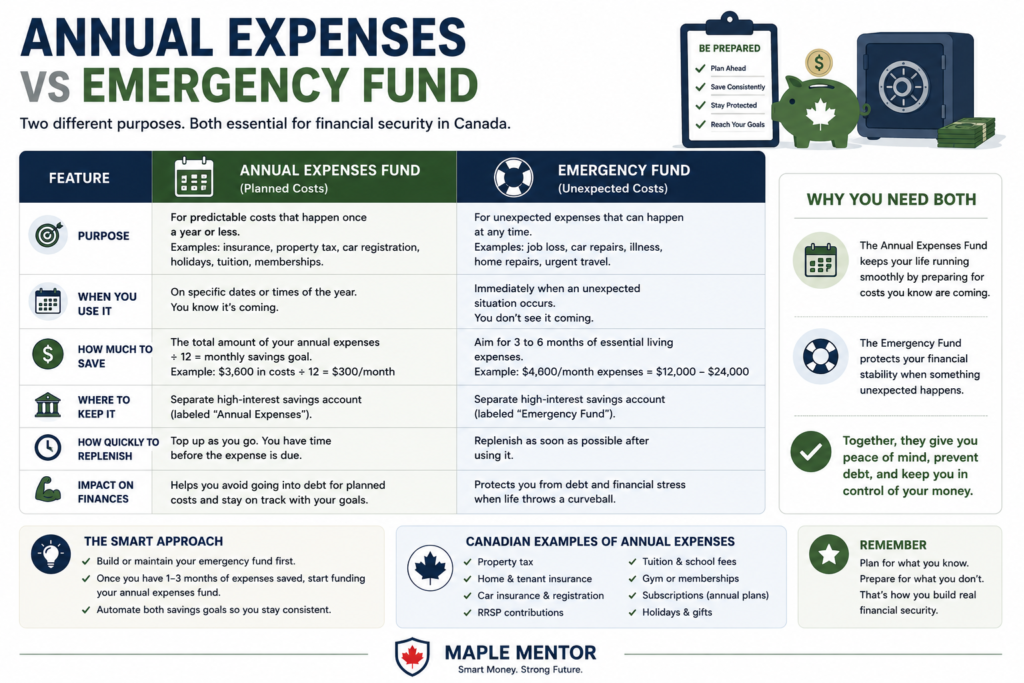
Annual Expenses vs Emergency Fund
Many Canadians accidentally use their emergency fund to pay for predictable bills.
However, annual expenses and emergency expenses serve completely different purposes.
Annual Expense Fund
Use this account for expenses you know are coming, such as:
- Property taxes
- Insurance renewals
- Holiday spending
- Car maintenance
- School expenses
- Annual subscriptions
- Home maintenance
Because these costs are expected, they should be included in your savings plan.
Emergency Fund
Your emergency fund is reserved for unexpected situations, including:
- Job loss
- Emergency medical expenses
- Major home repairs
- Unexpected vehicle breakdowns
- Urgent travel because of a family emergency
Using your emergency fund for predictable bills leaves you less prepared when a true emergency happens.
Keeping these savings separate makes it easier to stay organized and avoid unnecessary financial stress.
Learn more in Where to Keep Your Emergency Fund in Canada.
Common Mistakes to Avoid
Avoiding a few common mistakes can make your annual expense plan much more effective.
Forgetting Taxes
Many purchases cost more than expected because people forget to include sales taxes.
Always estimate the full amount you’ll actually need.
Underestimating Vehicle Costs
Vehicle ownership includes much more than fuel.
Remember to budget for:
- Oil changes
- Tires
- Repairs
- Registration
- Routine maintenance
Using Your Emergency Fund for Predictable Expenses
If you know an expense is coming every year, it belongs in your annual expense fund—not your emergency fund.
Ignoring Holiday Spending
Holiday expenses surprise many households every year, even though they happen at the same time.
Planning ahead can prevent holiday shopping from turning into credit card debt.
Keeping Everything in Your Main Chequing Account
Mixing annual savings with everyday spending makes it much easier to accidentally spend money you’ve already set aside.
A dedicated savings account creates helpful separation and makes tracking your progress much easier.
Never Updating Your Plan
Your annual expenses will change over time.
Reviewing your plan every few months helps ensure your monthly savings still match your expected costs.
Final Answer
Learning how to plan for annual expenses in Canada is one of the simplest ways to stay ahead financially.
Instead of treating predictable bills like emergencies, list your yearly expenses, estimate the total cost, divide it by 12, and save that amount every month in a separate account.
When you plan for annual expenses in Canada, you’ll be less likely to rely on credit cards, drain your emergency fund, or feel caught off guard when yearly bills arrive.
Over time, this simple habit creates a smoother budget, reduces financial stress, and gives you greater confidence in managing your money.
Frequently Asked Questions
What are examples of annual expenses?
Examples include insurance renewals, property taxes, car maintenance, holiday spending, gifts, school costs, annual subscriptions, home maintenance, and licence renewals.
How do I budget for annual expenses?
To plan for annual expenses in Canada, estimate your yearly costs, divide the total by 12, and save that amount every month in a separate savings account.
Should annual expenses come from my emergency fund?
Usually not. Annual expenses are predictable, while emergency funds should be reserved for unexpected financial situations.
Where should I keep money for annual expenses?
A high-interest savings account or a separate no-fee savings account is usually a good choice because your money remains safe, accessible, and separate from your everyday spending.