
A monthly money review Canada routine can help you stay in control of your finances without spending hours looking at spreadsheets. Instead of wondering where your money went, a monthly review lets you see what’s working, identify problems early, and make better decisions for the month ahead. In this guide, you’ll learn how to do a monthly money review in Canada using a simple step-by-step process that anyone can follow.
Quick Picks
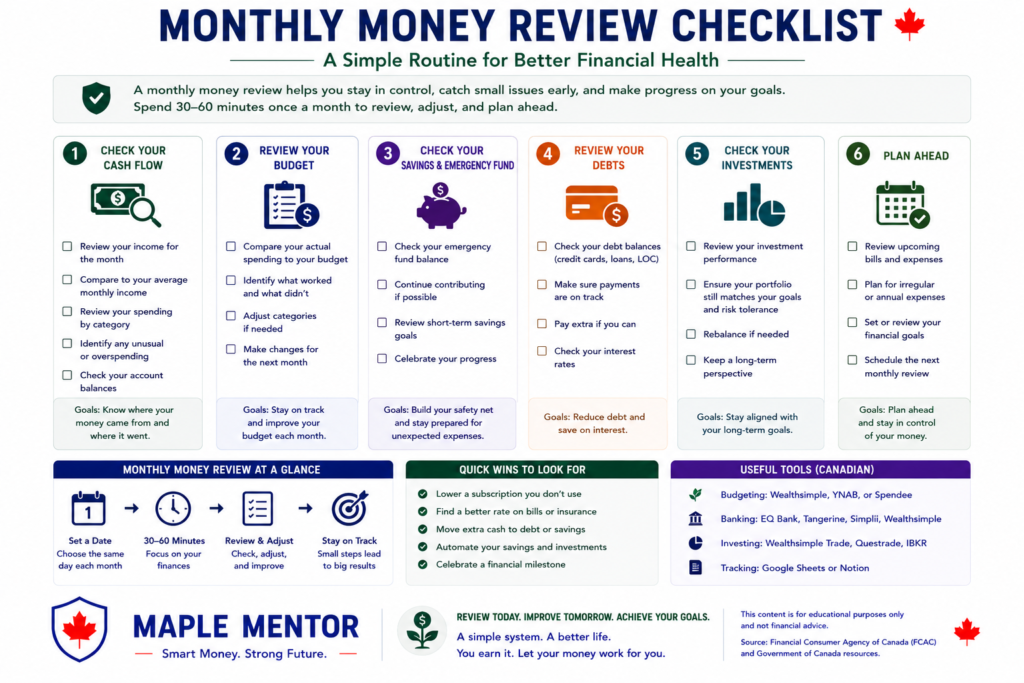
Monthly Money Review Checklist
A simple monthly money review should include:
- Review your income
- Check your spending
- Review bills and subscriptions
- Measure debt progress
- Update your emergency fund
- Check investment contributions
- Review financial goals
The goal isn’t perfection. It’s making small improvements every month.
What Is a Monthly Money Review?
A monthly money review is a regular financial check-in that helps you understand what happened with your money over the past month.
Rather than tracking every dollar every day, you take time once a month to review your finances and decide what needs to change.
Think of it as a routine maintenance check for your financial life.
Instead of asking, “Where did my money go?” you’ll start asking, “What should I improve next month?”
Why a Monthly Money Review Matters
Many financial problems develop slowly.
A small subscription here or an extra restaurant meal there may not seem important, but over time those expenses can add up.
Reviewing your finances every month helps you catch problems before they become expensive habits.
A monthly review can help you spot:
- Overspending
- Missed bills
- Slow debt progress
- Emergency fund growth
- Investing consistency
- Lifestyle inflation
More importantly, it keeps your financial goals top of mind.
Learn more about building good financial habits in How to Build Better Money Habits in Canada.
According to the Financial Consumer Agency of Canada, regularly reviewing your finances helps you stay on track with your financial goals.
Step 1 Review Your Income
Start by checking how much money came in during the month.
Include every source of income, such as:
- Paycheques
- Side hustles
- Business income
- Bonuses
- Freelance work
- Investment income
If your income varies from month to month, compare it with your average rather than your best month.
Doing this helps you build a more realistic financial plan.
If your income changes frequently, read How to Manage Irregular Income in Canada.
Step 2 Review Your Spending
Next, look at where your money actually went.
Most banking apps already categorize expenses automatically, making this process much easier.
Review categories like:
- Housing
- Groceries
- Transportation
- Restaurants
- Shopping
- Entertainment
- Subscriptions
Ask yourself:
- Where did I overspend?
- What surprised me?
- What can I improve next month?
This isn’t about feeling guilty.
Instead, it’s about learning from your spending habits.
If you’re struggling with your budget, read How to Create a Monthly Budget in Canada.
Step 3 Check Your Bills and Subscriptions
Review all your recurring expenses.
Pay special attention to:
- Streaming subscriptions
- Phone plans
- Internet
- Insurance
- Banking fees
- Annual memberships
Companies occasionally increase prices without much notice.
Likewise, it’s common to forget subscriptions you no longer use.
Canceling just one or two unused services could save hundreds of dollars each year.
Compare cheaper banking options in Best No-Fee Chequing Accounts in Canada.
Step 4 Check Your Debt Progress
Now review your debt balances.
Look at:
- Credit cards
- Lines of credit
- Car loans
- Student loans
- Personal loans
Don’t focus only on your monthly payment.
Instead, ask:
“Did my balance actually go down?”
Watching your balances decrease each month can be highly motivating.
If you’re working on debt repayment, read How to Pay Off Credit Card Debt Faster in Canada.
Step 5 Review Your Emergency Fund
Next, check your emergency savings.
Did your balance:
- Increase?
- Stay the same?
- Decrease?
Compare your progress with your target.
A common guideline is:
- Starter fund: $1,000
- Stable income: 3 months of expenses
- Irregular income: 6 months or more
Even adding a small amount every month builds financial security.
Learn more in How Much Emergency Savings Do You Really Need in Canada.
Find the best place to keep it in Where to Keep Your Emergency Fund in Canada.
Step 6 Review Your Investments
Keep this part simple.
You don’t need to analyze the stock market every month.
Instead, check:
- Did your contributions happen?
- Are your TFSA, RRSP, or FHSA contributions on schedule?
- Does your portfolio still match your long-term plan?
- Is rebalancing needed?
Short-term market movements are normal.
Rather than reacting emotionally, focus on staying consistent.
Learn how much you should invest in How Much Should You Invest Each Month in Canada.
Learn more about maintaining your portfolio in How to Rebalance Your Investment Portfolio.
Step 7 Review Your Financial Goals
Finally, review your financial goals.
Ask yourself whether you’re still making progress toward goals such as:
- Emergency fund
- Paying off debt
- Saving for a home
- Vacation savings
- Retirement
- Building your investment portfolio
If your priorities have changed, adjust your financial plan accordingly.
Financial goals should evolve as your life changes.
Learn how to set better goals in How to Set Financial Goals in Canada.
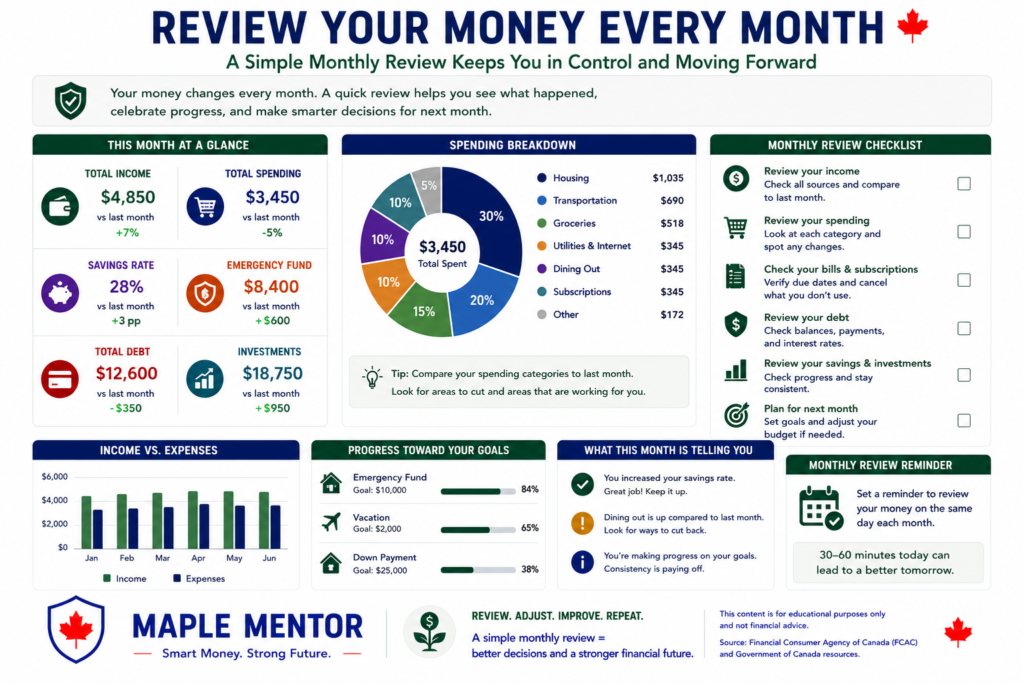
Monthly Money Review Checklist
| Review Item | Question to Ask |
|---|---|
| Income | Did I earn what I expected? |
| Spending | Where did I overspend? |
| Bills | Did anything increase? |
| Debt | Did my balances go down? |
| Savings | Did my emergency fund grow? |
| Investments | Did I contribute this month? |
| Goals | Am I still on track? |
Save this checklist and repeat it every month.
Common Mistakes to Avoid
Reviewing Too Often
Checking your finances every day often creates unnecessary stress.
For most Canadians, once a month is enough.
Ignoring Small Fees
Small banking fees and subscriptions can quietly cost hundreds of dollars every year.
Only Looking at Investments
Your investment portfolio is only one part of your financial picture.
Debt, spending, and savings deserve equal attention.
Not Checking Debt Balances
Making payments is good.
Seeing your balances shrink is even better.
Never Adjusting Next Month’s Budget
A review is only useful if you make changes afterward.
Being Too Hard on Yourself
No month is perfect.
Instead of focusing on mistakes, concentrate on making one or two improvements before your next review.
According to Investopedia’s budgeting guide, regularly reviewing your financial habits is one of the simplest ways to improve long-term financial outcomes.
Final Answer
A monthly money review Canada routine is one of the easiest ways to improve your finances without making drastic changes.
Spend 20 to 30 minutes each month reviewing your income, spending, bills, debt, savings, investments, and financial goals.
You don’t need complicated spreadsheets or expensive software.
Instead, build a simple routine, stay consistent, and make small improvements every month.
Over time, those small adjustments can have a significant impact on your financial future.
Frequently Asked Questions
How often should I review my finances?
For most Canadians, once a month is enough to stay on top of spending, savings, debt, and investing.
How long should a monthly money review take?
Most reviews take between 20 and 30 minutes.
What should I include in a money review?
Review your income, spending, bills, debt, emergency savings, investments, and financial goals.
Should I check my investments every month?
Yes, check your contributions and overall progress. However, avoid making decisions based solely on short-term market movements.