
How to Prepare for a Recession in Canada
Wondering how to prepare for a recession in Canada? While no one can predict exactly when a recession will happen, you can prepare your finances before economic conditions become more challenging. Building emergency savings, reducing debt, protecting your income, and sticking to a long-term financial plan can make a significant difference. In this guide, you’ll learn how to prepare for a recession in Canada using practical strategies that help you stay financially resilient.
Quick Picks
Before a recession arrives, focus on these priorities:
- Build an emergency fund.
- Reduce high-interest debt.
- Lower your fixed monthly expenses.
- Protect your income.
- Avoid unnecessary borrowing.
- Continue investing for long-term goals.
- Review your budget regularly.
Preparing for a recession isn’t about predicting the economy.
Instead, it’s about making your finances strong enough to handle uncertainty.
What Is a Recession?
A recession is a period when economic activity slows down for an extended time.
Although every recession is different, common effects include:
- Job losses
- Reduced work hours
- Lower business income
- Slower hiring
- Market volatility
- Greater financial uncertainty
However, recessions don’t affect everyone equally. Some industries remain stable, while others experience significant challenges.
Because it’s impossible to know exactly how the economy will change, the smartest approach is preparing your personal finances before problems arise.
Learn more about recessions from Investopedia’s recession guide.
Why Recessions Matter for Your Money
A recession doesn’t just affect the stock market.
It can also affect:
- Your employment
- Your income
- Your ability to save
- Your debt payments
- Your confidence as an investor
For example, losing overtime hours or experiencing a temporary layoff can quickly create financial stress if you don’t have savings available.
Likewise, carrying expensive debt becomes much harder if your income suddenly decreases.
Fortunately, preparing ahead of time gives you more flexibility and peace of mind.
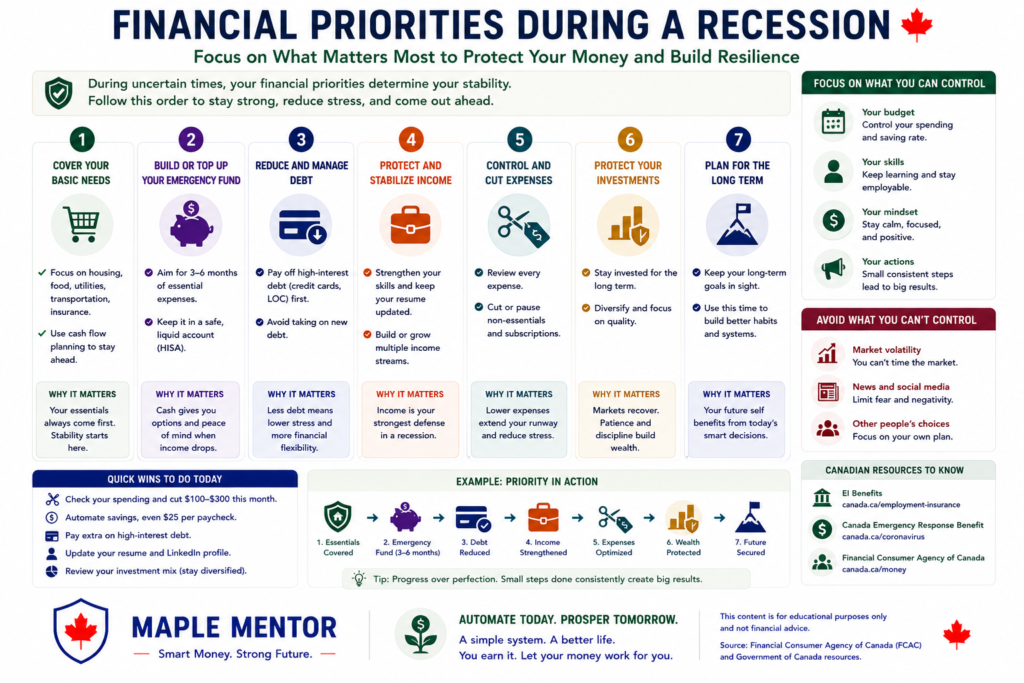
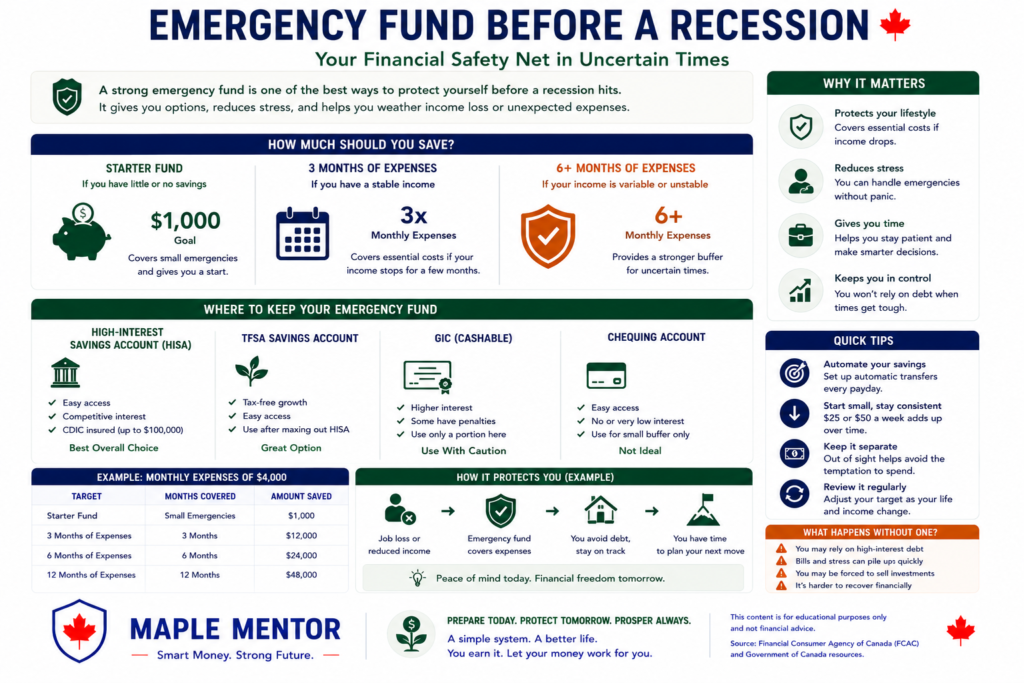
Step 1 Build or Review Your Emergency Fund
An emergency fund becomes even more valuable during uncertain economic periods.
Cash savings can help cover unexpected expenses without relying on high-interest debt.
A reasonable goal is:
- Starter emergency fund: $1,000
- Stable employment: 3 months of essential expenses
- Variable income: 6 months or more
If you already have emergency savings, review whether the amount still matches your current expenses.
Remember that housing costs, groceries, and utilities often increase over time.
Learn how much to save in How Much Emergency Savings Do You Really Need in Canada.
Find the best place to keep it in Where to Keep Your Emergency Fund in Canada.
Step 2 Reduce High-Interest Debt
High-interest debt becomes much more dangerous during a recession.
If your income drops while you’re paying 20% interest on a credit card, recovering financially becomes much harder.
Focus on eliminating:
- Credit card debt
- Payday loans
- High-interest personal loans
- Store financing balances
Although low-interest mortgages and government student loans may not require aggressive repayment, expensive consumer debt should usually become a priority.
Every dollar used to eliminate high-interest debt creates guaranteed savings through lower interest costs.
Learn practical strategies in How to Pay Off Credit Card Debt Faster in Canada.
Still deciding where your extra money should go? Read Should You Pay Off Debt or Invest in Canada?
Step 3 Lower Your Fixed Expenses
Reducing fixed monthly expenses creates breathing room if your income changes.
Unlike discretionary spending, fixed expenses continue every month whether business is good or bad.
Look for opportunities to reduce:
- Streaming subscriptions
- Phone plans
- Internet packages
- Insurance premiums
- Banking fees
- Vehicle costs
Even saving $150 to $300 every month can significantly improve your financial flexibility.
Likewise, eliminating unnecessary monthly payments means you’ll need less income to maintain your lifestyle.
Learn how to break the cycle in How to Stop Living Paycheck to Paycheck in Canada.
Compare banking options in Best No-Fee Chequing Accounts in Canada.
Step 4 Protect Your Income
Your ability to earn money is one of your most valuable financial assets.
Instead of trying to predict stock market movements, focus on making your income more secure.
Consider:
- Updating your resume
- Improving your professional skills
- Expanding your network
- Building relationships with clients
- Looking for additional income sources
Diversifying your income can reduce financial stress if one source becomes less reliable.
For example, a small freelance business or weekend side hustle may provide valuable extra income during slower periods.
Explore ideas in Best Side Hustles in Canada.
Step 5 Avoid Taking On Bad Debt
Economic uncertainty isn’t the best time to finance unnecessary purchases.
Whenever possible, avoid adding new debt for:
- Luxury vehicles
- Expensive vacations
- Buy-now-pay-later purchases
- Credit card spending
- Lifestyle upgrades
Instead, focus on maintaining financial flexibility.
If a recession never arrives, you’ll still benefit from carrying less debt.
If one does occur, you’ll be grateful you reduced your financial obligations beforehand.
Step 6 Keep Investing If Your Plan Is Long Term
Many investors become nervous when markets decline.
However, market downturns are a normal part of long-term investing.
Selling investments after prices fall can permanently lock in losses.
Instead, many long-term investors continue investing through market volatility using dollar-cost averaging.
Likewise, maintaining a diversified portfolio helps reduce risk without trying to predict short-term market movements.
Learn more in How to Protect Your Wealth in a Recession.
Continue investing consistently with Dollar-Cost Averaging Explained.
Review your portfolio regularly in How to Rebalance Your Investment Portfolio.
Step 7 Review Your Budget Monthly
A recession plan isn’t something you create once and forget.
Instead, review your finances every month to make sure you’re still on track.
Take a few minutes to check:
- Monthly spending
- Emergency fund balance
- Debt payments
- Income changes
- Investment contributions
- Upcoming bills
If your income changes or your expenses increase, adjust your budget accordingly.
Likewise, if your financial situation improves, consider increasing your emergency savings or investment contributions instead of increasing your lifestyle spending.
A monthly review helps you catch small problems before they become major financial setbacks.
Learn how to build a realistic budget in How to Create a Monthly Budget in Canada.
The Financial Consumer Agency of Canada also offers practical budgeting resources.
Recession Preparation Checklist
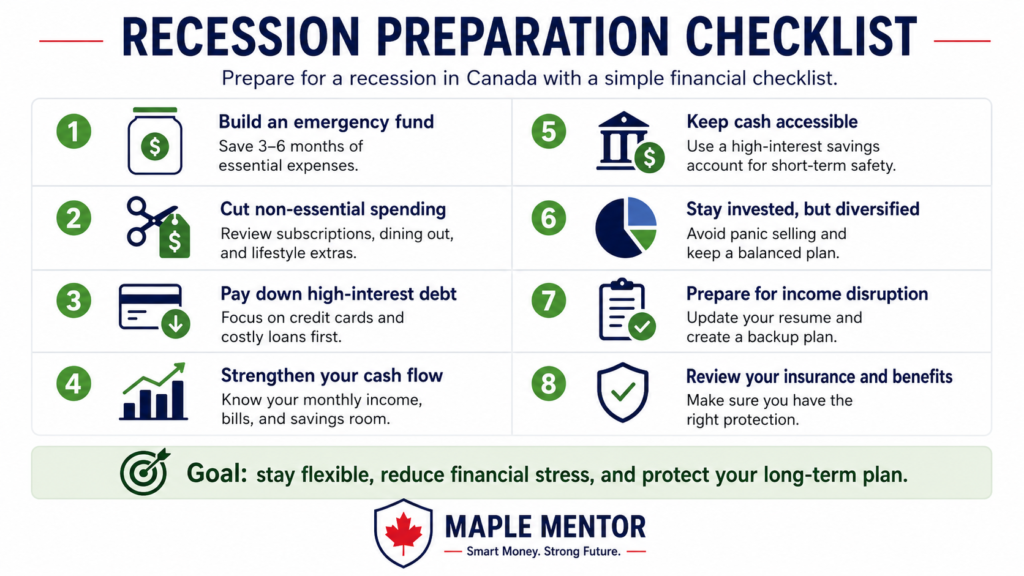
Use this checklist to evaluate your financial readiness.
You don’t need to complete everything immediately.
Instead, focus on making steady progress over time.
Common Mistakes to Avoid
Waiting Until a Recession Starts
Preparing after losing income is much harder than preparing beforehand.
Building savings while your finances are stable gives you more options later.
Panic Selling Investments
Market declines can feel uncomfortable.
However, selling long-term investments during a downturn often locks in losses that could have recovered over time.
If your investment strategy hasn’t changed, your emotions shouldn’t change it either.
Taking On New Debt
Adding unnecessary debt reduces flexibility during uncertain times.
Before financing a major purchase, ask yourself whether you’d still be comfortable making the payments if your income decreased.
Cutting Every Expense
Saving money is important.
However, eliminating every enjoyable expense usually isn’t sustainable.
Instead, focus on reducing unnecessary spending while keeping a realistic lifestyle you can maintain.
Ignoring Credit Card Balances
High-interest debt becomes even more expensive if your income falls.
Paying it down now gives you one less financial problem during difficult periods.
Assuming a Recession Won’t Affect You
No one knows exactly which industries will be impacted.
Even if your job appears secure, preparing ahead of time is simply good financial planning.
A strong financial foundation benefits you regardless of what the economy does.
Final Answer
Learning how to prepare for a recession in Canada isn’t about predicting the next economic downturn.
It’s about creating financial resilience before uncertainty arrives.
Focus on building emergency savings, reducing high-interest debt, lowering fixed expenses, protecting your income, and sticking to a long-term investing plan.
You can’t control the economy, but you can control how prepared your finances are.
Small improvements made today can make a significant difference if economic conditions become more challenging tomorrow.
Frequently Asked Questions
How much money should I save before a recession?
Aim for at least three months of essential expenses if possible. If your income is unpredictable or self-employed, six months or more may provide greater financial security.
Should I stop investing during a recession?
Not necessarily.
If your emergency fund is established, your high-interest debt is under control, and your investment timeline is long-term, continuing to invest can still be a reasonable strategy.
Should I pay off debt before a recession?
High-interest debt should usually become a priority because it becomes much harder to manage if your income decreases.
Where should I keep recession savings?
For most Canadians, a high-interest savings account provides the best combination of safety, accessibility, and interest earnings.