
Trying to decide whether to pay off debt or invest in Canada? This is one of the most common financial questions Canadians face. In this guide, you’ll learn when it makes sense to focus on debt repayment, when investing is the better option, and how to balance both.
Pay Off Debt or Invest? (Quick Breakdown)
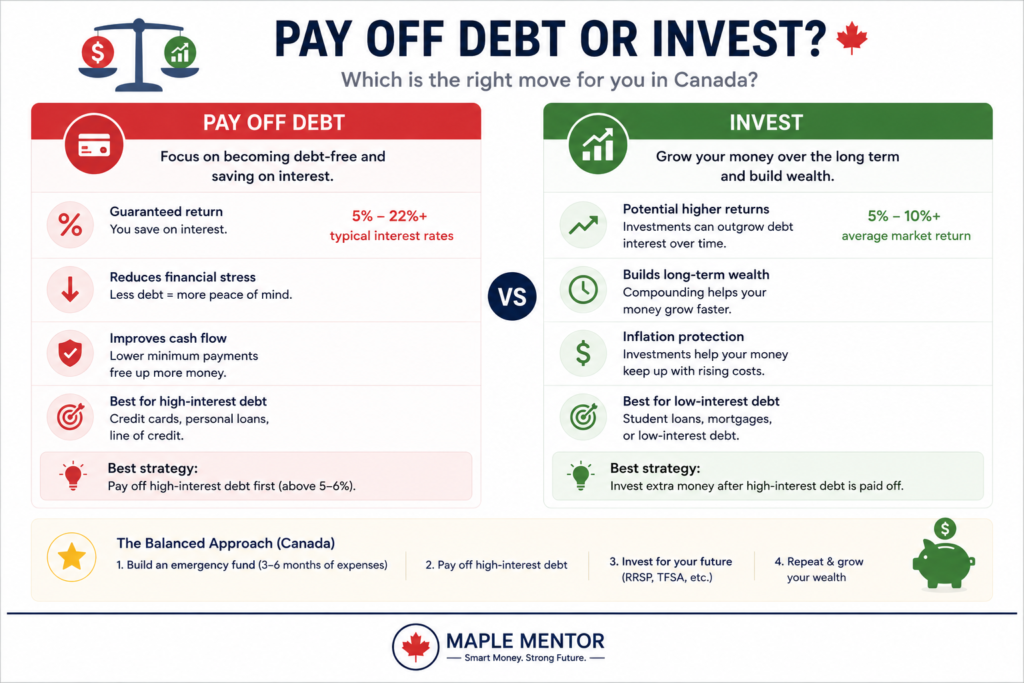
- High-interest debt → pay it off first
- Low-interest debt → investing may win long term
- Best option for many Canadians → balance both
- Key takeaway: Interest rate + financial stability should drive your decision
Why This Decision Matters
This choice has a major long-term impact.
Compounding
Investing early gives your money more time to grow.
Interest costs
Debt works against compounding because interest drains cash flow.
Financial stress
High debt can create constant financial pressure.
According to Investopedia’s compound interest guide, long-term investing benefits heavily from starting early and staying consistent.
Therefore, understanding the tradeoff between debt and investing is essential.
When You Should Pay Off Debt First
In some situations, paying off debt clearly wins.
Credit cards
Interest rates of 19–25% are extremely difficult to outperform consistently through investing.
Payday loans
These are among the worst forms of debt financially.
High-interest loans
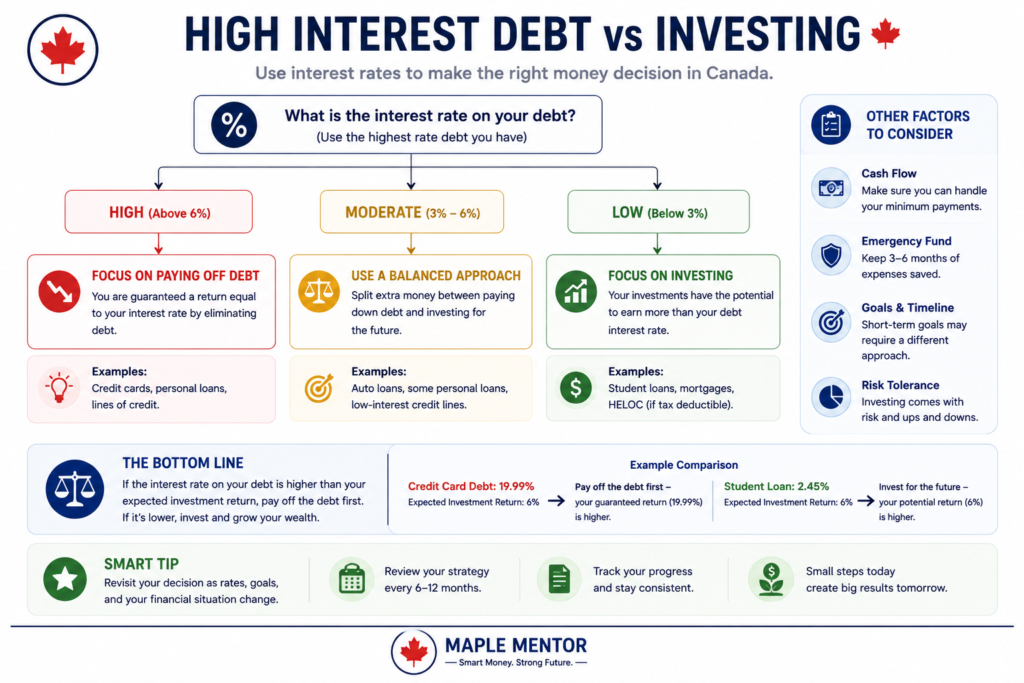
Any debt with rates above expected investment returns should usually be prioritized.
For example:
- credit card at 20% interest
- expected market return around 7–8%
In that scenario, paying off debt is mathematically stronger.
Because of this, many Canadians should focus on eliminating expensive debt before aggressively investing.
When Investing Makes More Sense
Sometimes investing creates better long-term outcomes.
Low mortgage rate
A 2–5% mortgage may be manageable while investing simultaneously.
Employer matching
If your employer offers RRSP matching, that is often an immediate guaranteed return.
Long-term investing
The earlier you invest, the more compounding works in your favor.
Start small How to Invest $100 Per Month in Canada
According to Vanguard’s long-term investing principles, time invested is one of the most powerful drivers of portfolio growth.
As a result, delaying investing too long can become costly.
The Hybrid Strategy (Best for Most Canadians)
For many people, the best solution is balancing both goals.
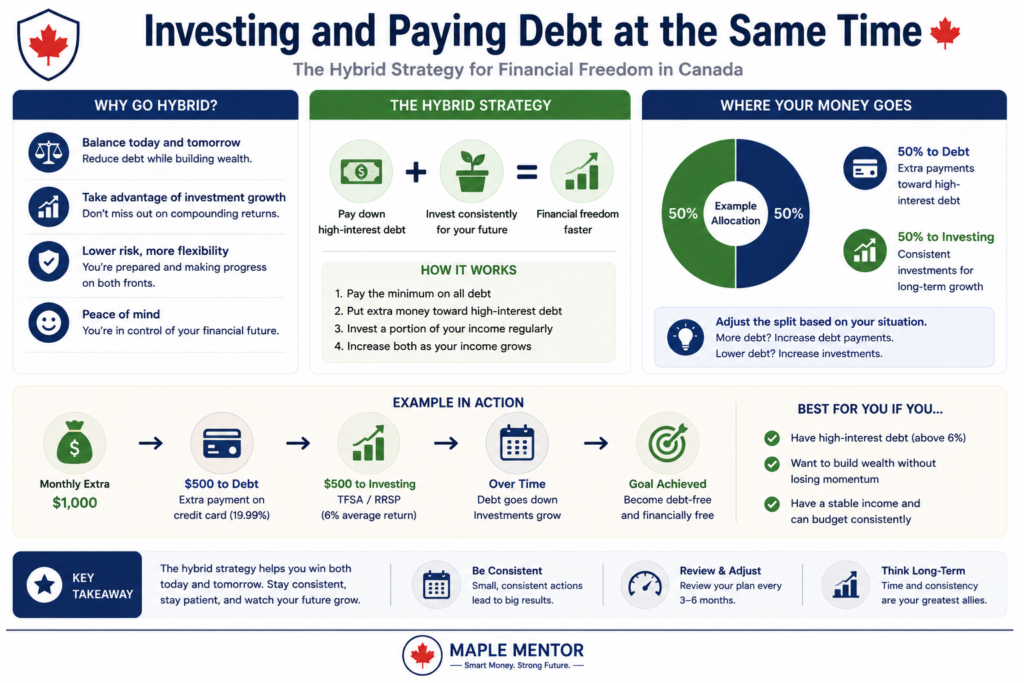
Invest + pay debt simultaneously
Instead of choosing one extreme:
- make extra debt payments
- invest smaller amounts consistently
Why this works
- reduces debt stress
- builds investing habits
- captures long-term compounding
This approach is often the most sustainable financially and psychologically.
What About Student Loans?
Student debt is different from credit card debt.
Low interest
Government student loans often have relatively low rates.
Government support
Some loans include repayment flexibility.
Emotional factor
Even low-interest debt can feel mentally exhausting.
Because of this, some Canadians prefer paying loans faster even when investing may mathematically outperform.
Should You Build an Emergency Fund First?
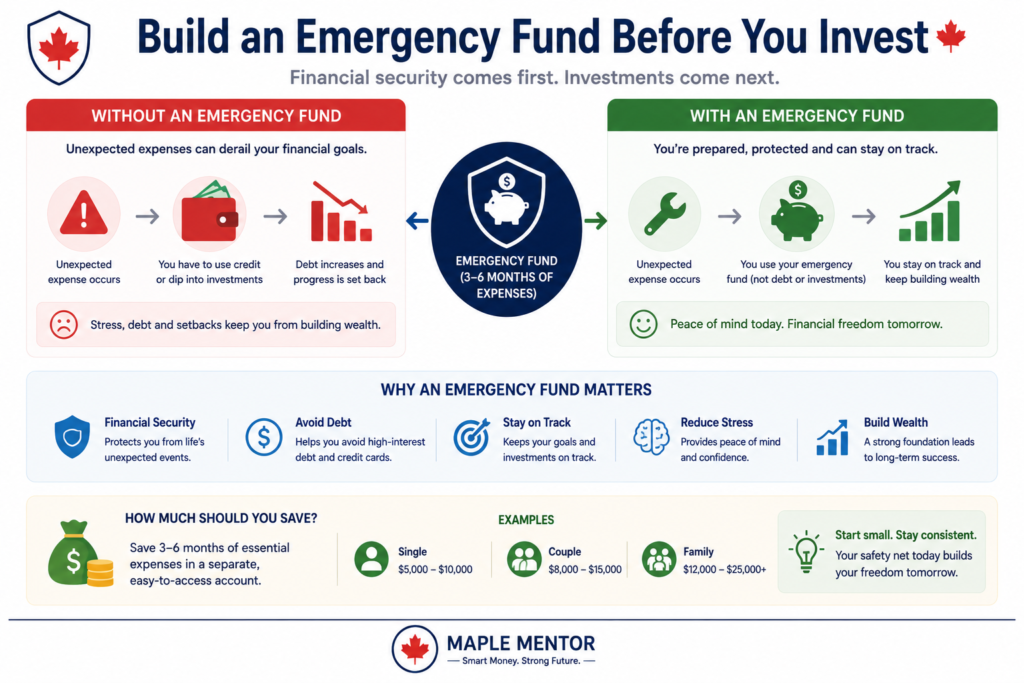
Yes, in most cases.
Why it matters
Without emergency savings, unexpected expenses often create more debt.
Recommended starting point
Aim for:
- $500 initially
- then $1,000+
Stability first
An emergency fund creates breathing room and reduces financial stress.
Build one here Best Ways to Build an Emergency Fund in Canada
If you’re struggling financially overall, also read How to Stop Living Paycheck to Paycheck in Canada and How to Save Money Fast in Canada.
According to Consumer Financial Protection Bureau emergency savings guidance, even small emergency savings improve financial resilience significantly.
Common Mistakes to Avoid
Avoiding mistakes is just as important as making good decisions.
Investing with credit card debt
High-interest debt usually destroys investment gains.
Ignoring employer match
Skipping free matching contributions is costly.
Emotional investing decisions
Fear and stress often lead to poor financial choices.
Therefore, using a clear framework helps reduce emotional mistakes.
Final Verdict
Deciding whether to pay off debt or invest in Canada depends mainly on:
- your interest rates
- financial stability
- long-term goals
In many situations:
- high-interest debt → pay off first
- low-interest debt → investing may win
- balanced strategy → best overall solution
Ultimately, consistency and smart financial habits matter more than perfection.
FAQ
Should I invest while paying off debt?
Yes, depending on the debt interest rate and your financial stability.
What debt should I pay off first?
Usually high-interest debt like credit cards or payday loans.
Is investing better than paying off a mortgage?
Sometimes, especially with low mortgage rates and long-term investing horizons.
Should I save or pay debt first?
Most Canadians should build a small emergency fund before aggressively paying debt.