
Trying to decide between saving, investing, or paying off debt in Canada? You’re not alone. Many Canadians have limited extra money each month and wonder where it should go first. While saving, investing, and debt repayment are all important, the order matters. In this guide, you’ll learn how to choose between saving, investing, and paying off debt in Canada using a simple framework that helps you build financial stability and long-term wealth.
Quick Picks
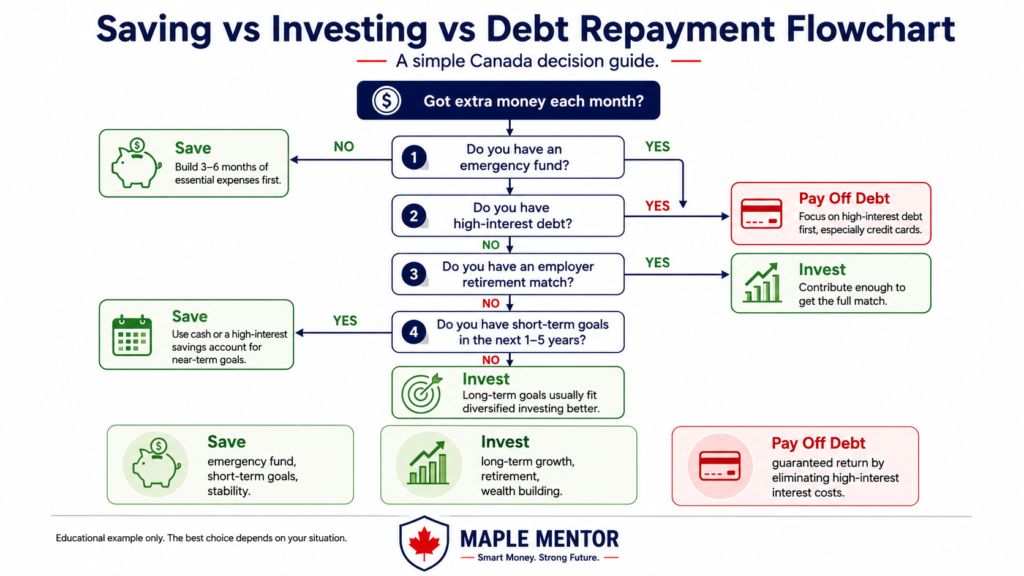
The Best Priority Order for Most Canadians
- Cover essential bills
- Build a starter emergency fund
- Pay off high-interest debt
- Take employer RRSP matching
- Build a full emergency fund
- Invest for long-term goals
- Save separately for short-term goals
For most people, following this sequence provides the best balance between security, flexibility, and long-term growth.
Why This Decision Feels Confusing
The challenge is that saving, investing, and debt repayment all feel urgent.
Saving helps you prepare for emergencies.
Investing helps you build wealth for the future.
Meanwhile, debt can drain your finances through interest charges.
Because all three goals compete for the same dollars, it’s easy to feel stuck. Furthermore, financial advice often sounds contradictory. Some experts prioritize investing, while others focus heavily on debt repayment.
The reality is that each option has its place. The key is understanding which one deserves priority right now.
The Simple Priority Order
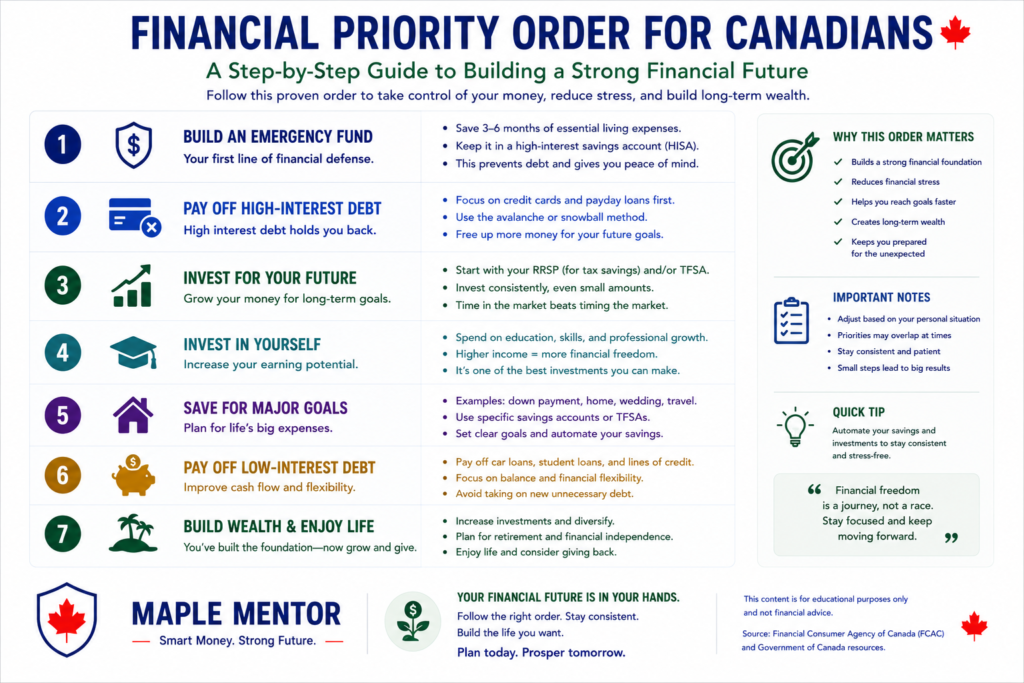
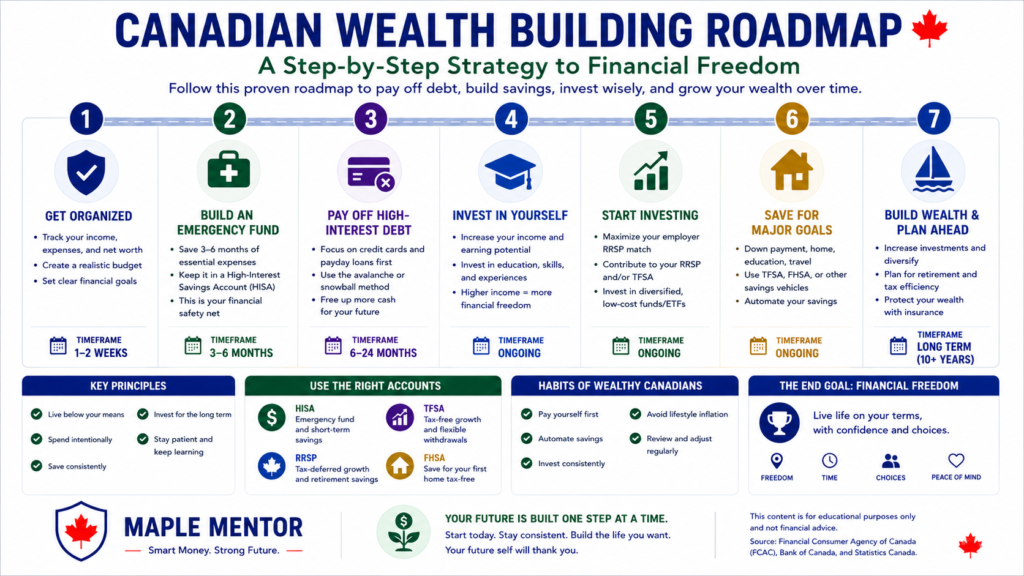
When deciding between saving, investing, or paying off debt in Canada, most Canadians can follow this order.
1. Cover Basic Bills
Before anything else, ensure you can consistently pay:
- Housing costs
- Utilities
- Groceries
- Insurance
- Transportation
Financial stability starts with covering necessities.
2. Build a Starter Emergency Fund
Aim for:
- $500 initially
- Then $1,000 as quickly as possible
This prevents small emergencies from becoming expensive debt problems.
Learn more in How Much Emergency Savings Do You Really Need in Canada?
3. Pay Off High-Interest Debt
Credit cards and payday loans often charge interest rates far higher than expected investment returns.
4. Take Employer RRSP Matching
If your employer offers matching contributions, it’s often one of the best financial opportunities available.
5. Build a Full Emergency Fund
Once expensive debt is under control, increase your emergency savings to cover 3–6 months of expenses.
Learn Where to Keep Your Emergency Fund in Canada
6. Invest for Long-Term Goals
Now you can focus more aggressively on:
- Retirement
- Financial independence
- Long-term wealth building
7. Save Separately for Short-Term Goals
Future goals may include:
- Vacations
- Home renovations
- Vehicle purchases
- Wedding expenses
When Saving Should Come First
Sometimes saving deserves priority over investing and extra debt payments.
Saving usually comes first when:
- You have no emergency fund
- Your income is unstable
- You’re self-employed
- Major expenses are likely in the near future
Without savings, even minor emergencies can force you back into debt.
As a result, building cash reserves often creates the foundation for every other financial goal.
If you’re struggling financially each month, read How to Stop Living Paycheck to Paycheck in Canada
When Paying Off Debt Should Come First
High-interest debt is often the biggest obstacle to wealth building.
Consider prioritizing debt repayment if you have:
- Credit card debt
- Payday loans
- High-interest personal loans
For example, paying off debt charging 20% interest produces a guaranteed return that few investments can consistently match.
Therefore, eliminating expensive debt is often the fastest way to improve your financial situation.
Learn practical strategies in How to Pay Off Credit Card Debt Faster in Canada
For a deeper comparison, see Should You Pay Off Debt or Invest in Canada?
When Investing Should Come First
Investing becomes more attractive under certain conditions.
You may prioritize investing when:
- You have employer RRSP matching
- Your debt carries low interest rates
- You have a stable emergency fund
- Your goals are decades away
Long-term investing benefits from compounding, which means time matters enormously.
Consequently, delaying investing for too many years can make retirement goals harder to achieve.
According to Investopedia’s guide to compound interest, compounding allows investment growth to generate additional growth over time.
Simple Comparison Table
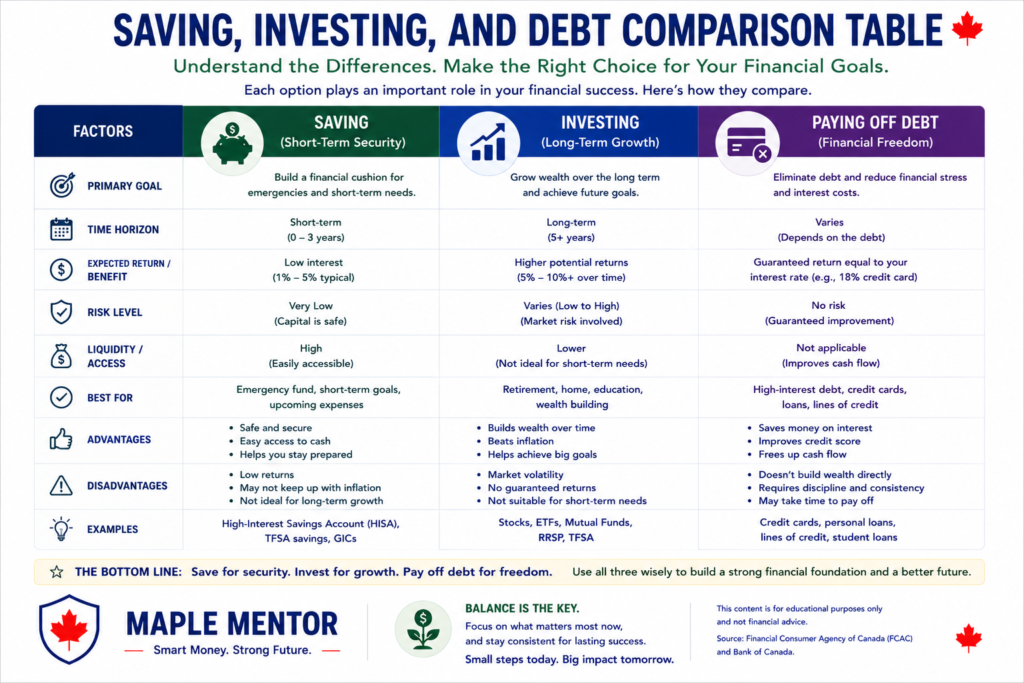
This comparison highlights why each option serves a different purpose.
Example Priority Plan
Imagine Sarah has:
- $8,000 in credit card debt
- No emergency fund
- $500 available each month
A reasonable plan might look like this:
Step 1
Build a $1,000 emergency fund.
Step 2
Direct most of the remaining cash toward credit card debt.
Step 3
Take any available employer RRSP match.
Step 4
Finish paying off the high-interest debt.
Step 5
Build a full emergency fund covering several months of expenses.
Step 6
Begin investing consistently through a TFSA or RRSP.
This approach balances protection, debt reduction, and long-term growth.
Common Mistakes to Avoid
Investing Too Early
Investing while carrying expensive credit card debt often slows overall progress.
Saving Too Much Cash
Holding excessive cash long term may reduce wealth-building opportunities.
Ignoring Debt Interest
Many Canadians underestimate how much interest costs over time.
Copying Someone Else’s Plan
Financial priorities depend on your:
- Income
- Debt level
- Family situation
- Risk tolerance
- Goals
Your strategy should reflect your circumstances, not someone else’s.
The Financial Consumer Agency of Canada budgeting resources can help you evaluate your own priorities and spending habits.
Final Answer
If you’re trying to choose between saving, investing, or paying off debt in Canada, focus on building financial stability first.
Start by covering your bills and creating a small emergency fund. Next, eliminate high-interest debt. Afterward, build larger savings and begin investing consistently for long-term goals.
While every situation is different, most Canadians will benefit from the same basic principle: create stability, remove expensive debt, and then let long-term investing work for you.
FAQ
Should I save or pay off debt first?
Start with a small emergency fund, then focus on high-interest debt.
Should I invest while I have debt?
It depends on the interest rate. Low-interest debt may coexist with investing, but high-interest debt usually deserves priority.
Should I build an emergency fund before investing?
Yes. Most financial experts recommend building at least a small emergency fund first.
Should I pay off credit card debt before investing?
In most cases, yes. Credit card interest rates are often much higher than expected long-term investment returns.