
Your savings rate in Canada may be the most important personal finance number you’ve never calculated. Canadians who build wealth quickly often focus less on income and more on the percentage of money they keep. In this guide, you’ll learn how to increase your savings rate in Canada and accelerate your financial goals.
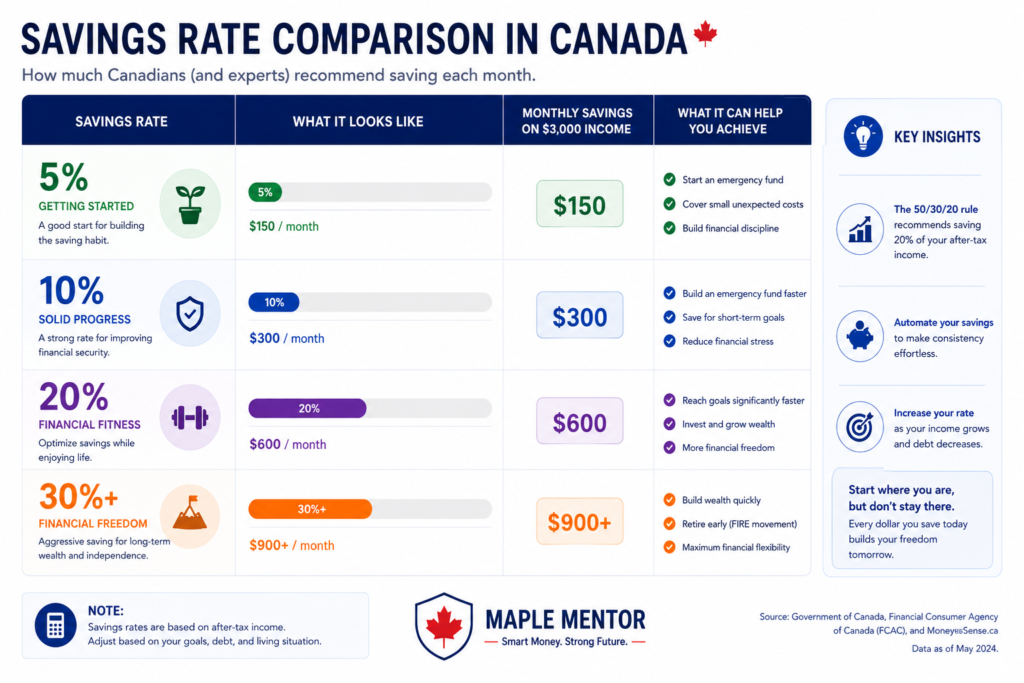
What Is a Good Savings Rate?
- 10% = Decent start
- 20% = Strong
- 30%+ = Wealth-building mode
- 50%+ = Aggressive FIRE strategy
- Key takeaway: The percentage you save often matters more than how much you earn.
What Is a Savings Rate?
Your savings rate measures how much of your income you keep instead of spend.
The Formula
Savings ÷ Income × 100 = Savings Rate
Example #1
- Monthly income: $4,000
- Monthly savings: $400
Savings rate:
$400 ÷ $4,000 × 100 = 10%
Example #2
- Monthly income: $5,000
- Monthly savings: $1,000
Savings rate:
$1,000 ÷ $5,000 × 100 = 20%
Because of its simplicity, the savings rate is one of the most useful financial metrics you can track.
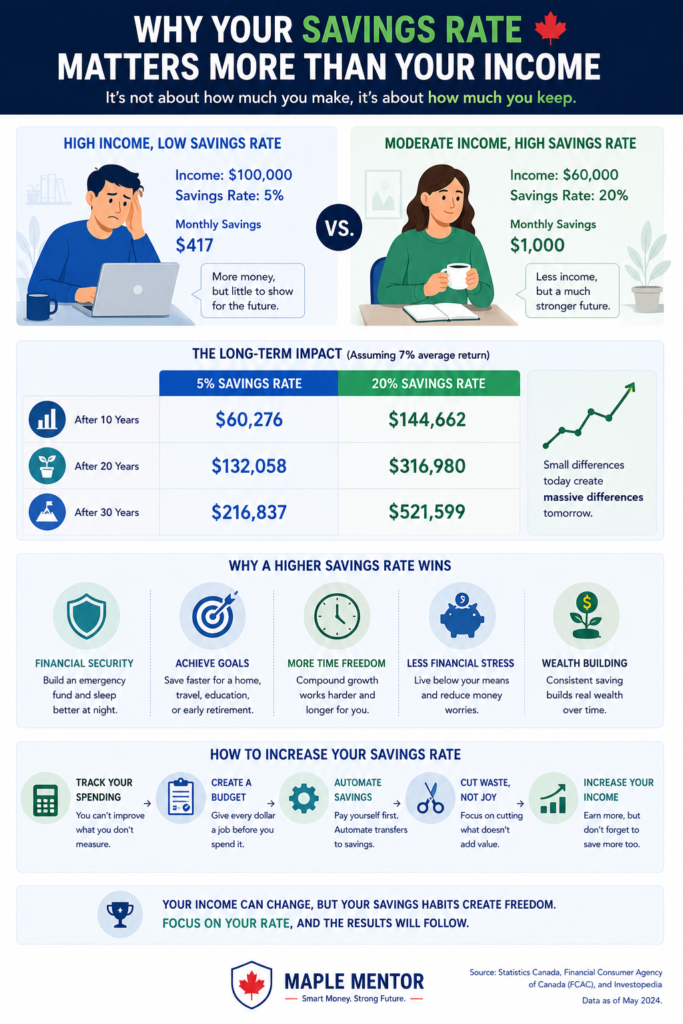
Why Savings Rate Matters More Than Income
Many people assume higher income automatically creates wealth. However, that isn’t always true.
Lifestyle Inflation
As income rises, spending often rises too.
Wealth Accumulation
The more you save and invest, the faster your wealth grows.
Flexibility
A high savings rate provides more financial options and less stress.
Learn how to avoid this trap How to Avoid Lifestyle Inflation in Canada
According to Investopedia’s lifestyle inflation guide, rising expenses often offset income growth and slow wealth building.
As a result, two people earning the same salary can have dramatically different financial outcomes.
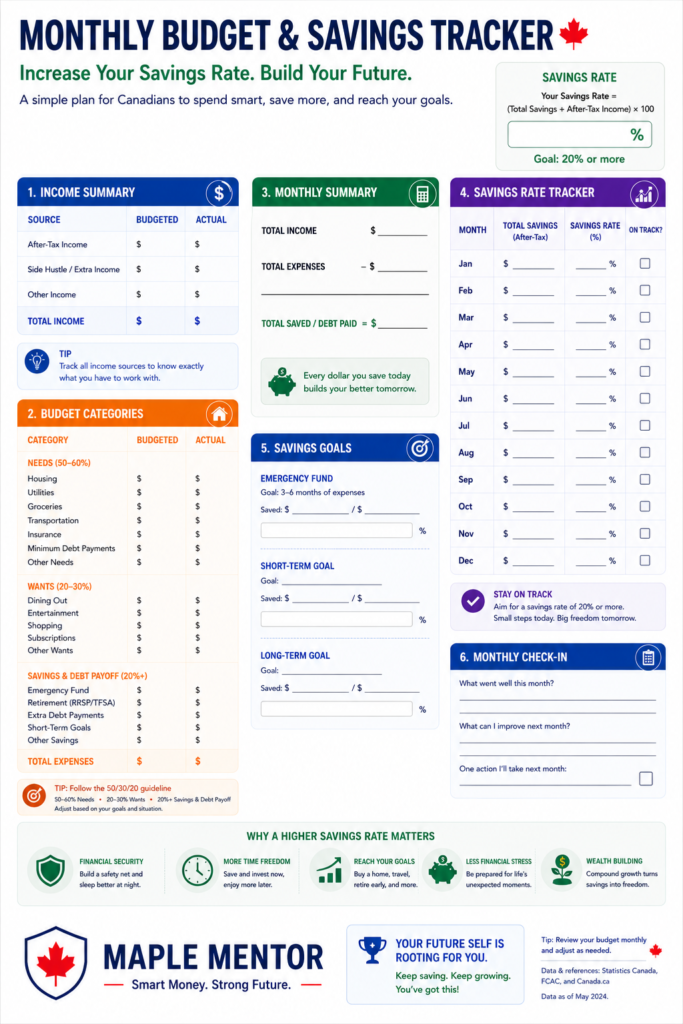
Calculate Your Current Savings Rate
Before improving your savings rate, you need to know where you stand.
Step 1 Calculate Monthly Income
Include:
- salary
- side hustle income
- government benefits
- other regular income
Step 2 Calculate Monthly Savings
Include:
- TFSA contributions
- RRSP contributions
- emergency fund deposits
- investment contributions
Step 3 Apply the Formula
Savings ÷ Income × 100
Tracking this number monthly makes progress easy to measure.
If you need a spending plan first, read How to Create a Monthly Budget in Canada
How to Increase Your Savings Rate
Improving your savings rate doesn’t necessarily require a higher income.
Reduce Expenses
Focus on the biggest categories:
- housing
- transportation
- food
Increase Income
Even modest side income can improve your savings rate significantly.
Automate Savings
Move money automatically before you have a chance to spend it.
Learn practical strategies here How to Save Money Fast in Canada
According to Consumer Financial Protection Bureau savings guidance, automated saving is one of the most effective ways to increase savings consistency.
The Biggest Savings Rate Killers
Several expenses can quietly destroy your progress.
Car Payments
Large vehicle payments often consume hundreds of dollars monthly.
Housing Costs
Housing is usually the largest expense category.
Subscriptions
Small recurring expenses accumulate surprisingly fast.
Lifestyle Creep
Gradually increasing spending after every raise slows wealth building.
Therefore, controlling these areas often produces the biggest gains.
Savings Rate and Financial Independence
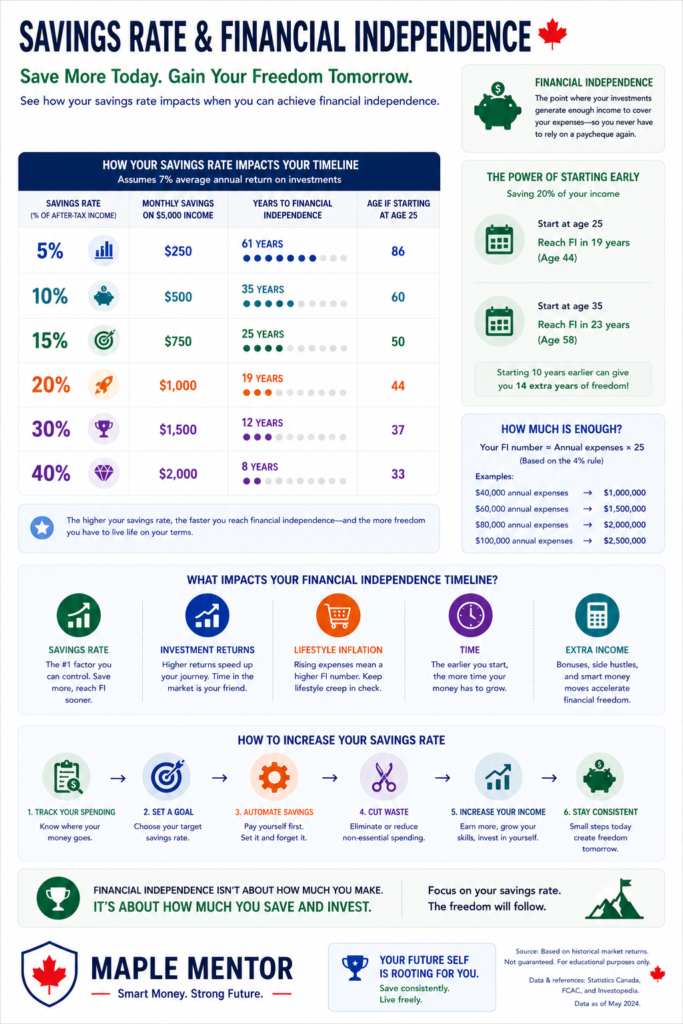
Your savings rate directly affects how quickly you can achieve financial independence.
FIRE Concept
The FIRE movement focuses heavily on maximizing savings rates.
Retirement Timeline
Higher savings rates often shorten retirement timelines significantly.
Financial Freedom
Saving more creates flexibility long before retirement.
Learn more about this strategy The FIRE Movement in Canada
According to Mr. Money Mustache’s savings rate analysis, increasing your savings rate can dramatically reduce the time needed to reach financial independence.
What Savings Rate Should Canadians Aim For?
There is no perfect number. However, some targets are more effective than others.
Beginner
10%–15%
A solid starting point.
Intermediate
20%–30%
Strong long-term wealth-building range.
Aggressive
30%–50%+
Ideal for Canadians pursuing financial independence aggressively.
Additionally, building an emergency fund first can make higher savings rates easier to maintain.
Start with a safety net How Much Emergency Savings Do You Really Need in Canada?
Final Verdict
Increasing your savings rate in Canada is one of the most effective ways to build wealth.
Remember:
- focus on percentages, not just dollars
- avoid lifestyle inflation
- automate savings whenever possible
- review progress regularly
Ultimately, consistency matters more than perfection. Small increases in your savings rate today can produce enormous results over the long term.
FAQ
What is a good savings rate in Canada?
Most financial experts consider 20% a strong target, although any positive savings rate is better than none.
How do I calculate my savings rate?
Divide your monthly savings by your monthly income, then multiply by 100.
Does income matter more than savings rate?
Income helps, but your savings rate often has a larger impact on long-term wealth building.
Can I build wealth on an average income?
Yes. Consistent saving, investing, and controlling expenses can build substantial wealth over time.