
Wondering how much emergency savings you really need in Canada? An emergency fund can protect you from job loss, unexpected bills, and financial stress. In this guide, you’ll learn how much emergency savings Canadians should aim for, how to build it faster, and where to keep your money safely.
Emergency Savings Guidelines in Canada
- Minimum goal: $1,000
- Recommended: 3–6 months of expenses
- Self-employed: 6–12 months
- Key takeaway: Start small first, then build gradually over time
What Is Emergency Savings?
Emergency savings are designed for unexpected situations only.
Emergency-only money
This fund should cover real emergencies, not vacations or impulse purchases.
Financial protection
Emergency savings reduce the need for debt during difficult periods.
Liquid cash
Your money should stay easily accessible when needed.
Because of this, emergency funds are one of the most important foundations of financial stability.
Why Emergency Savings Matter More Than Ever
Financial uncertainty has increased significantly.
Inflation
Higher living costs make unexpected expenses harder to manage.
Layoffs
Job markets can shift quickly during economic slowdowns.
Rising costs
Groceries, rent, and utilities continue to rise across Canada.
Debt prevention
Emergency savings help avoid high-interest credit card debt.
According to Statistics Canada household financial data, many Canadians remain financially vulnerable to unexpected expenses.
Therefore, building emergency savings is more important than ever.
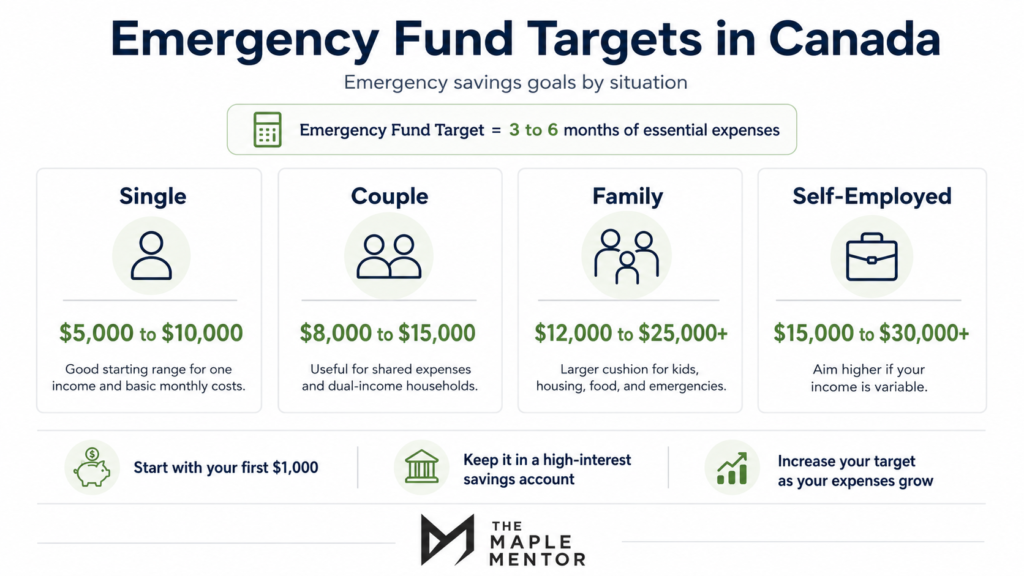
How Much Emergency Savings Do You Need?
The answer depends on your situation.
Single person
Aim for at least 3 months of expenses.
Family
Families often benefit from 6 months or more.
Homeowner
Home repairs and larger bills increase emergency costs.
Self-employed
Income variability usually requires 6–12 months of savings.
As a result, there is no universal number, but larger financial responsibilities require larger safety nets.
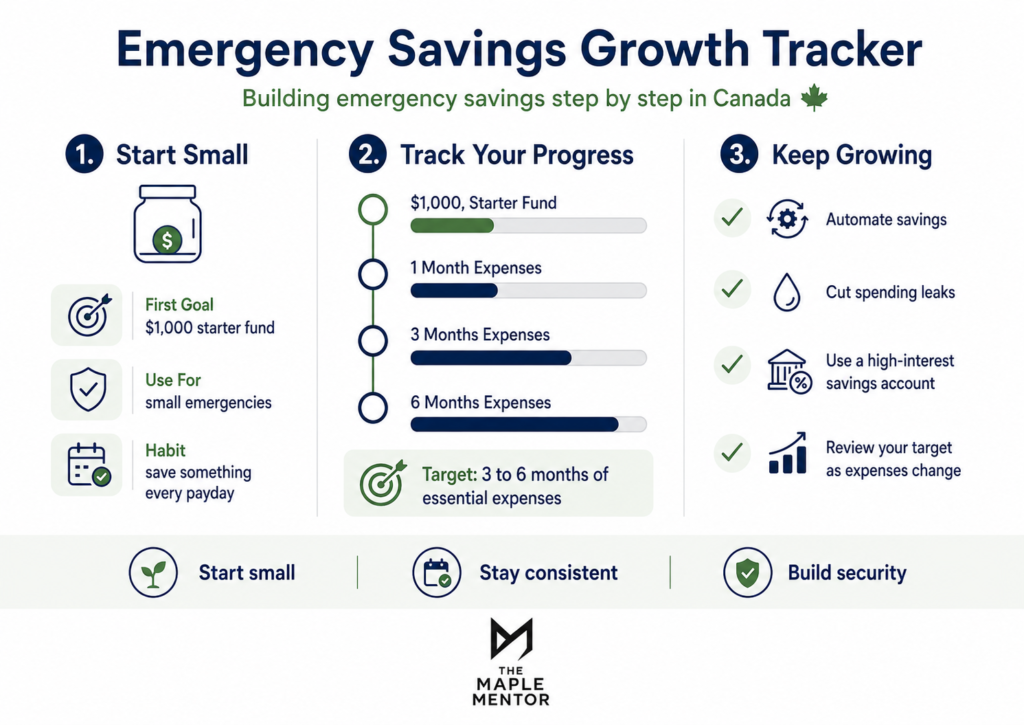
Start Small First
You do not need to build everything immediately.
First $500
This covers many common emergencies.
Then $1,000
A strong starting emergency buffer.
Gradual growth
Build consistently instead of trying to save everything at once.
Trying to save faster? Read How to Save Money Fast in Canada
Because of this approach, building emergency savings feels far more manageable.
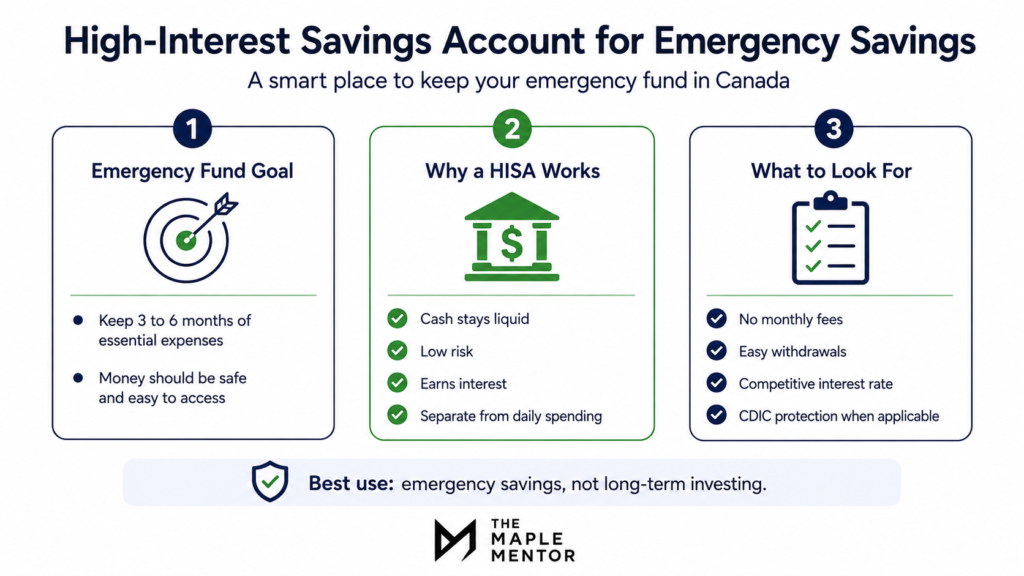
Where Should You Keep Emergency Savings?
Accessibility matters more than maximizing returns.
HISA
High-interest savings accounts are ideal for emergency funds.
No-fee savings accounts
Avoid unnecessary banking fees whenever possible.
Avoid investing emergency funds
Market volatility makes investments unsuitable for emergency savings.
Compare accounts Best High-Interest Savings Accounts in Canada
According to Investopedia’s emergency fund guide, emergency savings should remain liquid and low risk.
How to Build Emergency Savings Faster
Speed matters when you’re financially vulnerable.
Automate savings
Automatic transfers create consistency.
Reduce expenses
Small spending cuts free up cash quickly.
Side hustles
Extra income accelerates savings growth.
Increase income Best Online Side Hustles in Canada
If you’re struggling financially overall, also read How to Stop Living Paycheck to Paycheck in Canada.
As a result, combining savings habits with income growth produces the fastest progress.
Common Emergency Fund Mistakes
Avoid these common issues.
Investing emergency savings
Emergency funds should not fluctuate with the market.
Keeping too little
Tiny emergency funds often disappear quickly.
Spending it on non-emergencies
Protect the fund for genuine emergencies only.
Therefore, clear boundaries are essential.
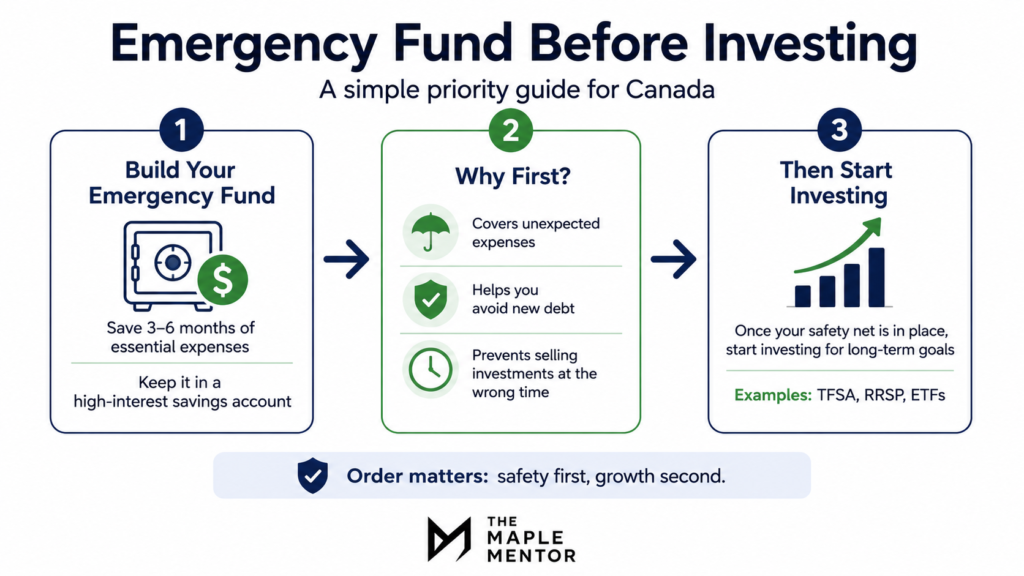
Emergency Fund vs Investing
Both are important, but order matters.
Stability first
Emergency savings reduce financial stress and risk.
Investing later
Once your emergency fund is stable, long-term investing becomes easier.
Start investing after saving How to Invest $100 Per Month in Canada
According to Consumer Financial Protection Bureau emergency savings guidance, even small emergency savings significantly improve financial resilience.
Final Verdict
Emergency savings are not about perfection.
Instead:
- start small
- stay consistent
- build gradually over time
Ultimately, emergency funds reduce stress, prevent debt, and create financial stability.
FAQ
How much emergency savings should I have in Canada?
Most Canadians should aim for 3–6 months of expenses.
Where should I keep my emergency fund?
A high-interest savings account is usually the best option.
Should I invest my emergency savings?
No. Emergency funds should stay liquid and low risk.
How fast should I build an emergency fund?
Focus on consistency first, then increase contributions over time.