
Disclosure: This post may contain affiliate links. We may earn a commission if you sign up through our links, at no extra cost to you.

Many Canadians believe RRSPs are completely tax-free.
They aren’t.
The key idea behind RRSP taxes explained for Canadians is simple: RRSPs provide tax deferral, not tax elimination. You receive a tax break today, but taxes apply later when money is withdrawn.
Once you understand this system, RRSPs become one of the most powerful retirement planning tools available in Canada.
Let’s break it down clearly.
Why Canadians Misunderstand RRSP Taxes
RRSP confusion usually comes from one misconception:
A tax refund feels like free money.
In reality, the refund is simply delayed taxation.
You postpone taxes during your working years and ideally pay them later when your income, and tax rate, are lower.
Understanding this principle is the foundation of RRSP taxes explained for Canadians.
What Is an RRSP? (Quick Overview)
Registered Retirement Savings Plan
An RRSP is a government-registered investment account designed for retirement savings.
Tax-deductible contributions
Money contributed reduces your taxable income.
Retirement focus
Funds grow tax-deferred until retirement withdrawals begin.
According to CRA RRSP overview, RRSPs encourage long-term retirement saving through tax incentives.
How RRSP Contributions Reduce Taxes
This is where RRSPs shine.
Tax deduction explained
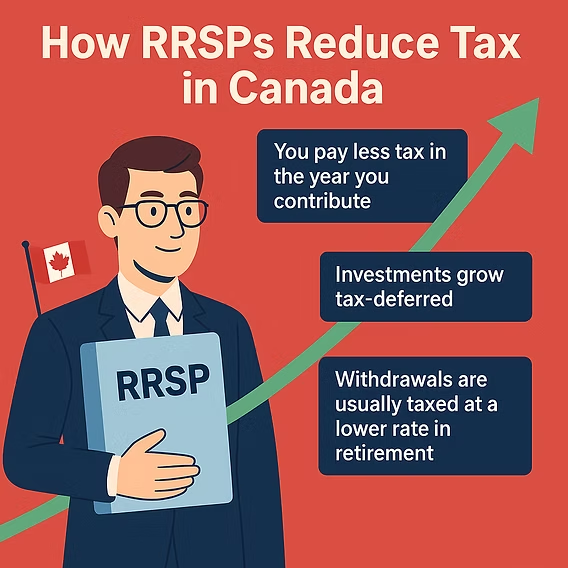
RRSP contributions reduce your taxable income for the year.
Example:
- Income: $80,000
- RRSP contribution: $10,000
- New taxable income: $70,000
Marginal tax rate impact
The higher your tax bracket, the larger the benefit.
Refund example
At a 35% marginal rate, a $10,000 contribution may generate roughly a $3,500 refund.
TFSA vs RRSP vs FHSA explains when deductions are most valuable.
For deeper tax mechanics, see Investopedia’s marginal tax rate explanation.
RRSP Contribution Limits (2026)
Contribution rules prevent overuse of tax deductions.
18% of income rule
Annual contribution room equals 18% of earned income from the previous year.
Annual maximum
The government sets a yearly dollar cap.
Carry-forward room
Unused contribution room carries forward indefinitely.
You can confirm room directly through your CRA My Account.
Understanding limits is essential when learning RRSP taxes explained for Canadians.
How RRSP Investments Are Taxed
Inside an RRSP, investments grow without annual taxation.
No tax on growth inside
Capital gains accumulate tax-deferred.
No tax on dividends inside
Dividend income is not taxed annually.
Tax deferred until withdrawal
Taxes apply only when funds leave the account.
This allows faster compounding compared to taxable accounts.
According to Investopedia’s tax-deferred investing explanation , deferred taxation significantly boosts long-term growth potential.
What Happens When You Withdraw From an RRSP?
Withdrawals are where taxes return.
Fully taxable as income
Every dollar withdrawn counts as income.
Withholding tax rates
Financial institutions withhold tax immediately:
- 10%–30% depending on amount withdrawn (outside Quebec rates differ slightly)
Early withdrawal consequences
Withdrawals before retirement:
- Trigger taxes
- Permanently lose contribution room
- May increase benefit clawbacks
Therefore, RRSPs work best as long-term accounts.
RRSP vs RRIF Taxes in Retirement
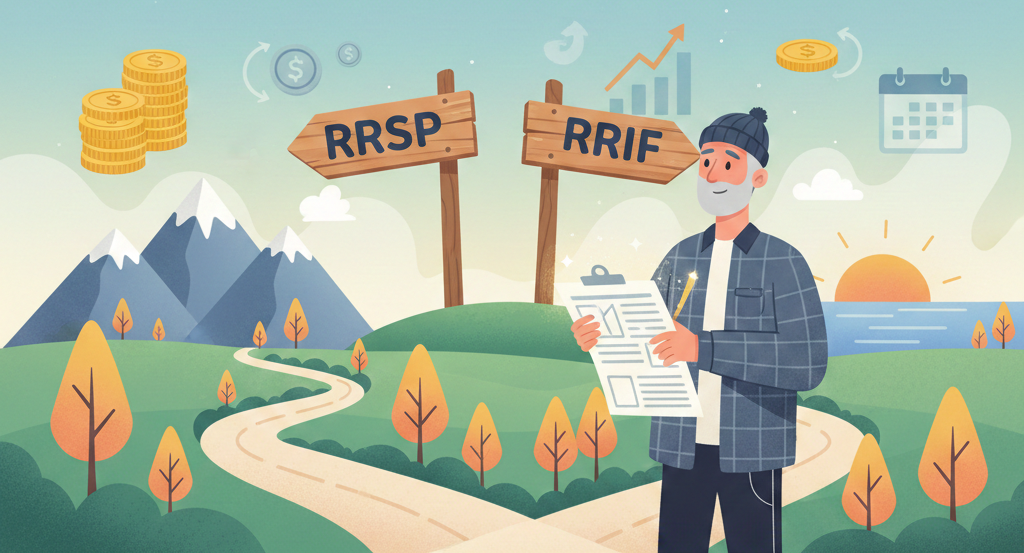
Eventually, RRSPs must transition.
Mandatory conversion
By December 31 of the year you turn 71, RRSPs must convert into a RRIF.
Minimum withdrawals
RRIFs require annual minimum withdrawals.
Retirement income taxation
Withdrawals remain taxable income each year.
Retirement Income Strategy explains how to manage retirement withdrawals efficiently.
The CRA outlines rules in RRIF withdrawal requirements.
RRSP Tax Strategy by Income Level
Not everyone benefits equally from RRSPs.
Low-income earners
Often better prioritizing TFSA contributions first.
Middle-income earners
Balanced TFSA + RRSP strategy works well.
High-income earners
RRSP deductions become extremely valuable due to higher marginal tax rates.
Matching account choice to income level is a major part of RRSP taxes explained for Canadians.
RRSP vs TFSA Tax Comparison
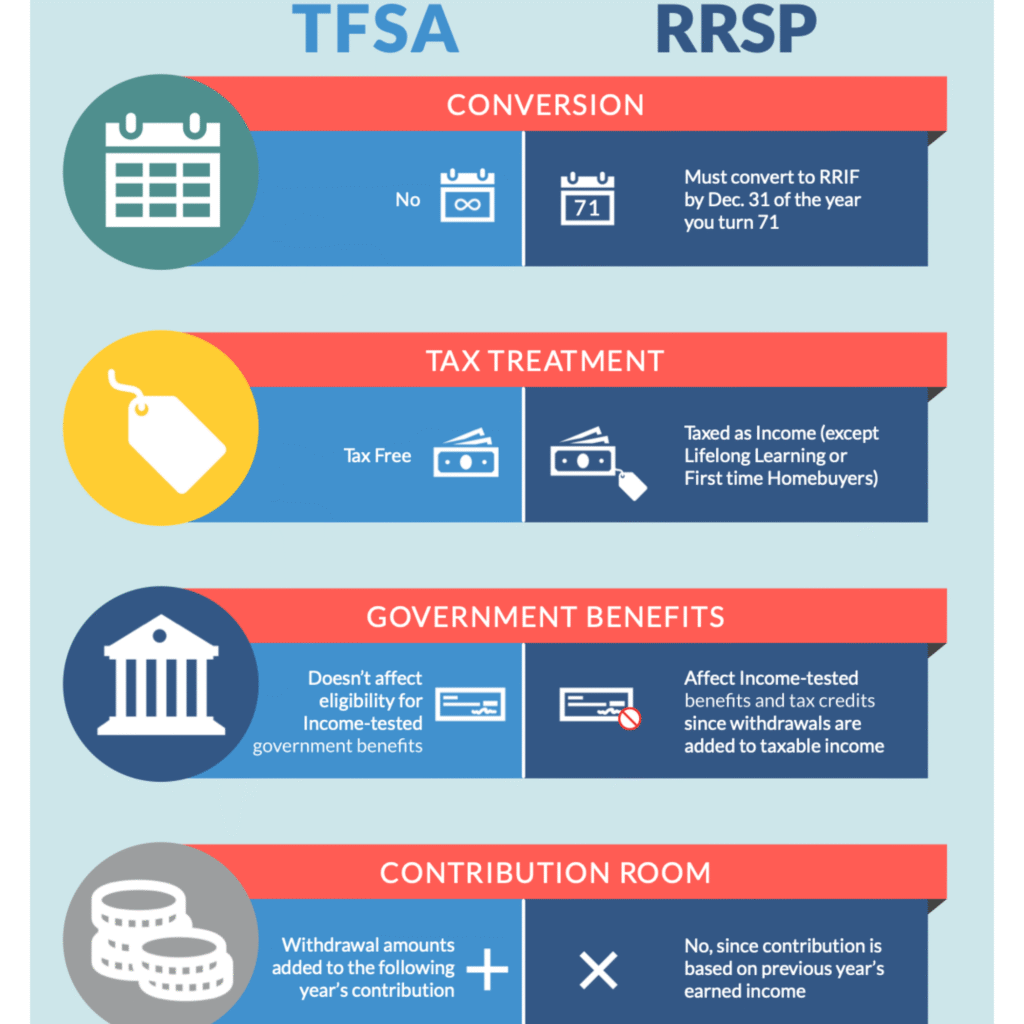
The core difference:
Tax today vs tax later
- RRSP → tax deduction now, tax later
- TFSA → no deduction now, no tax later
When RRSP wins
- High income today
- Lower income expected in retirement
When TFSA wins
- Lower income today
- Desire for flexibility
TFSA Taxes Explained compares both accounts in depth.
Common RRSP Tax Mistakes
Many Canadians unintentionally reduce RRSP benefits.
Over-contributing
Exceeding limits triggers penalties.
Withdrawing early
Creates unnecessary tax bills.
Ignoring withholding tax
Refund expectations often surprise investors.
Poor timing
Contributing during low-income years reduces benefits.
Avoiding these errors strengthens your long-term plan.
RRSP Optimization Strategy
A simple rule often works best.
Contribute at a high tax bracket
Maximize deductions when income peaks.
Withdraw at a lower tax bracket
Retirement withdrawals ideally occur at reduced income levels.
Use strategically
RRSPs are powerful when coordinated with TFSAs and pensions.
This strategic timing is the essence of RRSP taxes explained for Canadians.
RRSP Tax Checklist
Before contributing or withdrawing, confirm:
✅ Check contribution room
✅ Understand your marginal tax rate
✅ Plan withdrawal timing
✅ Avoid overcontribution penalties
When used correctly, RRSPs become a long-term tax optimization tool rather than just a savings account.
Frequently Asked Questions
Are RRSP withdrawals taxed?
Yes. All withdrawals count as taxable income.
Why do I receive a tax refund after contributing?
Because contributions reduce taxable income.
Should I use RRSP or TFSA first?
It depends primarily on your income level.
Can I hold ETFs in an RRSP?
Yes, and many Canadians do.