
Disclosure: This post may contain affiliate links. We may earn a commission if you sign up through our links, at no extra cost to you.

Most Canadians are confused about this.
Some say “invest early.” Others say “kill your debt first.”
So what actually works?
The truth is simple: it depends on the numbers, not opinions.
In this guide, you’ll get a clear, numbers-based answer to the question: should you invest or pay off debt in Canada, and exactly what strategy wins in real life.
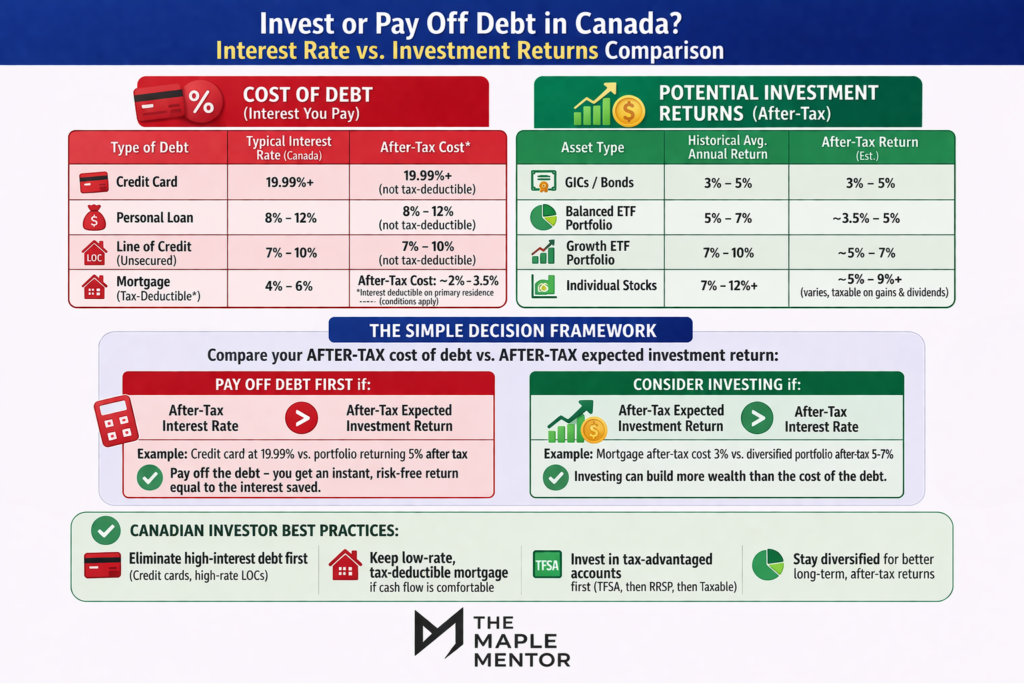
The Real Question: Interest vs Returns
This is the core framework.
Debt = guaranteed negative return
If your debt costs 10%, you are losing 10% every year, guaranteed.
Investing = uncertain positive return
Markets historically return around 6–8%, but nothing is guaranteed.
According to Investopedia’s expected return explanation, investment returns are always uncertain, while debt interest is fixed.
So the real question becomes:
Is your debt costing more than your investments are likely to earn?
That’s how you decide whether to invest or pay off debt in Canada.
When You Should Pay Off Debt First
In some cases, the answer is obvious.
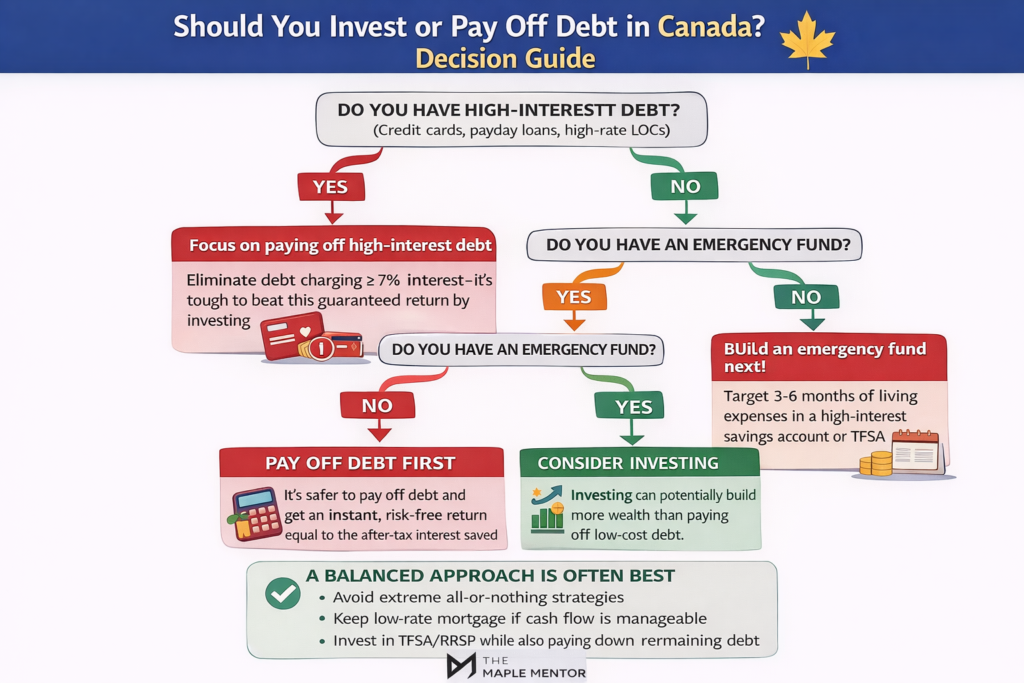
High-interest debt
Credit cards, payday loans, or anything above ~8–10%.
Interest > expected returns
If your debt costs more than the market typically returns, pay it off.
Emotional stress / cash flow pressure
If debt is affecting your life, eliminate it first.
If you’re dealing with credit-related debt, consider reviewing Best Credit Cards for Beginners in Canada or optimizing rewards with Best Cash-Back Credit Cards in Canada to reduce long-term costs.
Bottom line: high-interest debt kills wealth. Eliminate it first.
When You Should Invest Instead
Now the opposite scenario.
Low-interest debt
Student loans, mortgages, or low-rate financing.
Stable income
You can comfortably manage payments.
Long-term horizon
You’re investing for years, not months.
In this case, investing often wins.
To get started, read How to Invest in Stocks in Canada with Little Money, then build a portfolio using Best ETFs for Canadian Investors.
Historically, markets tend to outperform low-interest debt over time.
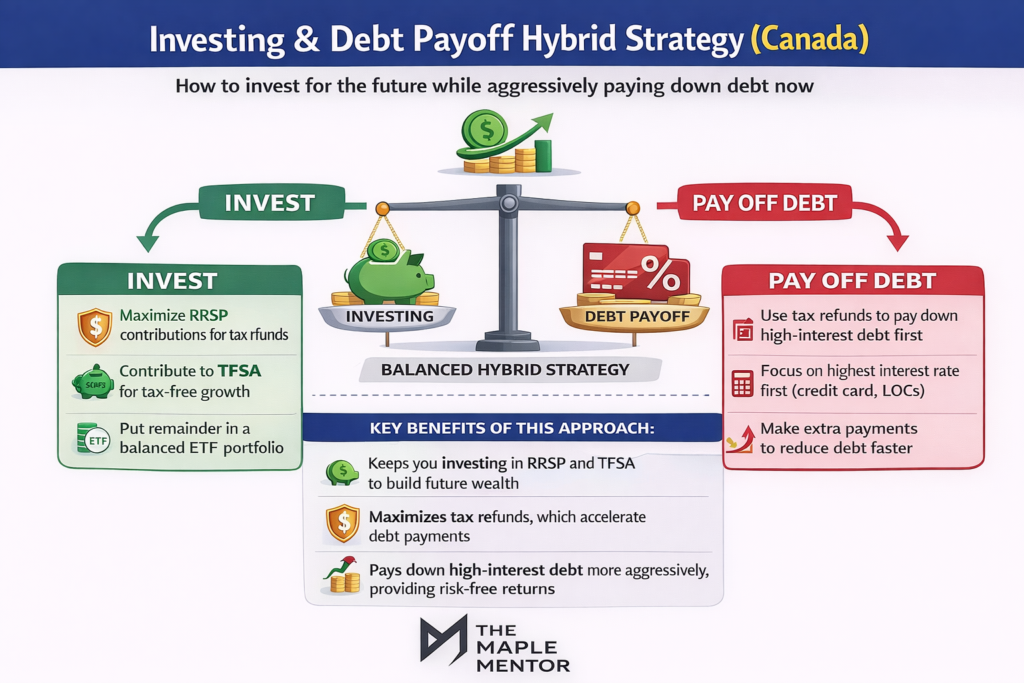
The Hybrid Strategy (THIS IS THE WINNER)
This is what most people miss.
You don’t have to choose one or the other.
Pay minimum debt
Stay on track with required payments.
Invest simultaneously
Start building your portfolio immediately.
Optimize cash flow
Split your monthly money between both.
This strategy balances:
- risk
- growth
- financial flexibility
For most Canadians, this is the best answer to should you invest or pay off debt in Canada.
Real Example (IMPORTANT FOR TRUST)
Let’s break it down.
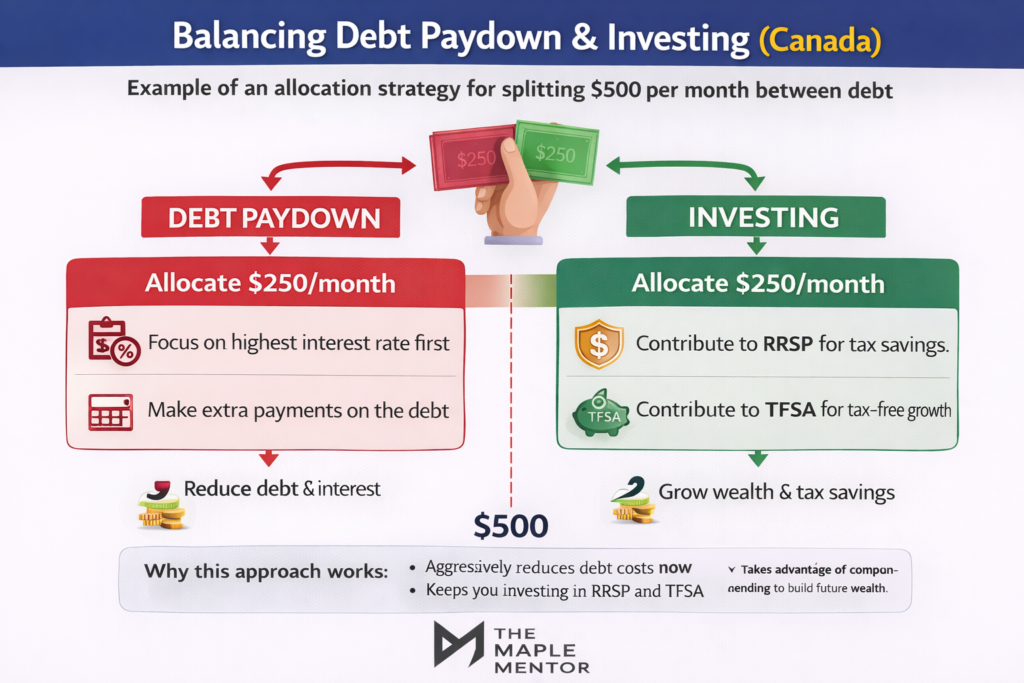
Scenario
- $10,000 debt at 5%
- $500/month available
Option 1: All debt payoff
- Faster debt elimination
- No investing growth
- Missed compounding time
Option 2: All investing
- Maximum market exposure
- Debt continues costing 5%
- Higher risk
Option 3: Hybrid approach
- $250 to debt
- $250 invested
Result
- Debt decreases steadily
- Investments grow simultaneously
- Balanced outcome
In most realistic scenarios, the hybrid strategy offers the best long-term outcome.
Psychological Factor (Underrated but Critical)
Math matters, but behavior matters more.
Stress matters
High debt can create anxiety.
Discipline matters
If you can’t stick to investing, the strategy fails.
Behavior > math
The best strategy is the one you can follow consistently.
According to Investopedia’s behavioral finance overview, emotions often have a bigger impact than logic in financial decisions.
Common Mistakes Canadians Make
Avoid these traps.
Investing while holding 20% debt
This destroys your financial progress.
Waiting too long to invest
Delays compounding and long-term growth.
Ignoring inflation
Holding too much cash reduces purchasing power.
All-or-nothing thinking
You don’t need to choose just one path.
Understanding these mistakes helps you make better decisions.
Final Strategy (Simple Rules)
If you want a clear framework, use this:
8%+ interest → Kill debt
Guaranteed return beats investing.
<5% interest → Invest
Market returns likely outperform.
5%–8% → Hybrid
Balance both strategies.
This is the simplest way to decide whether to invest or pay off debt in Canada.
FAQ
Should I invest if I have debt in Canada?
Yes, if your debt is low-interest and manageable.
Is it better to pay off credit cards or invest?
Always pay off credit cards first due to high interest.
What about mortgages?
Mortgages are usually low-interest, so investing often makes more sense long term.