
Disclosure: This post may contain affiliate links. We may earn a commission if you sign up through our links, at no extra cost to you.
One of the most common questions Canadians ask when starting to invest is:
“How much should I be investing each month?”
The truth is, most people get stuck here because they’re looking for the perfect number. In reality, investing success has far more to do with consistency than perfection. This guide breaks down how much Canadians should realistically invest each month in 2026, based on income, goals, and life stage.
Is There a “Right” Amount to Invest Each Month?
There’s no universal dollar amount that works for everyone.
How much you invest depends on:
- Your income
- Your cost of living
- Your financial goals
- Where you are in life
What matters most early on isn’t the amount, it’s building the habit. Even small, regular contributions can compound into meaningful wealth over time.
The Simple Rule Most Canadians Can Follow
Instead of focusing on a fixed dollar amount, many investors follow a percentage-based rule.
Why percentages work better:
- They scale as your income grows
- They adjust automatically if income drops
- They remove pressure to “hit a number”
For many Canadians, investing 10–20% of income over time is a strong long-term target. Beginners often start lower and increase gradually.
How Much to Invest Based on Income (Examples)
Here’s how monthly investing might look at different income levels.
Lower income or early career
- Focus on consistency
- Start with $50–$100/month
- Increase when income rises
Average income
- $100–$300/month is common
- TFSA contributions first
- Automation is key
Higher income
- $500+/month becomes realistic
- Combine TFSA and RRSP
- Increase contributions annually
Variable income or self-employed
- Invest during strong months
- Use averages instead of fixed amounts
- Avoid stopping completely
Beginner Monthly Investing Benchmarks
These benchmarks help set expectations, not pressure.
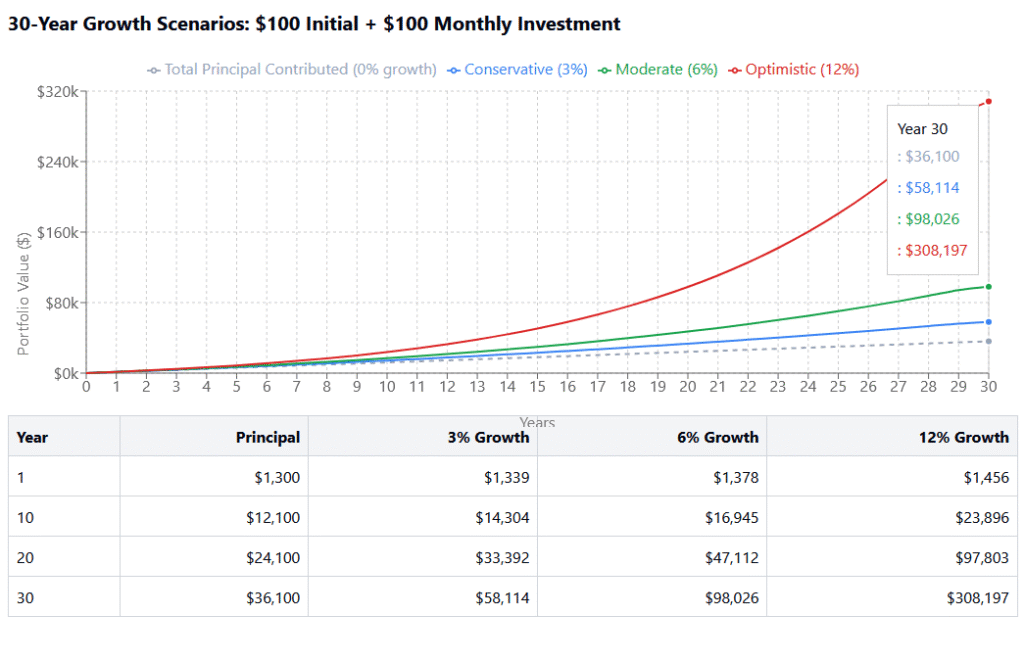
- $50/month → builds the habit and confidence
- $100/month → meaningful long-term growth over decades
- $250/month → accelerates compounding noticeably
- $500+/month → strong wealth-building pace
Even $50/month invested consistently can outperform someone who waits years to “start properly.”
Where Should Monthly Investments Go First?
For most Canadians, the order is simple.
Start with a TFSA, then expand as income grows.
When income rises, RRSPs become more useful.
If you’re buying your first home, an FHSA may take priority.
This decision is explained clearly in TFSA vs RRSP vs FHSA, but beginners almost always start with a TFSA.
Best Investments for Monthly Contributions
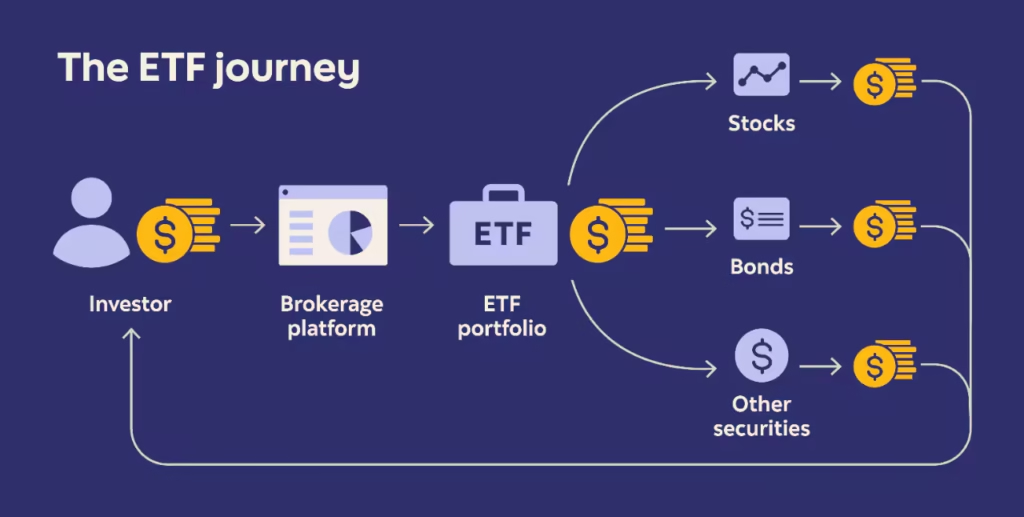
Monthly investing works best with simple, diversified investments.
Many beginners use broad-market ETFs from providers like Vanguard Canada or iShares Canada, because they offer low fees and instant diversification.
If you want guidance on choosing funds, Best ETFs for Beginners in Canada walks through beginner-friendly options.
For hands-off investors, automated platforms covered in Best Robo-Advisors in Canada handle monthly contributions, rebalancing, and risk management automatically.
Platforms such as Wealthsimple and Questrade allow recurring monthly investments, which removes friction and keeps you consistent.
Monthly Investing Example (Realistic Scenario)
Imagine a Canadian who starts investing $150/month at age 25.
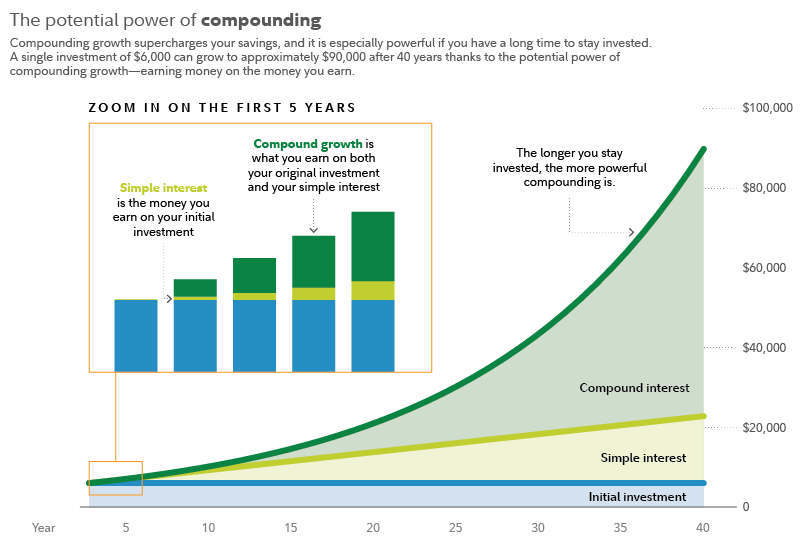
If they increase contributions by just 5% per year, that habit can grow into hundreds of thousands of dollars over a working lifetime, without needing massive income jumps.
The power comes from time + consistency, not big one-time investments.
What If You Can’t Invest Every Month?
Life happens, and that’s okay.
Missing a month doesn’t break your plan. What matters is avoiding all-or-nothing thinking. If income is irregular, invest when you can and resume automation when possible.
Progress is measured over years, not months.
Common Monthly Investing Mistakes
Canadians often slow themselves down by:
- Waiting for “extra money”
- Stopping contributions during market drops
- Changing strategies too often
- Comparing their pace to others
Markets reward patience, not comparison.
Final Takeaway
If you remember one thing, let it be this:
Start small.
Increase gradually.
Automate everything.
Review once per year, not every month.
Set up an automatic monthly investment today, even if it’s small. Consistency today beats perfection tomorrow.
FAQ Monthly Investing in Canada
Is $100 per month enough to invest?
Yes. Over time, consistency matters far more than the starting amount.
Should I wait until I earn more to invest?
No. Start now and increase contributions as income grows.
Is it bad to skip months?
Occasionally skipping is fine. Quitting entirely is the real risk.
Should I change my amount every year?
Yes. small annual increases make a big long-term difference.