
Disclosure: This post may contain affiliate links. We may earn a commission if you sign up through our links, at no extra cost to you.

The First Home Savings Account (FHSA) is one of the best tools Ottawa has ever created for young Canadians. Yet, most people either ignore it or use it poorly.
In this guide, you’ll learn a clear FHSA investing strategy for first-time buyers in Canada, how to combine it with your TFSA and RRSP, and how to avoid costly mistakes that delay home ownership.
If you’re serious about buying your first home, this FHSA investing strategy in Canada can easily save you tens of thousands of dollars over time.
What Is an FHSA? (Plain English Explanation)
Let’s start simple.
Tax-deductible contributions
Money you put into an FHSA reduces your taxable income, just like an RRSP.
Tax-free withdrawals
When you use the funds to buy your first home, withdrawals are completely tax-free, like a TFSA.
Who qualifies
You must be:
- A Canadian resident
- At least 18
- A first-time home buyer (with some look-back rules)
Lifetime limits
- $8,000 per year
- $40,000 lifetime maximum
According to CRA FHSA guidelines, unused room carries forward, similar to a TFSA.
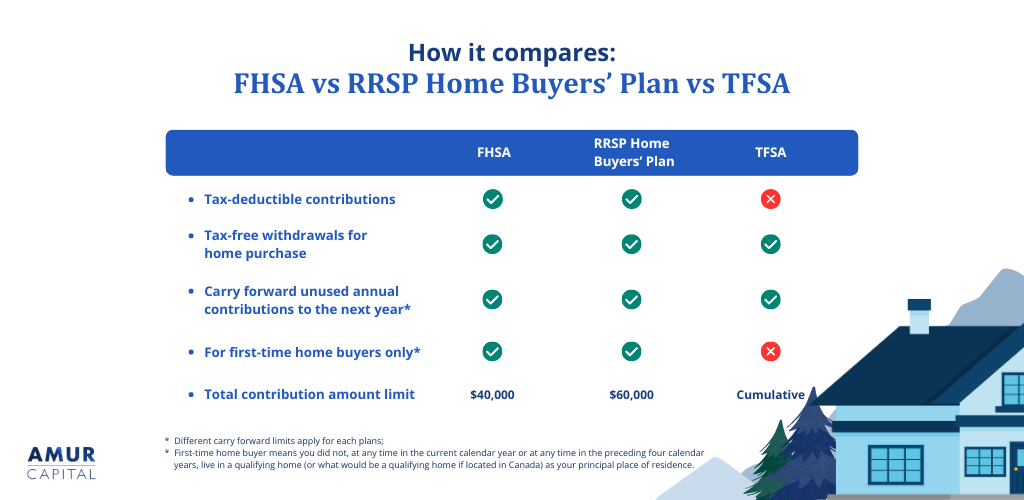
FHSA vs TFSA vs RRSP for Home Buyers in Canada
Choosing the right account matters as much as choosing investments.
When FHSA wins
The FHSA gives you both tax deduction and tax-free withdrawal, which no other account offers.
When TFSA is better
If you may need flexibility or emergency access, the TFSA works better.
When RRSP + HBP works
The RRSP Home Buyers’ Plan allows borrowing up to $35,000, but you must repay it.
TFSA vs RRSP vs FHSA explains how to coordinate all three.
For deeper tax comparisons, Wealthsimple FHSA guide is a solid reference.
Best FHSA Investing Strategy for Beginners in Canada
This is where most people go wrong.
Prioritize FHSA early
If buying a home is your main goal, the FHSA should often come before extra TFSA investing.
Avoid holding cash too long
Leaving money in cash for years kills purchasing power.
Simple ETF approach
A small set of diversified ETFs is usually enough.
Risk management
As your purchase date gets closer, reduce risk gradually.
A good FHSA investing strategy for first-time buyers balances growth early and safety later.
Best Investments to Hold in an FHSA (Canada)
Your timeline determines your asset mix.
Conservative ETFs
Best for buyers within 2–3 years.
Balanced ETFs
Ideal for 3–7 year timelines.
Cash + short-term bonds
Useful in the final year before buying.
What NOT to hold
Avoid:
- Individual stocks
- Crypto
- Leveraged ETFs
- Speculative themes
Best ETFs for Beginners (2026) helps you start safely.
Best Canadian ETFs for Long-Term Growth (2026) explains growth options for longer timelines.
For ETF construction basics, Vanguard asset allocation research is authoritative.
How Much Should You Contribute to an FHSA?
Annual vs lifetime limits
- Max $8,000 per year
- Max $40,000 total
Try to use room early if possible.
Matching savings to timeline
Short timeline = lower risk
Long timeline = more growth
Combining with TFSA
Many buyers split savings between FHSA and TFSA for flexibility.
How Much Should You Invest Each Month in Canada? helps you set realistic targets.
FHSA Example: Realistic First-Time Buyer Scenario (Canada)
Let’s look at a practical case.
Profile
- Age: 25
- Goal: Buy at 33
- Timeline: 8 years
Monthly contributions
- $500/month into FHSA
- Maxes out yearly room
Expected growth
With balanced ETFs and modest returns, this can grow to $55,000–$65,000 tax-free.
That’s a serious down payment boost.
This is the power of a disciplined FHSA investing strategy in Canada.
FHSA Withdrawal Rules for First-Time Buyers (Important)
This section is critical.
Qualifying home
The home must be in Canada and intended as your primary residence.
Timing rules
You must withdraw within specific windows around purchase.
Penalties to avoid
Non-qualifying withdrawals are taxable and may lose room permanently.
Always double-check with CRA FHSA withdrawal rules before pulling funds.
Common FHSA Investing Mistakes in Canada
Waiting too long
Delaying FHSA contributions wastes free tax benefits.
Over-investing
Too much risk close to purchase can destroy your down payment.
Ignoring deadlines
Missing contribution or withdrawal timelines is costly.
Using the wrong account
Some buyers load TFSAs first when FHSA should come earlier.
FHSA + Investing Roadmap for First-Time Buyers
Here’s a clean timeline.
Before buying
- Open FHSA early
- Invest for growth
- Automate contributions
During saving
- Gradually reduce risk
- Track contribution room
After purchase
- Shift focus back to TFSA and RRSP
- Resume long-term investing
This roadmap keeps your FHSA investing strategy for first-time buyers in Canada aligned with real life.

Final FHSA Checklist for Beginners
Before you move on, make sure you’ve done this:
- Open an FHSA
- Choose a low-fee platform
- Pick diversified ETFs
- Automate contributions
- Review once per year
Simple systems win.
Frequently Asked Questions
Is an FHSA better than a TFSA for buying a home?
Usually yes, if you qualify and plan ahead.
Can I invest aggressively in an FHSA?
Yes early on, but reduce risk closer to purchase.
What happens if I never buy a home?
Your FHSA converts to an RRSP later.
Can couples both use an FHSA?
Yes, each eligible person gets their own limits.