
Disclosure: This post may contain affiliate links. We may earn a commission if you sign up through our links, at no extra cost to you.
Exchange-Traded Funds (ETFs) have become one of the most popular investments for Canadians. They offer diversification, low fees, and simple long-term investing.
However, many investors still struggle to understand ETF taxes in Canada.
The confusion usually comes from the different types of taxes that can apply, depending on the account you use and the type of income your ETF generates.
In this guide, we’ll break down ETF taxes in Canada clearly so you know exactly what gets taxed and how to invest more efficiently.
What Is an ETF?
Exchange-Traded Fund
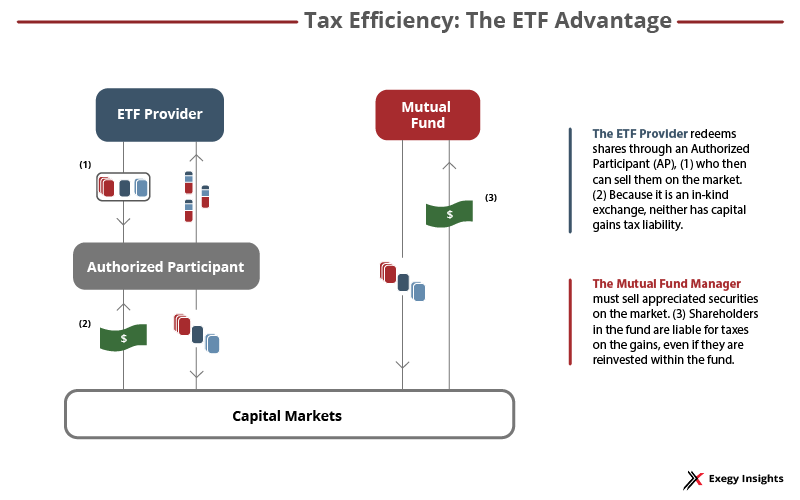
An ETF is an investment fund that trades on a stock exchange, similar to a stock.
Diversified investment
Most ETFs hold dozens, hundreds, or even thousands of securities in a single fund.
Popular for long-term investing
Because of low fees and broad diversification, ETFs are widely used for long-term portfolios.
See Best ETFs for Canadian Investors for more details.
According to Investopedia’s ETF definition and overview, ETFs combine diversification with the flexibility of stock trading.
Understanding the structure of ETFs is important before learning how ETF taxes in Canada work.
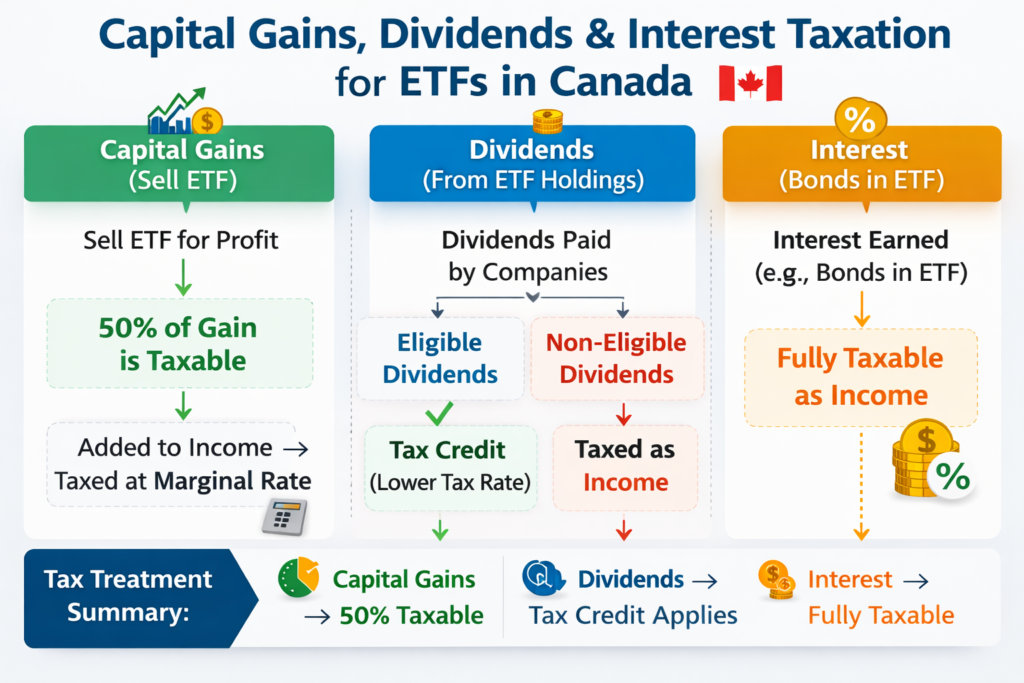
The 3 Ways ETFs Are Taxed in Canada
ETFs can generate three types of taxable investment income.
Capital gains
Capital gains occur when you sell an ETF for more than you paid.
Only 50% of capital gains are taxable in Canada.
Read Capital Gains Tax in Canada Explained.
Dividends
Many ETFs distribute dividends from the companies they hold.
These dividends may receive favourable tax treatment if they come from Canadian companies.
Dividend Taxes in Canada Explained (2026 Guide)
Interest income
Bond ETFs often distribute interest income, which is taxed as regular income.
Because interest is taxed at your full marginal rate, it is usually the least tax-efficient type of ETF income.
Understanding these categories helps explain ETF taxes in Canada more clearly.
ETF Taxes in a TFSA
A TFSA is the most tax-efficient account for many ETF investors.
Inside a TFSA:
✔ No capital gains tax
✔ No Canadian dividend tax
✔ Tax-free withdrawals
Read TFSA Taxes Explained
This means ETFs held inside a TFSA can grow completely tax-free.
According to CRA TFSA tax rules, investment income inside a TFSA is not taxed.
Because of this advantage, many investors prioritize ETFs inside their TFSA when learning about ETF taxes in Canada.
ETF Taxes in an RRSP
RRSP taxation works differently.
Inside an RRSP:
✔ Investment growth is tax-deferred
✔ Dividends and capital gains are not taxed annually
✔ Withdrawals are taxed as income later
RRSPs delay taxes rather than eliminating them completely.
Still, this structure allows investments to compound without annual tax drag.
ETF Taxes in a Taxable Account
When ETFs are held in a regular taxable account, taxes apply differently.
Capital gains tax
If you sell an ETF at a profit, you pay capital gains tax on 50% of the gain.
Dividend taxation
Dividend distributions must be reported each year.
Adjusted cost base (ACB)
Investors must track the adjusted cost base of their ETF purchases to calculate capital gains accurately.
The CRA explains cost basis tracking in capital gains reporting guidelines.
Because of these rules, managing ETF taxes in Canada requires careful record keeping in taxable accounts.
Foreign Withholding Tax on ETFs
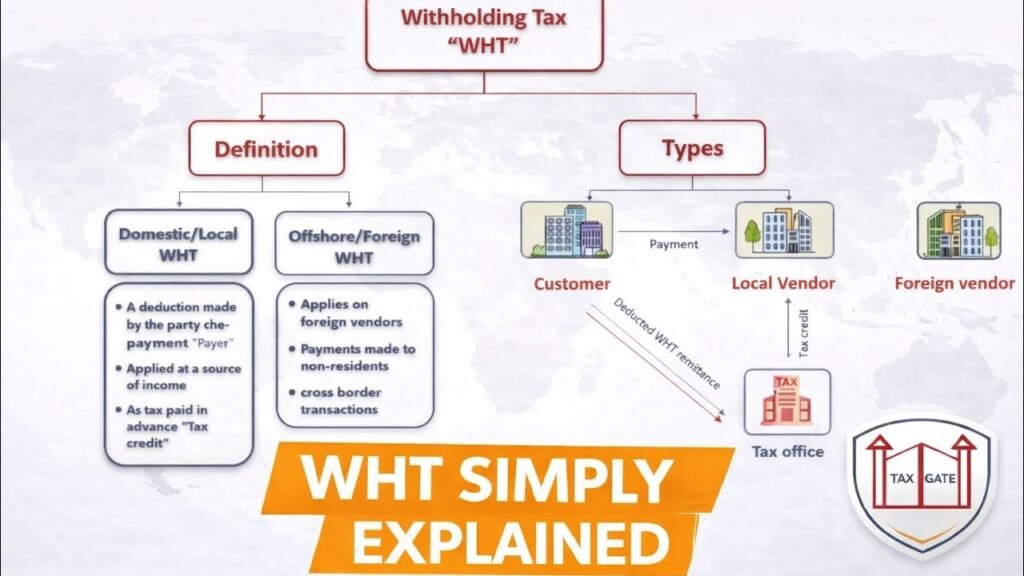
Foreign investments introduce additional tax considerations.
U.S. withholding tax
U.S. dividends often face a 15% withholding tax when paid to Canadian investors.
International ETFs
Global ETFs may also face withholding taxes from multiple countries.
RRSP treaty advantage
The Canada–U.S. tax treaty allows U.S. dividend withholding tax to be avoided in RRSP accounts.
Example:
U.S. dividend → 15% withholding tax before reaching the investor.
For a deeper explanation, see Investopedia’s withholding tax overview.
Understanding foreign withholding rules is another key aspect of ETF taxes in Canada.
ETF Tax Example
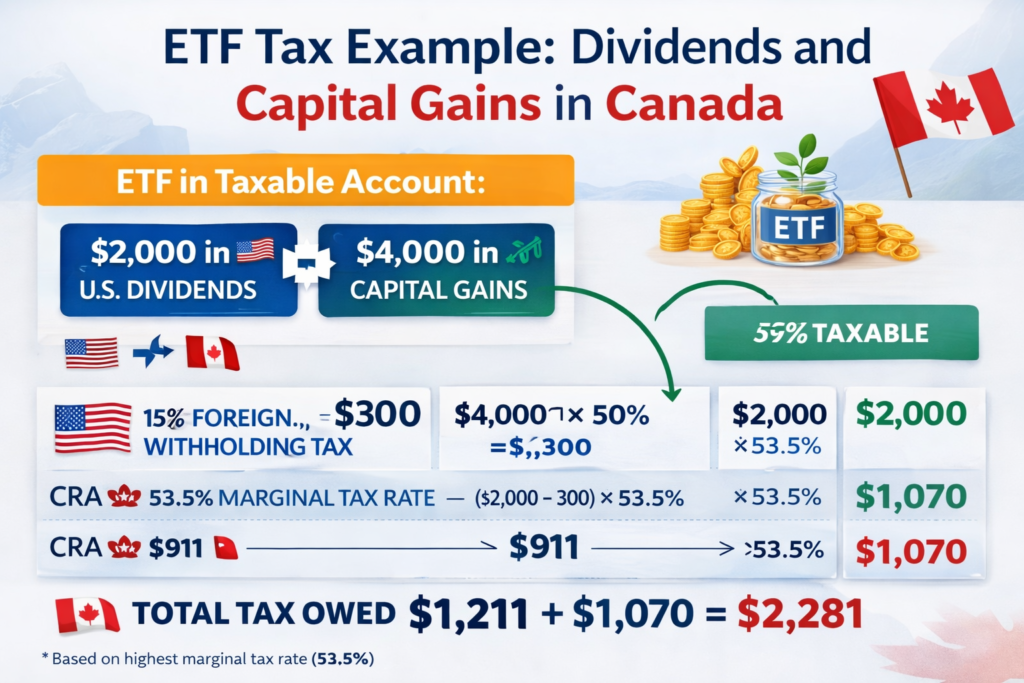
Let’s look at a simple example.
Investment: $10,000
Dividend income: $300
Capital gain on sale: $2,000
In a TFSA
Tax owed: $0
In an RRSP
Tax owed when sold: $0 initially
Taxes apply only when funds are withdrawn.
In a taxable account
Dividend income taxed annually.
Capital gains tax applied to 50% of the $2,000 gain.
Example:
Taxable gain = $1,000
Your marginal tax rate determines the final tax owed.
This example illustrates how ETF taxes in Canada depend heavily on the account type used.
How Canadians Reduce ETF Taxes
Smart investors follow a few key strategies.
Use TFSA first
Tax-free growth eliminates most investment taxes.
Use RRSP for U.S. ETFs
RRSPs may avoid U.S. withholding tax.
Long-term investing
Holding ETFs long term defers capital gains taxes.
Avoid excessive trading
Frequent buying and selling creates taxable events.
Read Tax Efficient Investing for Canadians
These strategies significantly improve long-term returns when managing ETF taxes in Canada.
Common ETF Tax Mistakes
Many investors accidentally increase their tax bill.
Misunderstanding withholding taxes
Foreign dividends may lose a portion to withholding taxes.
Ignoring capital gains
Selling ETFs frequently creates taxable gains.
Frequent trading
Short-term trading reduces tax efficiency.
Holding the wrong assets in the wrong account
Asset location matters for tax efficiency.
Avoiding these mistakes helps investors maximize after-tax returns.
Final Takeaway
Taxes play a major role in investing success.
Understanding ETF taxes in Canada allows investors to:
- choose the right accounts
- reduce unnecessary taxes
- improve long-term compounding
Ultimately, knowing how ETF taxes work can significantly increase long-term investing returns.
Frequently Asked Questions
Do ETFs pay taxes every year in Canada?
They can if held in taxable accounts and distributions occur.
Are ETFs tax-free in a TFSA?
Yes, Canadian taxes on growth and dividends are eliminated.
Are ETF capital gains taxed?
Yes, but only when sold in taxable accounts.
Are foreign ETFs taxed differently?
Yes, foreign withholding taxes may apply.