
Disclosure: This post may contain affiliate links. We may earn a commission if you sign up through our links, at no extra cost to you.
Retirement doesn’t look the same as it did 30 years ago. Today, many Canadians are questioning the traditional “work until 65” model. Instead, some are aiming for financial independence much earlier.
So which path makes more sense?
In this guide, we’ll compare early retirement vs traditional retirement in Canada clearly and realistically, without hype, fear, or extremes.
Why Canadians Are Rethinking Retirement
For decades, retirement followed a simple formula:
Work until 60–65 → Collect pension → Slow down.
However, rising living costs, longer life expectancy, and flexible careers have changed the conversation.
As a result, many Canadians now ask:
- Can I retire earlier?
- Do I want to work part-time instead?
- Is full retirement even necessary?
Understanding early retirement vs traditional retirement in Canada helps you make that decision intentionally.
What Is Traditional Retirement in Canada?
Traditional retirement is the standard model most Canadians grew up expecting.
Age 60–65 model
Most people retire between 60 and 65.
CPP and OAS timing
CPP can start as early as 60 or as late as 70. OAS generally begins at 65.
According to Government of Canada CPP overview and OAS eligibility details, timing decisions significantly affect long-term income.
Employer pensions
Some Canadians rely on defined benefit pensions, although they’re becoming less common.
Slower accumulation
Savings build gradually over decades, with moderate contribution rates.
Traditional retirement prioritizes stability and predictability.
What Is Early Retirement (FIRE) in Canada?
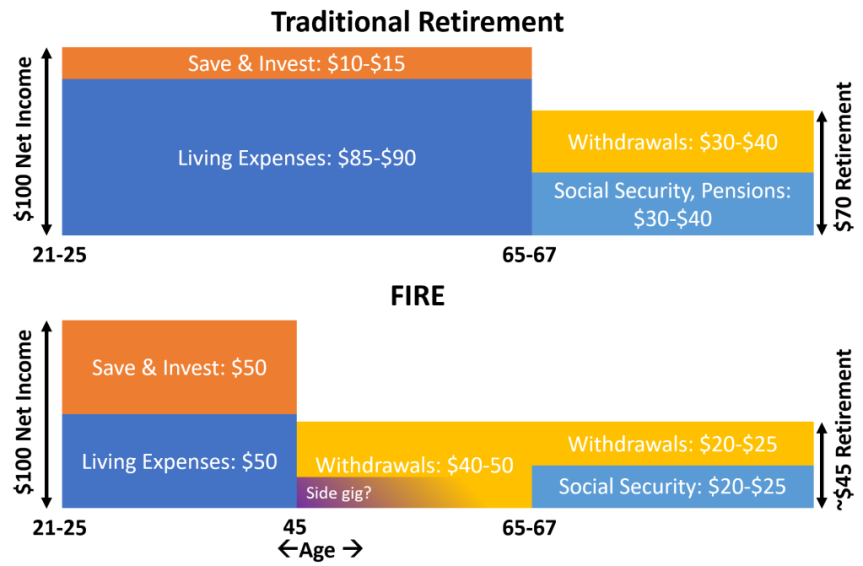
Early retirement often follows the FIRE philosophy.
Financial Independence
You accumulate enough investments to cover expenses.
Retire Early concept
You stop working before traditional retirement age, often in your 40s or 50s.
Savings rate focus
High savings rates (30%–60%) accelerate progress.
Lifestyle flexibility
Work becomes optional rather than mandatory.
The FIRE Movement in Canada explains this model in detail.
In short, FIRE trades short-term consumption for long-term freedom.
Key Differences: Early Retirement vs Traditional Retirement in Canada
| Factor | Early Retirement | Traditional Retirement |
|---|---|---|
| Savings rate | High | Moderate |
| Risk tolerance | Higher | Moderate |
| Timeline | Shorter | Longer |
| Lifestyle | Flexible | Structured |
Although both paths can work, they require different mindsets and habits.
How Much Do You Need for Each?
Money is where the comparison becomes practical.
25× rule
Early retirees often use the 25× annual expenses formula.
For example:
$50,000 × 25 = $1.25 million
Income replacement
Traditional retirees may rely more on CPP, OAS, and pensions, reducing required portfolio size.
Canada tax considerations
Withdrawal taxes and benefit clawbacks affect both strategies.
When Can You Retire in Canada? helps calculate your timeline realistically.
For deeper math behind safe withdrawals, see Investopedia’s 4% rule explanation.
Ultimately, early retirement usually requires more upfront capital.
Pros & Cons of Early Retirement in Canada
Pros
- Greater freedom
- Flexible lifestyle
- Ownership of your time
Cons
- Higher discipline required
- Healthcare planning becomes important
- Greater exposure to long-term market risk
Because early retirement depends heavily on investments, volatility matters more.
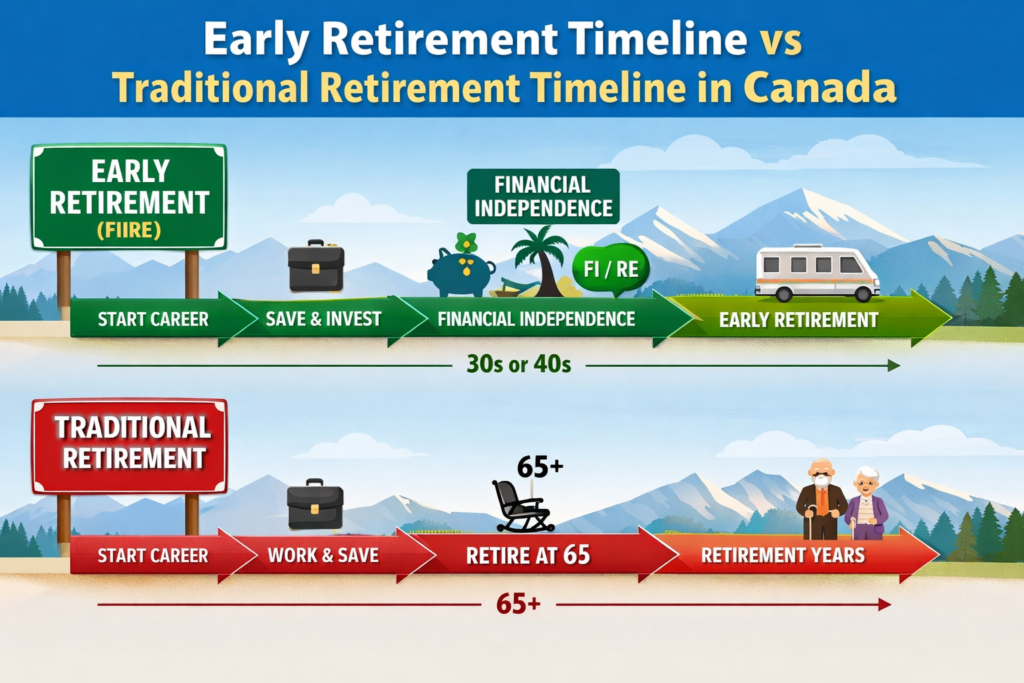
Pros & Cons of Traditional Retirement in Canada
Pros
- Lower stress during working years
- Stable retirement timeline
- Ability to maximize CPP benefits
Cons
- Less flexibility
- Longer dependence on employment income
Although traditional retirement feels safer, it limits optionality earlier in life.
Investment Strategy Differences
Investment approach changes depending on the path you choose.
Early retirement → aggressive growth
Early retirees typically invest heavily in equities to accelerate compounding.
Best Canadian ETFs for Long-Term Growth outlines suitable options.
Traditional retirement → gradual balance shift
Traditional plans often move from growth to balanced allocations over time.
Retirement Income Strategy explains how income portfolios evolve.
According to Vanguard’s research on asset allocation and long-term returns , diversified portfolios outperform market timing over decades.
Therefore, strategy should match timeline, not emotion.
Tax Considerations in Canada
Taxes affect both models significantly.
CPP timing impact
Delaying CPP increases monthly payouts.
RRSP withdrawals
Early retirees must carefully manage RRSP withdrawals to avoid high taxes later.
TFSA flexibility
TFSA withdrawals remain tax-free and don’t affect government benefits.
TFSA vs RRSP vs FHSA explains how to prioritize accounts.
Proper planning can shift retirement timing by years.
Which Retirement Path Is Right for You?
There is no universal answer.
Income level
Higher income makes early retirement easier.
Risk tolerance
Can you handle market downturns without panic?
Family situation
Children and dependents change financial needs.
Career stability
Entrepreneurs and high earners may prefer flexibility.
If stability matters most, traditional retirement may fit better. However, if autonomy drives you, early retirement may align more closely.
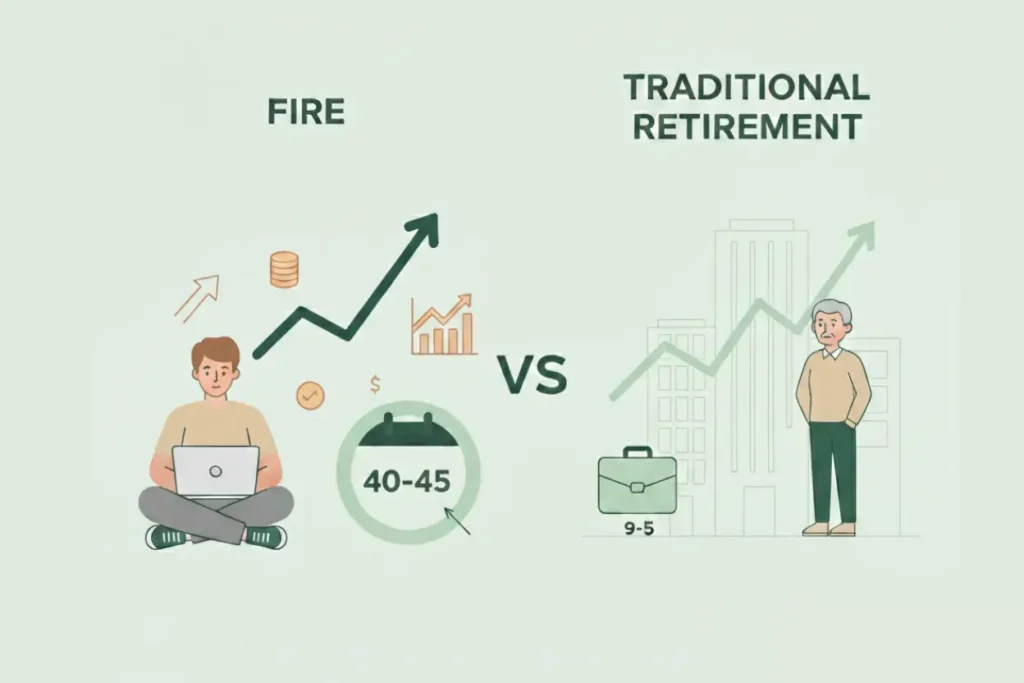
Hybrid Approach: Semi-Retirement or Coast FIRE
For many Canadians, the best solution sits between extremes.
Part-time work
Reduce hours instead of quitting completely.
Lower stress
Shift to passion-based work.
Balanced lifestyle
Maintain income while investments grow.
This hybrid model often combines financial safety with lifestyle freedom.
Final Decision Framework
If you’re choosing between early retirement vs traditional retirement in Canada, follow this framework:
Define your lifestyle
What does your ideal week look like?
Calculate your number
Know your required portfolio size.
Choose your strategy
Align savings rate and investment approach accordingly.
Stay flexible
Life changes. Your plan can too.
Ultimately, retirement isn’t about age. It’s about financial independence, flexibility, and confidence.
Frequently Asked Questions
Is early retirement realistic in Canada?
Yes, but it requires high savings and disciplined investing.
Is traditional retirement safer?
Often yes, because timelines are longer and government benefits play a bigger role.
Do I need a million dollars to retire early?
It depends on your expenses and tax strategy.
Can I switch paths later?
Yes. Many Canadians move from traditional to semi-retirement over time.