
Disclosure: This post may contain affiliate links. We may earn a commission if you sign up through our links, at no extra cost to you.
Taxes are one of the most misunderstood parts of investing. Many Canadians focus only on returns, yet taxes can significantly affect long-term wealth.
That’s why understanding capital gains tax in Canada explained clearly is essential for anyone investing in stocks, ETFs, real estate, or cryptocurrency.
In this guide, we’ll break down how capital gains tax works in Canada, when you pay it, and how smart investors legally reduce it.
What Is Capital Gains Tax in Canada?
Definition
A capital gain occurs when you sell an investment for more than you paid for it.
For example:
- Buy shares for $5,000
- Sell later for $8,000
- Capital gain = $3,000
CRA basics
The Canada Revenue Agency taxes only part of that gain, not the full amount.
According to CRA capital gains reporting rules, capital gains must be reported when investments are sold.
Why investors must understand it
Taxes can reduce investment returns significantly. Therefore, understanding capital gains tax in Canada explained properly helps investors keep more of their profits.
When Do Canadians Pay Capital Gains Tax?
You generally pay capital gains tax only when you sell an investment.
Selling stocks
If shares are sold for more than the purchase price, a capital gain occurs.
Selling ETFs
Exchange-traded funds follow the same tax rule as stocks.
Real estate investments
Rental properties and secondary homes can trigger capital gains.
Cryptocurrency
Crypto profits are usually taxed as capital gains if held for investment.
For detailed definitions, see Investopedia’s capital gains tax explanation.
Because taxes apply at sale, investors often delay selling to control timing.
Capital Gains Tax Rate in Canada
Canada uses a capital gains inclusion rule.
50% inclusion rule
Only 50% of the capital gain is taxable.
Marginal tax rates
The taxable portion is added to your income and taxed at your marginal tax rate.
Example calculation
If you make a $10,000 capital gain:
- Taxable amount = $5,000
- That $5,000 is taxed at your personal income rate.
Understanding the capital gains tax rate in Canada explained through the inclusion rule is crucial for long-term investors.
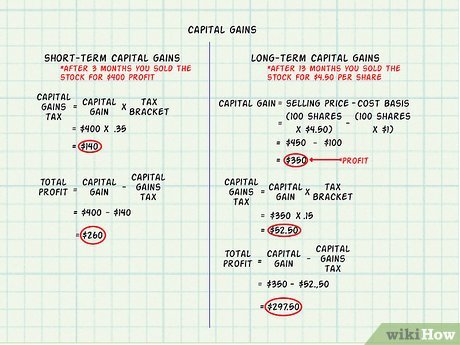
Capital Gains Tax Example (Simple Scenario)
Let’s walk through a basic example.
Buy stock → $5,000
Sell stock → $8,000
Capital gain = $3,000
Taxable amount = $1,500 (50%)
If your marginal tax rate is 30%:
$1,500 × 30% = $450 tax owed
This example helps clarify capital gains tax in Canada explained in practical terms.
Capital Gains vs Dividends (Important Difference)
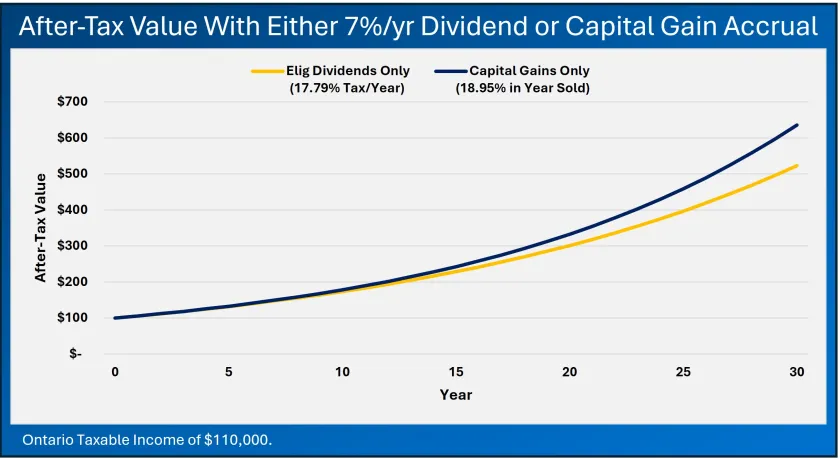
Capital gains and dividends are taxed differently.
Dividends taxed differently
Dividend income is taxed each year when received.
Capital gains taxed on sale
Capital gains are only taxed when you sell the asset.
Dividend Taxes in Canada explains dividend tax rules.
Because capital gains taxes are deferred until sale, many long-term investors prefer growth investments.
Do You Pay Capital Gains Tax in a TFSA?
No.
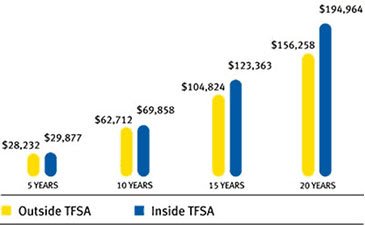
Tax-free growth
Investments inside a TFSA grow completely tax-free.
Tax-free withdrawals
When money is withdrawn, there are no taxes.
TFSA Taxes Explained breaks down the rules.
Because of this advantage, many Canadians prioritize using their TFSA for investments first.
According to CRA TFSA guidelines, investment income inside a TFSA remains tax-free.
Do You Pay Capital Gains Tax in an RRSP?
Not directly.
No capital gains tax inside the account
Investment growth inside an RRSP is tax-deferred.
Withdrawals taxed as income
When money is withdrawn, the full amount is taxed as income.
RRSP Taxes Explained explains how RRSP taxation works.
This means RRSPs delay taxes rather than eliminating them.
Capital Gains Tax Strategies Canadians Use
Smart investors plan ahead to reduce taxes.
Hold investments long term
Deferring sales delays taxation.
Use TFSA first
Tax-free accounts eliminate capital gains taxes entirely.
Use RRSP strategically
RRSPs delay taxation until retirement.
Offset with losses
Investment losses can reduce taxable gains.
These strategies help investors manage capital gains tax in Canada explained through practical planning.
Tax Loss Harvesting Explained
Tax-loss harvesting is a common strategy.
Selling losing investments
Investors sell investments that have declined in value.
Offsetting gains
Losses reduce taxable capital gains.
CRA rules
The superficial loss rule prevents repurchasing the same security within 30 days.
For a deeper explanation, see Investopedia’s tax-loss harvesting guide.
Common Capital Gains Tax Mistakes
Many investors accidentally increase their tax bill.
Day trading in a taxable account
Frequent trading may trigger business income taxation.
Ignoring tax planning
Selling without considering tax timing increases taxes.
Misunderstanding adjusted cost base
Incorrect cost calculations lead to incorrect tax reporting.
Proper record-keeping prevents these mistakes.
Final Takeaway
Taxes are an essential part of investing.
Understanding capital gains tax in Canada explained clearly helps you:
- Keep more investment profits
- Plan tax-efficient strategies
- Avoid costly mistakes
Ultimately, investing taxes matter just as much as investment returns.
Smart investors focus on both.

Frequently Asked Questions
Do you pay capital gains tax every year?
No. Taxes apply only when investments are sold.
How much capital gains tax do Canadians pay?
Only 50% of gains are taxable.
Do TFSAs avoid capital gains tax?
Yes. TFSA investment growth is tax-free.
Can losses reduce capital gains tax?
Yes. Losses can offset gains for tax purposes.