
Disclosure: This post may contain affiliate links. We may earn a commission if you sign up through our links, at no extra cost to you.
Getting started with investing doesn’t have to be complicated. In fact, for most Canadians, ETFs are the simplest and smartest way to begin investing.
This guide breaks down the best ETFs for beginners in Canada, explains how they work in plain language, and shows you how to build your first portfolio without overthinking it.
If you’re brand new, this pairs well with Best Investing Apps in Canada and TFSA vs RRSP vs FHSA so everything works together.
What Is an ETF? (Beginner Explanation)
An ETF (Exchange-Traded Fund) is a basket of investments, stocks or bonds, that trades like a single stock.
Instead of picking individual companies, one ETF can give you exposure to hundreds or even thousands of investments at once.
That’s why ETFs beat stock picking for beginners:
- Less risk from one company failing
- Instant diversification
- Much lower fees than mutual funds
In short, ETFs balance risk and reward better for long-term investors.
Why ETFs Are Perfect for Beginner Investors
ETFs are ideal for Canadians starting out because they offer:
- Built-in diversification
- Low management fees (MERs)
- Easy buying and selling
- Perfect fit for TFSA and RRSP accounts
Most importantly, ETFs remove emotion from investing, and that’s where beginners usually make mistakes.
Best ETFs for Beginners in Canada (Quick Table)
| ETF | Type | Best For | MER |
|---|---|---|---|
| VEQT | All-equity | Long-term growth | ~0.24% |
| VGRO | Growth | Balanced growth | ~0.24% |
| VBAL | Balanced | Conservative beginners | ~0.24% |
| VFV | S&P 500 | U.S. exposure | ~0.09% |
| XIC | Canada equity | Home bias | ~0.06% |
Best All-In-One ETFs for Beginners
All-in-one ETFs are the easiest way to start investing because they handle diversification automatically.
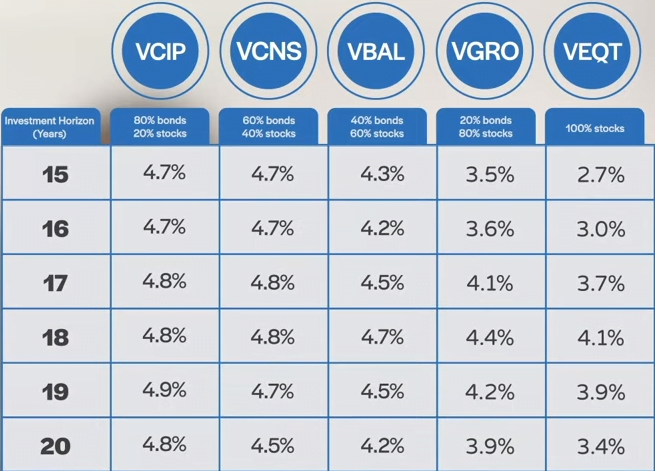
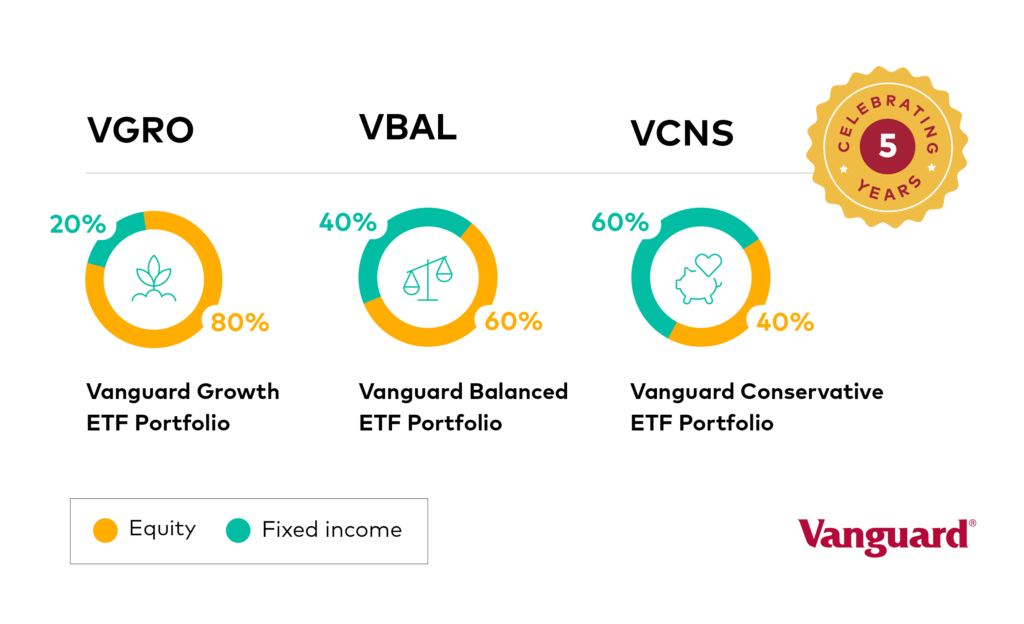
- VBAL → lower risk, more bonds
- VGRO → balanced growth
- VEQT → maximum growth, higher volatility
Most beginners choose VGRO or VEQT depending on risk tolerance.
You can view details directly on Vanguard’s site, where VEQT and its siblings are explained clearly.
💬 Personal insight: If you don’t know your risk level yet, start slightly more conservative. You can always adjust later.

Best S&P 500 ETF for Beginners
If you want exposure to U.S. companies like Apple, Microsoft, and Amazon, S&P 500 ETFs are a great addition.
The two most popular options are:
- VFV (Vanguard)
- XUS (iShares)
Both track the U.S. market efficiently and cost very little.
You can compare them on Vanguard’s VFV page or iShares Canada.
Best Canadian Market ETF for Beginners
Canadian investors benefit from some home-country exposure.
- VCN (Vanguard)
- XIC (iShares)
These ETFs give you access to Canadian banks, energy, and dividend-paying companies. This helps reduce currency risk and adds stability.
Best Dividend ETF for Beginners
Best dividend ETFs for beginners in Canada focus on income rather than growth.
While dividends feel rewarding, beginners often don’t need them early on. Growth usually matters more.
Still, popular options include:
- VDY
- XEI
If you want income later, these pair well with Best Dividend ETFs in Canada.
How to Buy Your First ETF in Canada
Buying your first ETF is simpler than most people think.
First, choose a broker. Many beginners start with platforms listed in Best Online Brokers in Canada or automated options in Best Robo-Advisors in Canada.
Next, decide where to hold it:
- TFSA → best for most beginners
- RRSP → better once income increases
Then invest regularly using dollar-cost averaging instead of trying to time the market.
Beginner ETF Mistakes to Avoid
Many beginners make the same mistakes:
- Buying too many ETFs
- Chasing high dividends too early
- Trying to time the market
- Constantly switching strategies
Simplicity beats complexity almost every time.
Final Recommendation (Simple Portfolios)
Option 1: One-ETF Portfolio
- VGRO or VEQT
Option 2: Two-ETF Portfolio
- VEQT + VFV
You don’t need more than this until your portfolio grows significantly.
Pick one ETF, open a TFSA, and invest your first amount this week. The hardest step is starting.

❓ FAQ (Beginner ETFs in Canada)
Are ETFs safe for beginners?
Yes. ETFs are one of the safest ways for beginners to invest because of diversification.
How much money do I need to start?
Many brokers allow ETF purchases with as little as $1–$50.
Should I invest monthly or lump sum?
Monthly investing reduces emotional decisions and works well for beginners.