
Disclosure: This post may contain affiliate links. We may earn a commission if you sign up through our links, at no extra cost to you.
Investing can feel overwhelming at first. Between TFSAs, ETFs, market news, and endless opinions online, many Canadians simply don’t know where to begin.
The good news? You don’t need advanced knowledge to succeed.
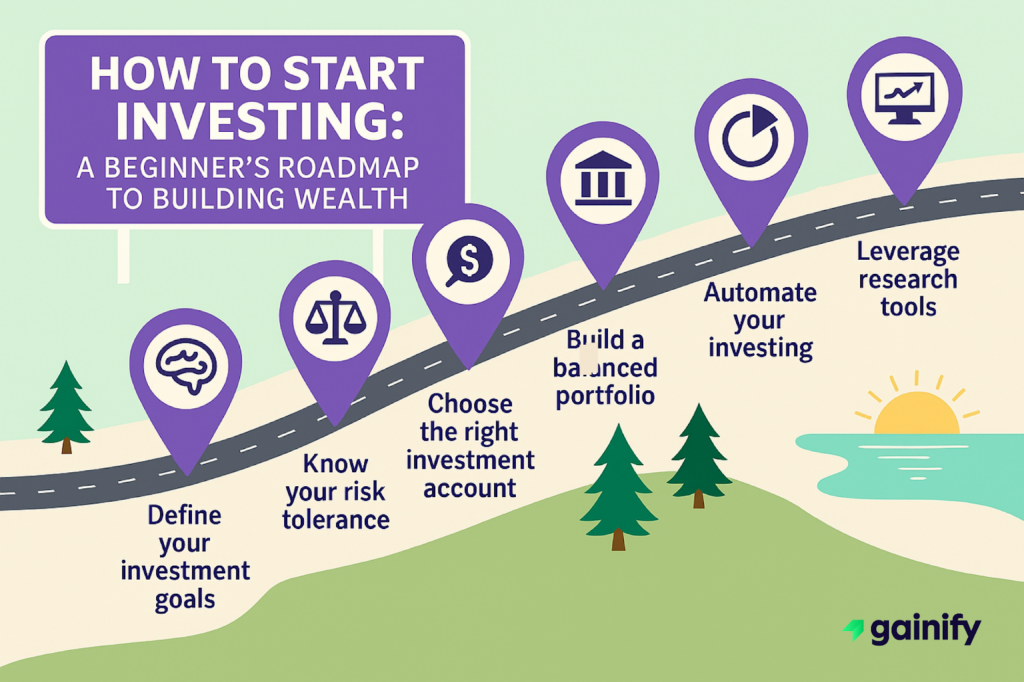
This complete beginner’s investing roadmap in Canada gives you a clear, step-by-step path, from your first dollar invested all the way to long-term financial independence.
Why Investing Feels Confusing for Beginners
Many Canadians delay investing because they believe they need perfect timing or expert knowledge. However, successful investing rarely depends on complexity.
Instead, progress comes from following a simple sequence:
- Build stability
- Invest consistently
- Stay invested long term
Let’s walk through that roadmap.
Step 1: Build Your Financial Foundation Before Investing
Before buying investments, stabilize your finances.
Emergency fund
Aim for 3–6 months of expenses in accessible savings.
Best High-Interest Savings Accounts
Emergency Fund Guide
Keeping cash reserves prevents forced selling during market downturns.
Debt control
High-interest debt reduces investment growth. Therefore, prioritize credit cards and payday loans first.
Budget system
A basic spending system ensures you always have money available to invest.
According to Government of Canada financial planning basics, strong financial habits matter more than investment timing.
Step 2: Understand Investing Basics (Canada Beginner Guide)
Before investing, understand the core building blocks.
Stocks
Ownership in companies that grow over time.
ETFs
Exchange-Traded Funds hold hundreds or thousands of stocks in one purchase.
Index investing
Instead of picking winners, you track entire markets.
Long-term mindset
Markets fluctuate short term but historically trend upward.
ETFs for Beginners (2026) explains this clearly.
For foundational investing education, see Investopedia’s index investing explanation.
Step 3: Open the Right Investment Accounts in Canada
Choosing the right account is crucial.
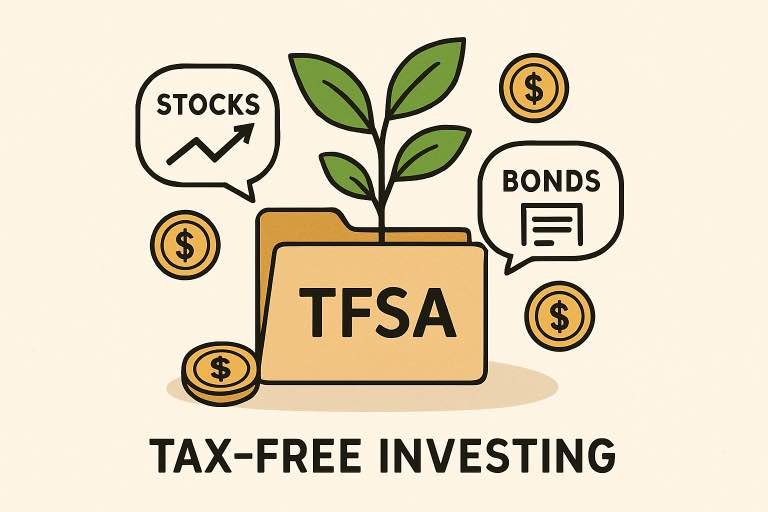
TFSA
Usually the best starting point:
- Tax-free growth
- Flexible withdrawals
RRSP
Useful for higher-income earners seeking tax deductions.
FHSA
Ideal if you plan to buy your first home.
TFSA vs RRSP vs FHSA shows how to prioritize accounts.
Official contribution rules are available through CRA registered plans overview.
Step 4: Choose a Beginner Investment Strategy
You don’t need complicated portfolios.
All-in-one ETFs
One ETF provides global diversification automatically.
Robo-advisors
Automated portfolios for hands-off investors.
Simple diversification
Global exposure reduces risk over time.
Best Robo-Advisors in Canada
Beginner Portfolio Examples
According to Vanguard diversification principles, diversified portfolios help smooth long-term returns.
Step 5: Start Investing Consistently
Consistency matters more than timing.
Dollar-cost averaging
Invest the same amount regularly regardless of market conditions.
Automation
Automatic transfers remove emotional decision-making.
Monthly investing habits
Treat investing like a fixed expense.
How Much Should You Invest Each Month
Over time, disciplined investing becomes the engine of wealth building.
Step 6: Build Your First $100,000 Portfolio
The first six figures change everything.
Compounding phase
Once investments grow large enough, market returns begin to outpace contributions.
Patience advantage
Early consistency matters more than starting amount.
How to Build a 6-Figure Portfolio
Reaching $100,000 often marks the transition from effort-driven growth to compounding-driven growth.
Step 7: Avoid Beginner Investing Mistakes
Many investors struggle not because of bad investments, but because of bad behaviour.
Timing the market
Waiting for perfect conditions usually delays success.
Panic selling
Selling during downturns locks in losses.
Overtrading
Frequent changes increase fees and mistakes.
Research from Dalbar investor behaviour studies explained by Investopedia shows behaviour often matters more than strategy.
Step 8: Track Progress Like a Real Investor
Successful investors measure progress consistently.
Net worth tracking
Track assets and liabilities quarterly.
Portfolio reviews
Check allocation once or twice per year.
Annual adjustments
Update goals as income and life change.
Tracking progress keeps motivation high and prevents drift.

Step 9: Transition Toward Passive Income Investing
As portfolios grow, goals evolve.
Dividends
Income-producing investments can supplement earnings later.
Long-term compounding
Growth remains essential even during income phases.
Retirement preparation
Eventually, investments replace employment income.
Passive Income Investing Canada
Retirement Planning Guide
According to Investopedia’s passive income investing overview, sustainable income usually results from long-term investing rather than quick strategies.
Step 10: Your Long-Term Investing Path
Investing is a lifelong journey.
Wealth building
Consistent investing builds financial security.
Financial independence
Savings eventually create work flexibility.
Retirement options
You gain the freedom to choose when and how to retire.
FIRE Movement Canada
When Can You Retire in Canada
Over decades, small actions compound into major opportunities.
Beginner Investing Checklist (Canada)
Before finishing, make sure you’ve completed these steps:
✅ Open investment account
✅ Fund your TFSA
✅ Buy your first ETF
✅ Automate contributions
✅ Stay consistent long term
If you follow this complete beginner’s investing roadmap in Canada, investing stops feeling complicated and starts feeling automatic.
Frequently Asked Questions
How much money do I need to start investing in Canada?
You can start with as little as $50–$100.
Should beginners pick individual stocks?
Most beginners benefit more from ETFs.
Is investing risky?
Short-term volatility exists, but long-term investing reduces risk.
How long should I stay invested?
Ideally 10+ years or more.