
Struggling with how to stop living paycheck to paycheck in Canada? You’re not alone. Many Canadians feel stuck financially, even with a steady income. In this guide, you’ll learn how to stop living paycheck to paycheck in Canada using a simple, realistic step-by-step plan that actually works.
How to Stop Living Paycheck to Paycheck (Quick Plan)
- Track your spending
- Cut unnecessary expenses
- Build a small emergency fund
- Increase your income
- Start investing
- Key takeaway: Small consistent actions create financial breathing room over time
Why You’re Living Paycheck to Paycheck
Understanding the cause is the first step.
Rising cost of living
Housing, groceries, and transportation costs have increased significantly across Canada.
Lack of budgeting
Without a clear plan, money disappears quickly.
Low savings habits
If nothing is saved, every expense becomes urgent.
As a result, many people stay stuck even when their income increases.
Step 1 Track Where Your Money Is Going
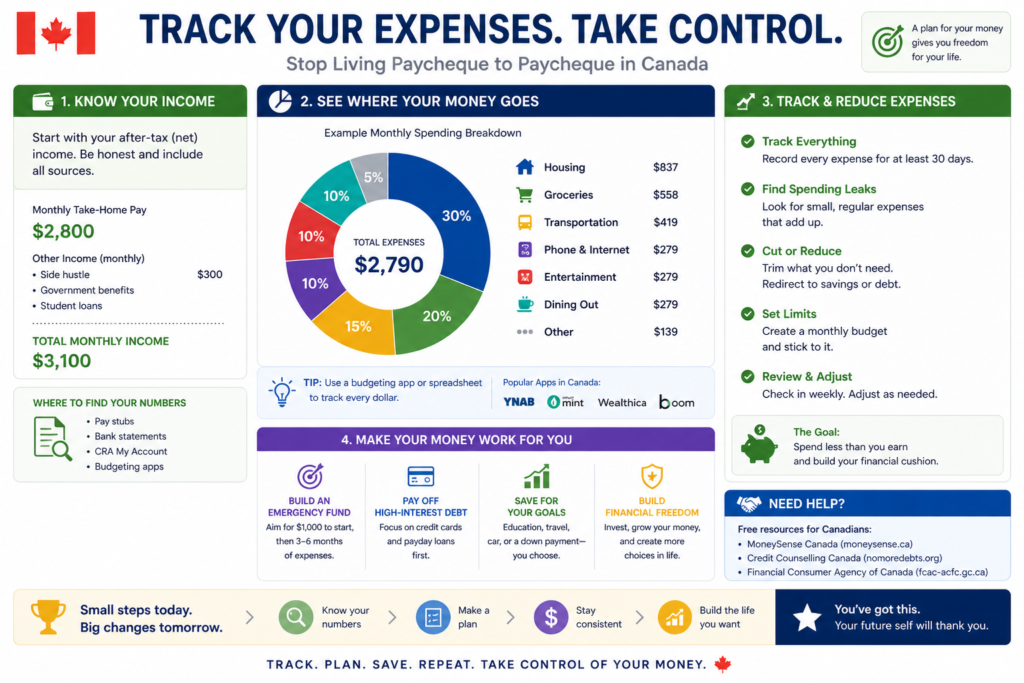
Before fixing anything, you need clarity.
Bank statements
Review the last 30–60 days of spending.
Apps
Use budgeting tools to categorize expenses automatically.
Awareness
Seeing your spending patterns often reveals easy wins.
If you need help managing your money, see How to Budget in Your 20s
Tracking your money is the foundation of how to stop living paycheck to paycheck in Canada.
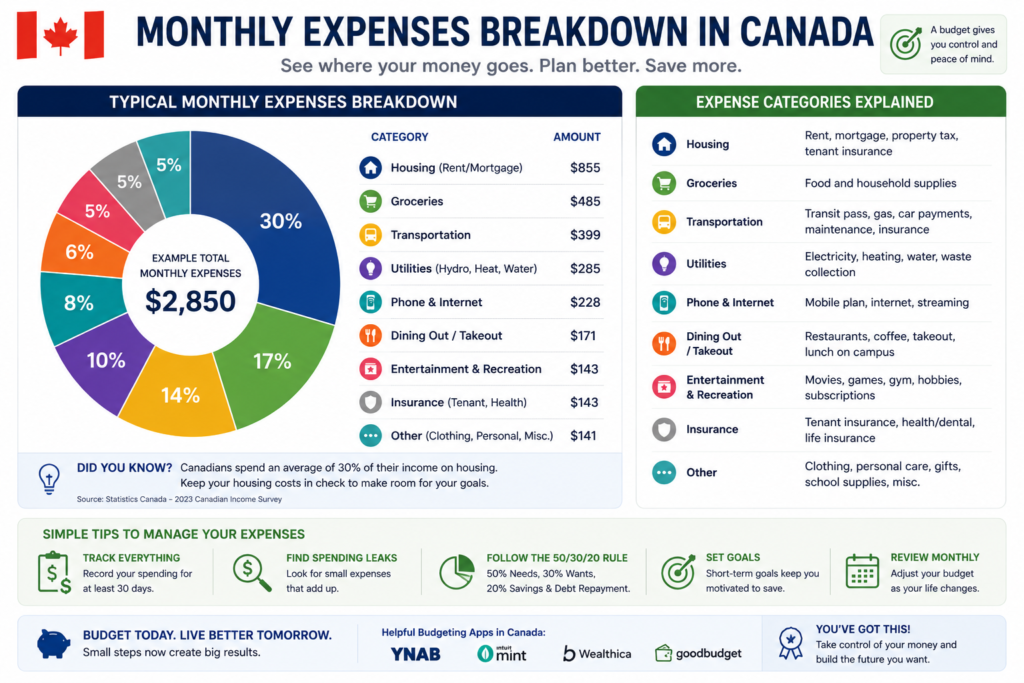
Step 2 Cut Expenses Without Ruining Your Life
Cutting costs doesn’t mean cutting everything.
Subscriptions
Cancel what you don’t use.
Eating out
Reduce frequency rather than eliminating it completely.
Lifestyle creep
Avoid increasing spending as income grows.
Therefore, small adjustments can free up significant cash without feeling restrictive.
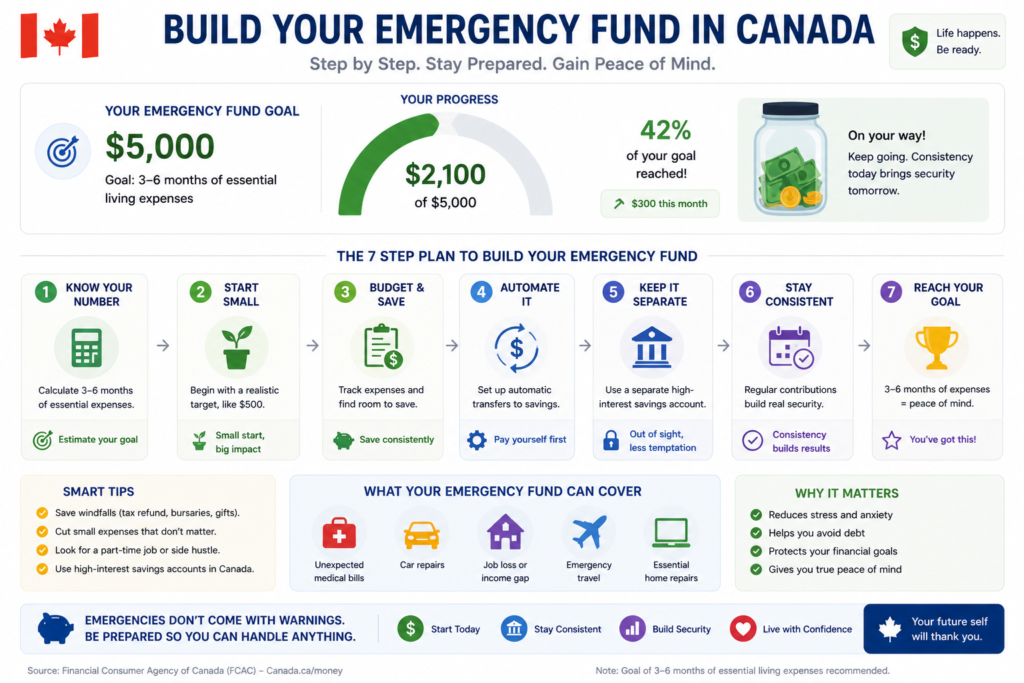
Step 3 Build a Small Emergency Fund
This step creates immediate financial stability.
Start small
Aim for $500 first, then build toward $1,000.
Why it matters
Unexpected expenses won’t force you back into debt.
Keep it accessible
Use a savings account for easy access.
Learn how to build one Best Ways to Build an Emergency Fund in Canada or investopia great way to build an emergency fund.
Even a small emergency fund can break the paycheck-to-paycheck cycle.
Step 4 Increase Your Income
Cutting expenses helps, but income growth accelerates progress.
Side hustles
Flexible ways to earn extra money.
Better job
Negotiating or switching roles can increase income significantly.
Extra hours
Short-term effort can create long-term breathing room.
Start here Best Online Side Hustles in Canada
As a result, increasing income is one of the fastest ways to improve your situation.
Step 5 Start Investing (Even Small Amounts)
Once you create a small buffer, begin investing.
Start with $100/month
Consistency matters more than the amount.
Long-term mindset
Focus on growth over time.
Build the habit
Investing regularly reinforces financial discipline.
Begin here How to Invest $100 Per Month in Canada
Over time, this step transforms survival into wealth-building.
Common Mistakes to Avoid
Avoiding mistakes is just as important as following the plan.
Trying to be perfect
Perfection leads to inaction.
Not tracking
Without tracking, progress is unclear.
Ignoring small expenses
Small leaks can drain your finances.
Because of this, consistency always beats perfection.
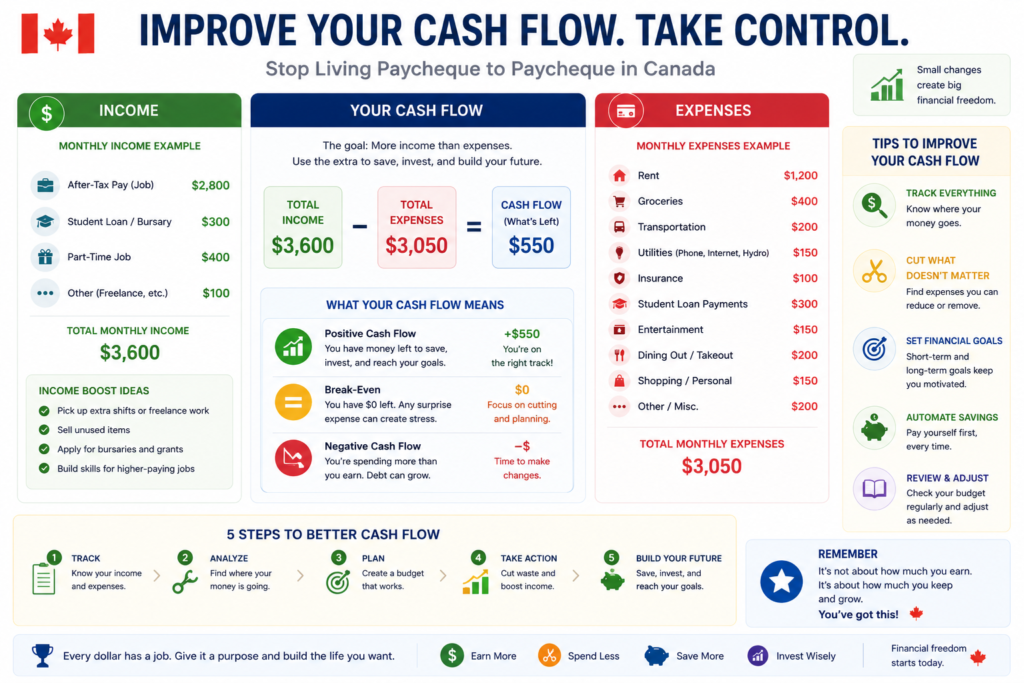
How Long Does It Take to Break the Cycle?
This depends on your situation.
Realistic timeline
- 1–3 months → awareness + small savings
- 3–6 months → financial breathing room
- 6–12 months → real progress
Key factors
- income level
- discipline
- consistency
Although progress takes time, results come faster than most people expect.
Final Verdict
Learning how to stop living paycheck to paycheck in Canada is not about drastic changes.
It’s about:
- building awareness
- making small adjustments
- staying consistent
Ultimately, small changes compound into long-term financial freedom.
FAQ
Why do I keep living paycheck to paycheck?
Usually due to high expenses, lack of budgeting, or low savings habits.
How much should I save first?
Start with $500, then aim for $1,000.
Can I invest while paying bills?
Yes, once you have a small emergency fund in place.
What’s the fastest way to improve finances?
Track spending, cut unnecessary costs, and increase income.