
Most Canadians overpay taxes on their investments.
Not because they’re doing anything illegal, but because they don’t have a strategy.
If you understand a few key rules, you can legally keep more of your returns and grow your wealth faster.
In this guide, you’ll learn exactly how to pay less tax on investments in Canada using simple, proven strategies.
Why Investment Taxes Matter More Than You Think
Taxes are one of the biggest hidden costs in investing.
Losing a percentage every year compounds
Even a small tax drag reduces long-term growth significantly.
Taxes = silent wealth killer
Unlike market crashes, taxes quietly reduce your returns every single year.
According to Investopedia’s tax-efficient investing guide, minimizing taxes can significantly improve long-term performance.
That’s why learning how to pay less tax on investments in Canada is just as important as choosing the right investments.
Use Tax-Advantaged Accounts First (TFSA, RRSP, FHSA)
Before thinking about strategies, start with the basics.
TFSA
- tax-free growth
- tax-free withdrawals
RRSP
- tax-deductible contributions
- tax-deferred growth
FHSA
- tax-deductible contributions
- tax-free withdrawals for a home
Instead of paying unnecessary taxes, prioritize these accounts first.
To understand how to use them properly, read TFSA vs RRSP vs FHSA, and then dive deeper into TFSA Taxes Explained to maximize your tax-free growth.
Using these accounts correctly is the foundation of learning how to pay less tax on investments in Canada.
Asset Location Strategy (THIS IS GOLD)
This is where things get powerful.
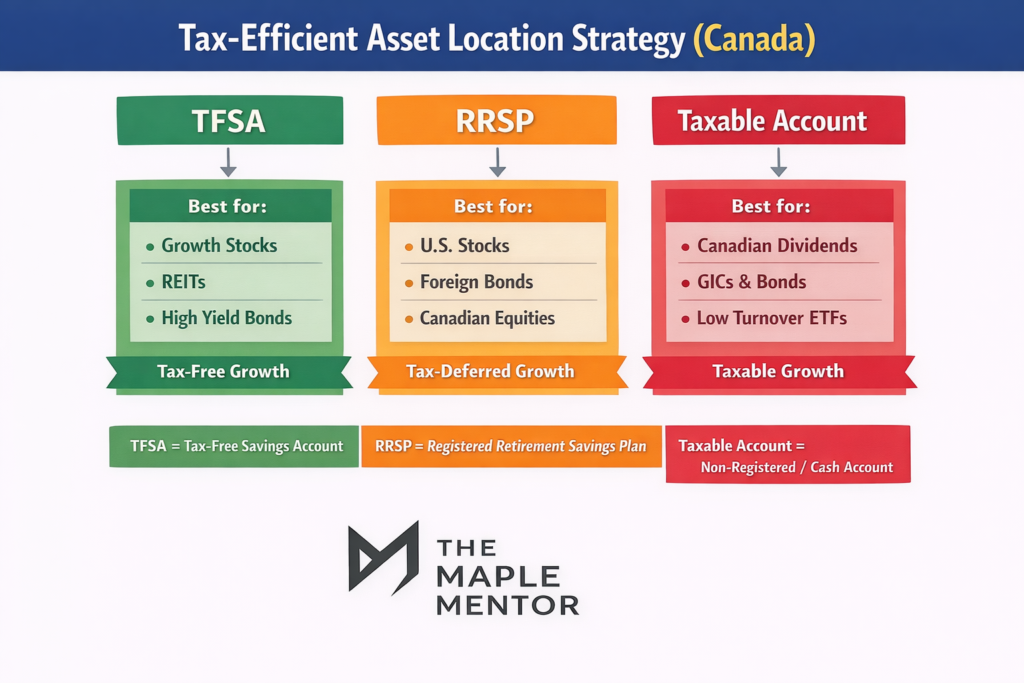
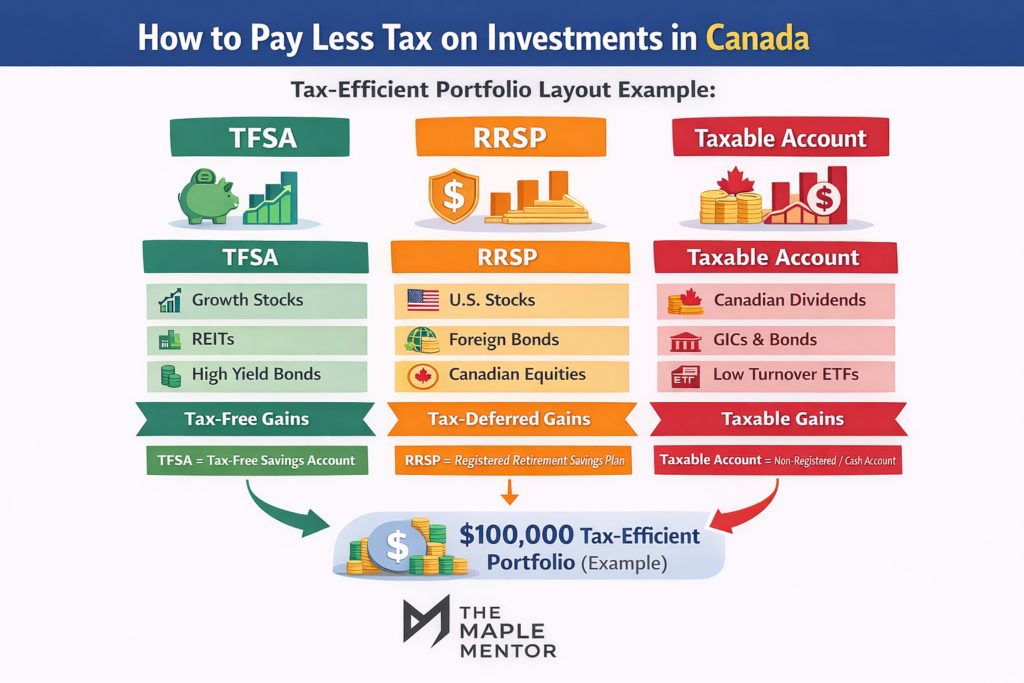
Asset location means placing the right investments in the right accounts.
Example strategy
- TFSA: growth ETFs and dividend stocks
- RRSP: bonds and U.S. dividend stocks
- Taxable account: long-term growth investments
Why it works
Different investments are taxed differently. Placing them strategically reduces your overall tax burden.
If you want a deeper breakdown, see Tax-Efficient Investing for Canadians.
This single strategy can dramatically reduce how much tax you pay over time.
Prefer Capital Gains Over Dividends
Not all investment income is taxed equally.
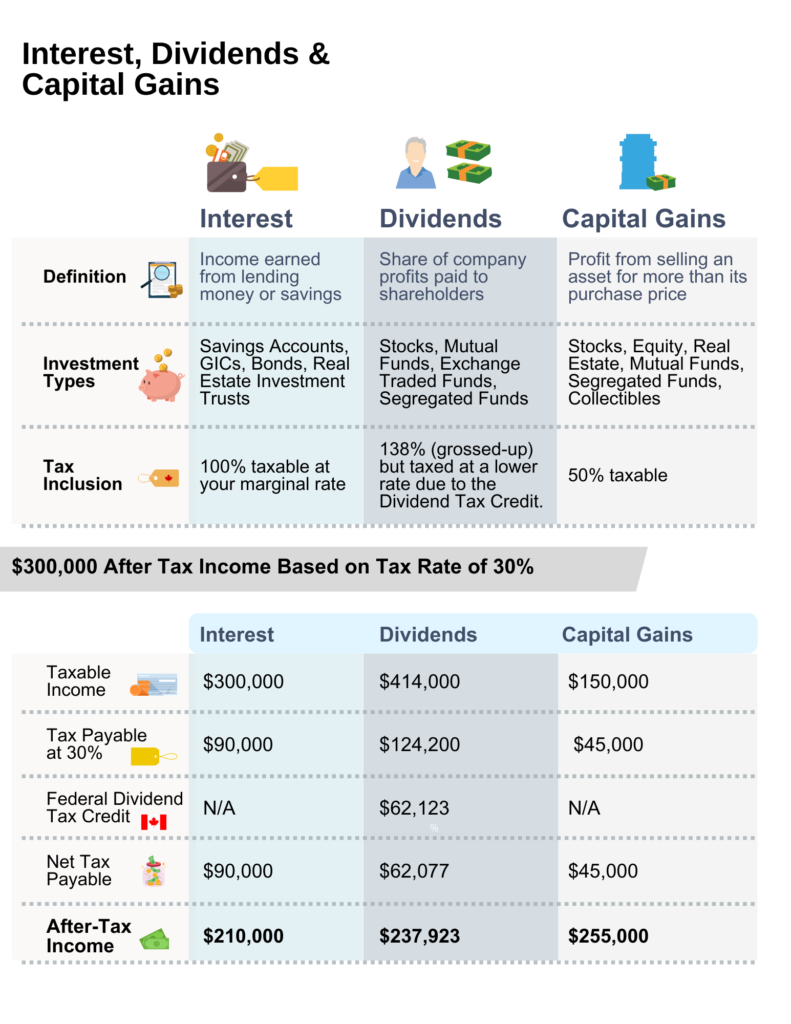
Capital gains
- taxed only when you sell
- only 50% is taxable
Dividends
- taxed every year
- can reduce compounding
Because of this, many investors prefer growth-focused strategies.
To understand the difference, read Capital Gains Tax in Canada.
Choosing investments wisely is another way to pay less tax on investments in Canada.
Use Loss Harvesting to Reduce Taxes
This strategy is often overlooked.
Sell losing investments strategically
Realize losses intentionally.
Offset gains
Losses can reduce taxable capital gains.
Key benefit
You lower your tax bill while staying invested.
However, you must follow CRA rules (like avoiding superficial losses).
According to Investopedia’s tax-loss harvesting guide, this strategy can significantly reduce taxable income.
Avoid High-Tax Investments in Taxable Accounts
Some investments are heavily taxed.
Interest income = worst taxed
GICs, savings accounts, and bonds are taxed at your full marginal rate.
Example
- GIC in taxable account → high tax
- ETF in taxable account → more tax-efficient
Because of this, asset placement matters.
Avoid holding high-tax assets in taxable accounts whenever possible.
Reinvest Smartly (Not Emotionally)
Your behavior matters as much as your strategy.
Avoid triggering taxes
Frequent selling creates taxable events.
Long-term mindset
Holding investments reduces unnecessary taxes.
Let compounding work
Reinvesting without interruption builds wealth faster.
Staying disciplined helps you pay less tax on investments in Canada over time.
Common Tax Mistakes Canadians Make
Avoid these costly errors.
Using TFSA incorrectly
- day trading inside TFSA
- overcontributing
Overtrading
Creates unnecessary taxable events.
Ignoring fees + taxes combined
High fees + taxes = massive drag on returns.
Fixing these mistakes alone can significantly improve your results.
Final Strategy (Simple Version)
If you want a simple plan, follow this:
Step 1
Max out your TFSA first.
Step 2
Use your RRSP strategically based on your income.
Step 3
Invest in long-term, tax-efficient assets.
Step 4
Avoid unnecessary trading and taxes.
This is the easiest way to consistently pay less tax on investments in Canada.
FAQ
How can I legally reduce investment taxes in Canada?
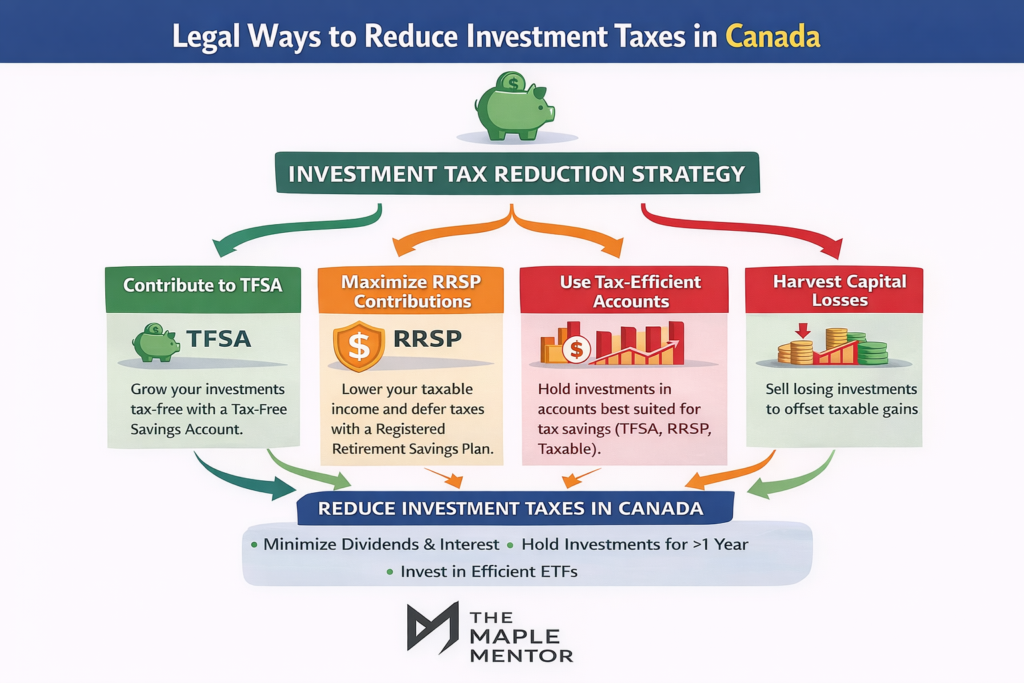
Use TFSA and RRSP accounts, apply asset location strategies, and avoid unnecessary trading.
What investments are tax-free?
Investments inside a TFSA grow and can be withdrawn tax-free.
Is TFSA really tax-free?
Yes, as long as you follow CRA rules and avoid overcontributions or business activity.