
Disclosure: This post may contain affiliate links. We may earn a commission if you sign up through our links, at no extra cost to you.
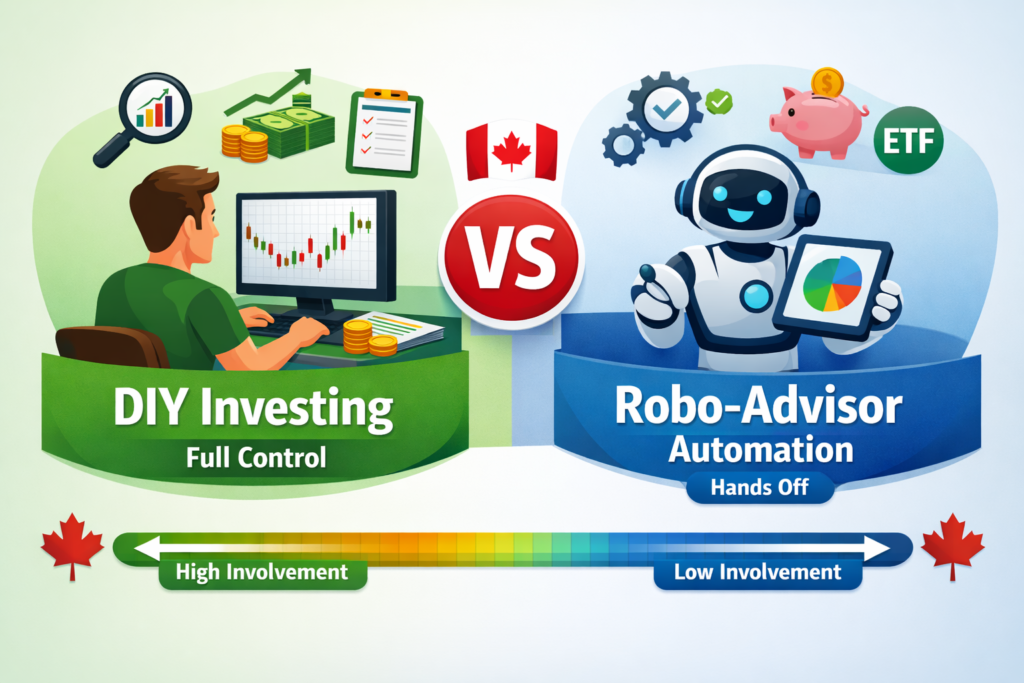
Choosing between ETF vs robo-advisor in Canada is one of the biggest decisions beginners face.
Both are excellent options. However, they serve different types of investors.
Some people want simplicity and automation. Others want control and lower fees.
In this guide, you’ll get a clear, no-BS answer so you can confidently choose the right path.
What Is an ETF?
Exchange-traded fund
An ETF is a fund that trades on the stock market like a stock.
Basket of investments
Most ETFs hold hundreds or thousands of companies, giving you instant diversification.
Low-cost
ETFs typically have very low management fees.
DIY investing
You choose what to buy, when to invest, and how to manage your portfolio.
If you want examples, check out Best ETFs for Canadian Investors.
According to Investopedia’s ETF overview, ETFs are one of the most efficient ways to invest long term.
What Is a Robo-Advisor?
Automated investing
A robo-advisor builds and manages your portfolio automatically.
Managed portfolios
You answer a few questions, and the platform creates a diversified portfolio.
Hands-off approach
The platform handles:
- rebalancing
- portfolio allocation
- ongoing management
If you want options, explore Best Robo Advisors in Canada.
According to Investopedia’s robo-advisor guide, robo-advisors are designed to simplify investing for beginners.
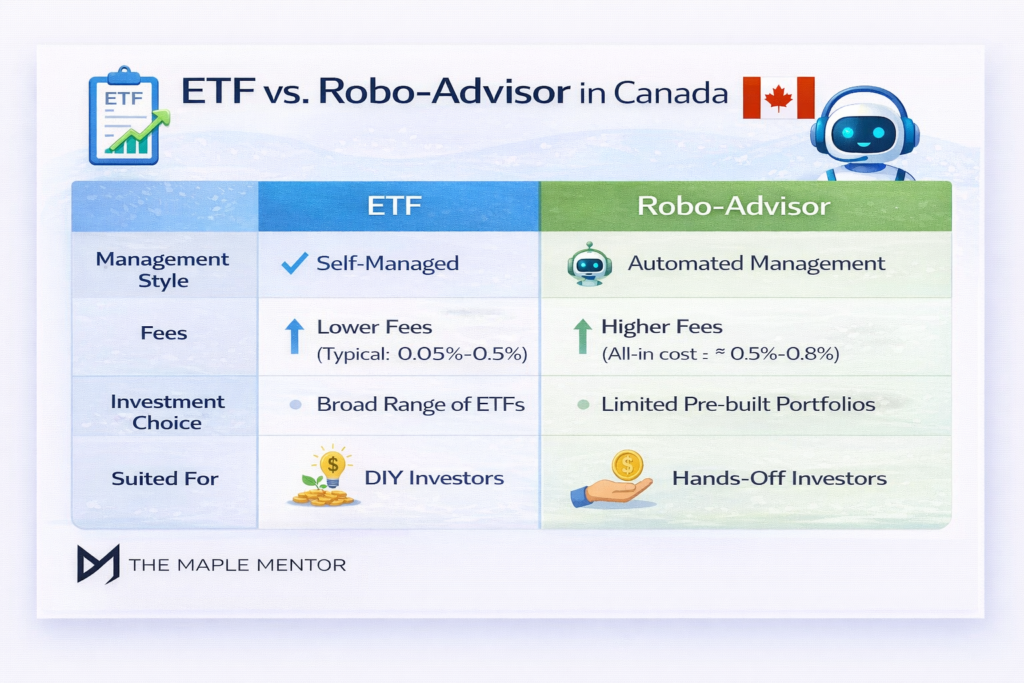
ETF vs Robo-Advisor in Canada: Key Differences
Let’s break down the core differences.
Control
ETF: Full control over your investments
Robo: Portfolio is managed for you
Fees
ETF: Lower (often 0.05%–0.25%)
Robo: Slightly higher (typically 0.5%–1% total)
Simplicity
ETF: Requires basic knowledge
Robo: Easiest option available
Time Required
ETF: Minimal, but requires manual investing
Robo: Fully automated
These differences define the choice when comparing ETF vs robo-advisor in Canada.
Which One Has Better Returns?
This is where things get interesting.
ETFs often outperform
Lower fees mean more money stays invested.
Robo-advisors still perform well
They use ETFs internally and follow solid strategies.
Consistency matters more
Your behaviour matters more than the platform.
According to Vanguard’s research on costs and returns, lower fees have a direct impact on long-term returns.
So while ETFs may have a slight edge, discipline is the real factor.
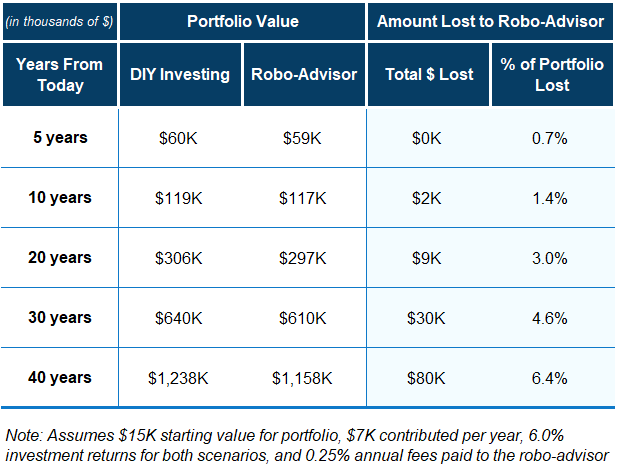
ETF vs Robo-Advisor: Example Comparison
Let’s keep this simple.
Scenario
$10,000 invested over 20 years
ETF (DIY)
- Lower fees
- Slightly higher final value
Robo-advisor
- Higher fees
- Slightly lower final value
- easier to stick with
Even a 0.5% fee difference can result in thousands of dollars over time.
This is why understanding ETF vs robo-advisor in Canada matters long term.
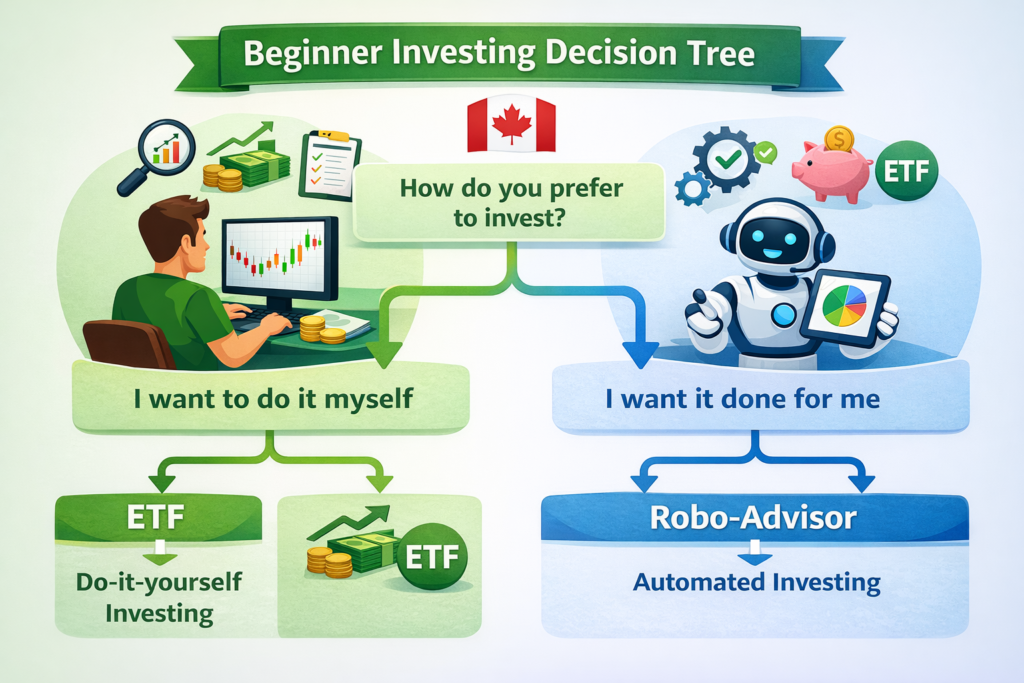
Best Option for Beginners in Canada
Here’s the honest answer.
Robo-advisor → easiest start
If you want zero complexity, this is the best option.
ETF → best long-term
If you’re willing to learn a little, ETFs usually win over time.
The best choice depends on your personality, not just numbers.
When to Choose ETFs
Choose ETFs if you:
Want control
You prefer managing your own portfolio.
Want lower fees
You want to maximize long-term returns.
Are comfortable investing
You’re willing to learn basic investing concepts.
ETFs are ideal for investors focused on efficiency and long-term growth.
When to Choose a Robo-Advisor
Choose a robo-advisor if you:
Want simplicity
You don’t want to manage anything.
Have no experience
You’re just starting and want guidance.
Prefer automation
You want everything handled for you.
Robo-advisors remove friction and make investing easier.
Can You Use Both?
Yes, and many investors do.
Hybrid strategy
- Robo-advisor for automatic investing
- ETFs for additional control
When it makes sense
This works well as you gain experience.
You can start with a robo-advisor, then gradually transition to ETFs.
Final Verdict
Let’s make it clear.
- Total beginners → Robo-advisor
- Intermediate investors → ETFs
- Long-term wealth building → ETFs win
If you’re deciding between ETF vs robo-advisor in Canada, the best approach is simple:
Start where you’re comfortable, then evolve your strategy over time.
Frequently Asked Questions
Are ETFs better than robo-advisors?
Often yes due to lower fees, but both are good options.
Should beginners use robo-advisors?
Yes, they are the easiest way to start.
Can I switch from robo-advisor to ETFs later?
Yes, and many investors do.
Do robo-advisors use ETFs?
Yes, most robo-advisors build portfolios using ETFs.