
Disclosure: This post may contain affiliate links. We may earn a commission if you sign up through our links, at no extra cost to you.
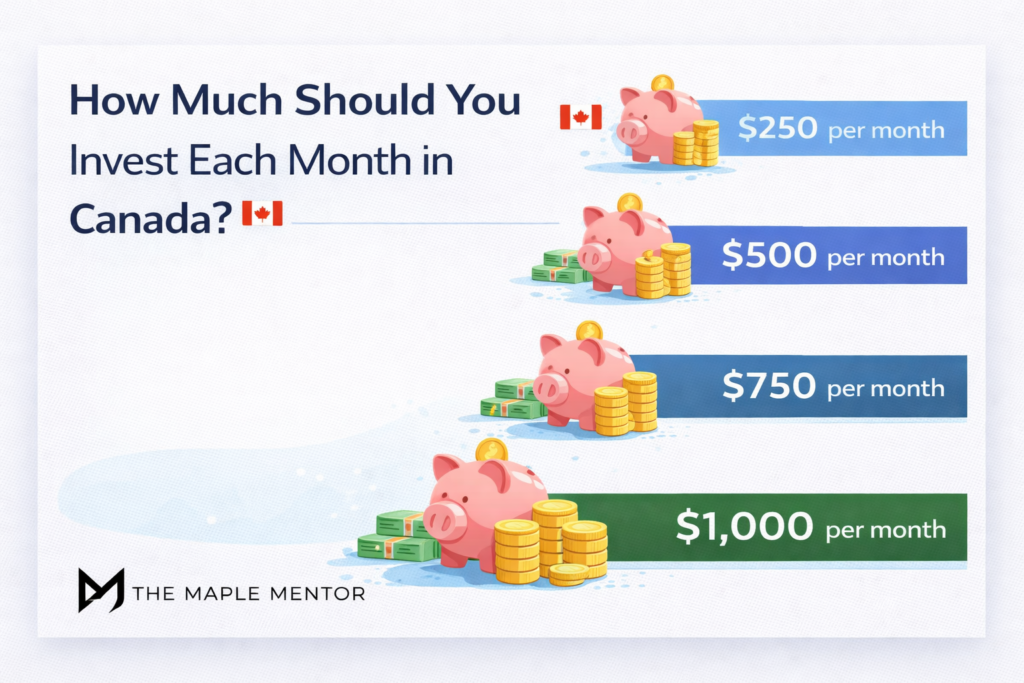
One of the most common questions beginners ask is: how much should you invest each month in Canada?
Most people don’t know where to start. Some worry they’re investing too little. Others hesitate because they think they need a perfect number before beginning.
Here’s the truth: there is no perfect number, but there is a smart starting point.
In this guide, you’ll get a clear answer, realistic examples, and a simple system you can follow immediately.
The Simple Rule: Start With What You Can
Before anything else, keep this in mind.
Consistency > amount
Investing regularly matters more than how much you invest at the beginning.
Building habit first
The goal is to make investing automatic.
Avoid perfection mindset
Waiting for the “right amount” delays progress.
According to Investopedia’s investing basics guide, consistency is one of the most important factors in long-term success.
If you’re asking how much should you invest each month in Canada, the best answer is: start now, adjust later.
The 10%–20% Rule (Popular Strategy)
A simple guideline many investors follow is:
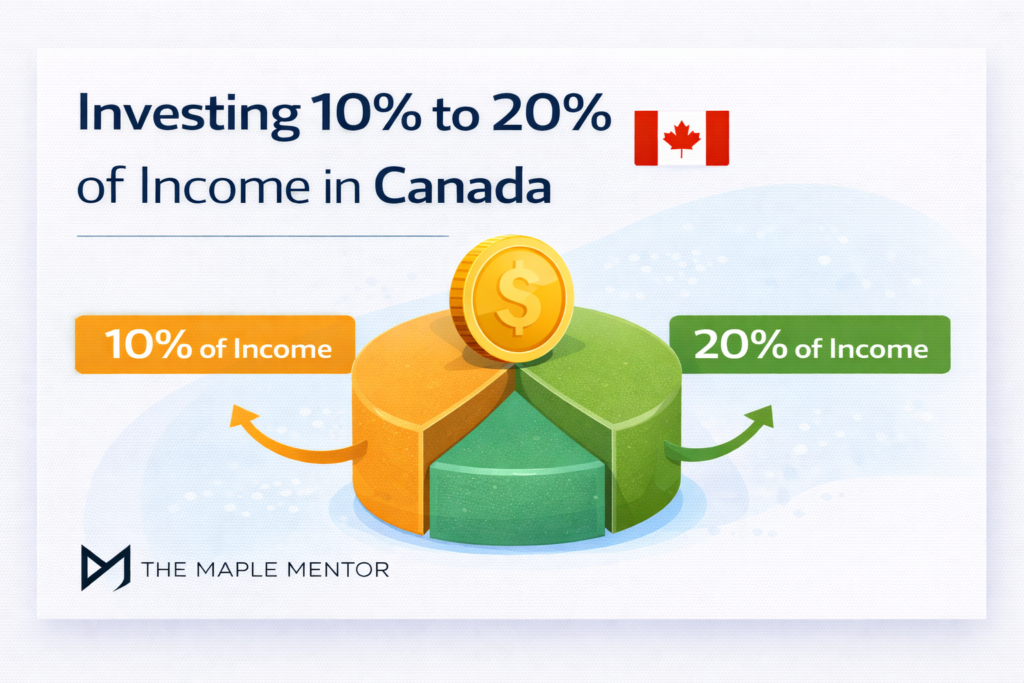
Invest 10%–20% of your income
This scales naturally with your earnings.
Examples
- $3,000/month → $300–$600
- $5,000/month → $500–$1,000
This rule keeps things simple while still building wealth over time.
However, if that feels too high, start lower. What matters most is consistency.
How Much Canadians Actually Invest
In reality, many Canadians invest less than they should.
Reality vs ideal
Expenses, debt, and lifestyle costs often reduce how much people invest.
Why many invest less
- lack of knowledge
- fear of losing money
- inconsistent income
Importance of starting
Even small contributions make a difference.
Because of this, answering how much should you invest each month in Canada often starts with what’s realistic for you, not what’s ideal.
Monthly Investing Examples (Canada)
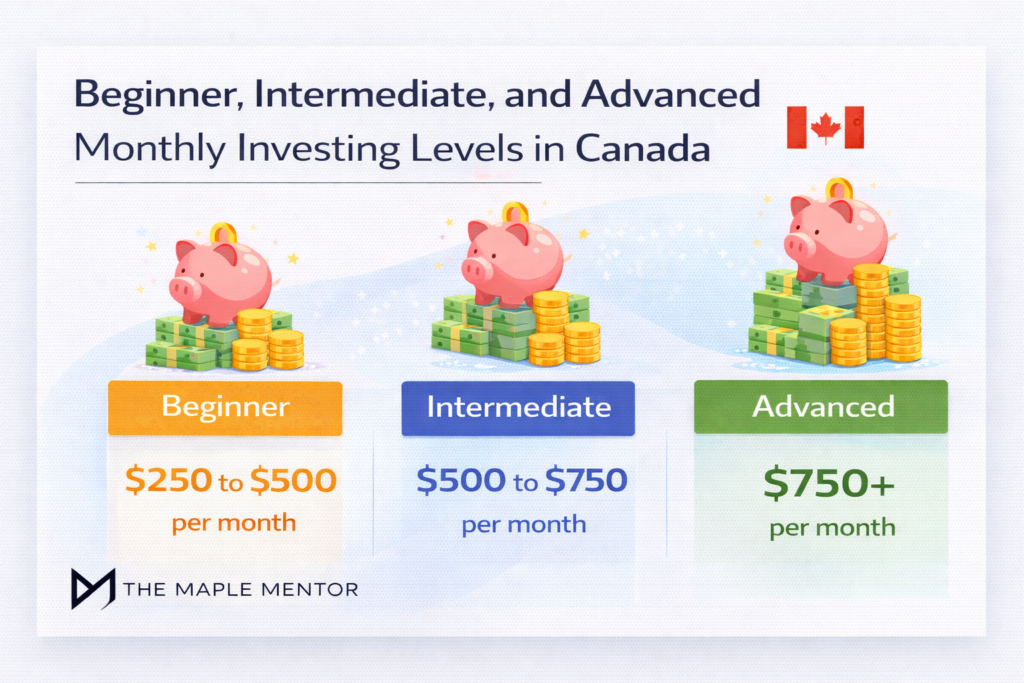
Here’s how different contribution levels look.
Beginner $100/month
A great starting point for building the habit.
If you’re starting small, follow How to Invest $100 Per Month in Canada.
Intermediate $500/month
A strong level where compounding accelerates.
To scale your investing, see How to Invest $500 Per Month in Canada.
Advanced $1,000+/month
This level builds wealth quickly and shortens timelines.
If you’re starting with a lump sum, read How to Invest Your First $1,000 in Canada.
Each level builds on the previous one.
Step 1 Choose the Right Account
Where you invest matters as much as how much you invest.
TFSA first
For most Canadians:
- tax-free growth
- tax-free withdrawals
RRSP second
Best for higher-income earners seeking tax deductions.
FHSA if needed
Ideal if you’re saving for your first home.
To understand account priorities, check out TFSA vs RRSP vs FHSA.
Choosing the right account is essential when deciding how much should you invest each month in Canada.
Step 2 Choose What to Invest In
Keep your investments simple.
ETFs
Low-cost, diversified, and beginner-friendly.
Robo-advisors
Automated portfolios for hands-off investing.
Simple strategies
Avoid overcomplication.
To get started, explore Best ETFs for Canadian Investors or consider Best Robo Advisors in Canada.
According to Vanguard’s index investing research, simple diversified investing often outperforms complex strategies.
Step 3 Automate Your Monthly Investing
Automation is key.
Automatic deposits
Set up recurring contributions.
Discipline
You invest regardless of market conditions.
Remove emotions
No second-guessing or hesitation.
This method is known as dollar-cost averaging. Learn more in Dollar-Cost Averaging Guide.
Automation makes it easier to stay consistent once you decide how much to invest each month.
What Happens If You Invest Monthly (Compounding)
Monthly investing creates powerful long-term growth.
Long-term growth
Even small contributions add up over time.
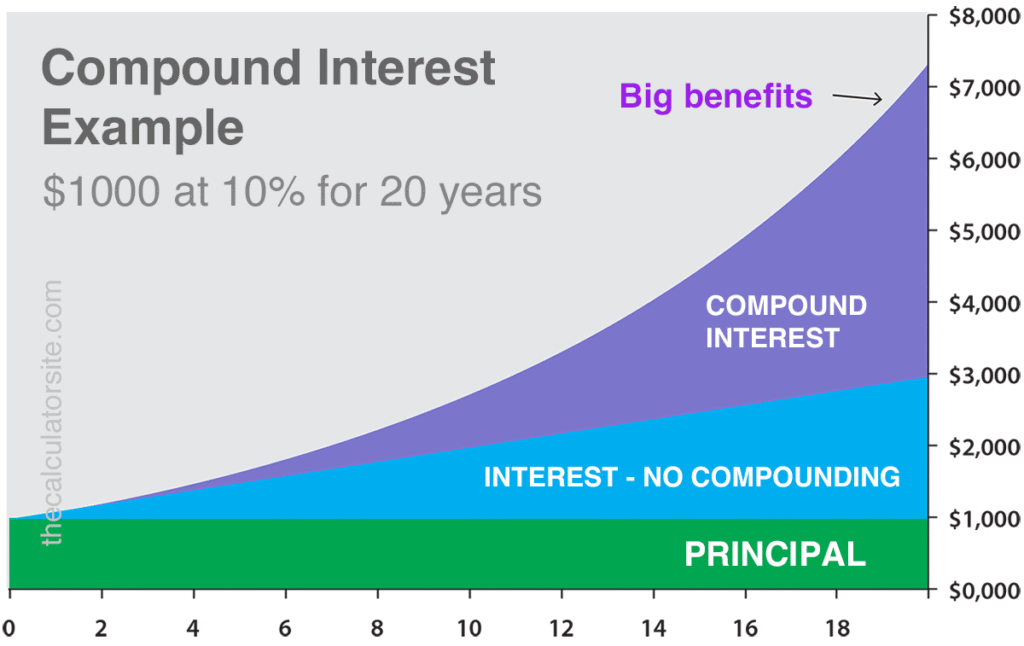
Compounding effect
Your returns generate additional returns.
Consistency wins
Regular investing beats sporadic investing.
According to Investopedia’s compound interest explanation, compounding becomes more powerful over longer time periods.
This is why answering how much should you invest each month in Canada is less important than staying consistent.
How to Increase Your Monthly Investments
Over time, increasing contributions accelerates results.
Income growth
Raise your investing as your income increases.
Reducing expenses
Free up cash for investing.
Side income
Extra income streams can boost contributions.
If you want ideas, check out Best Side Hustles for Canadians.
Gradually increasing your monthly investments is one of the fastest ways to build wealth.
Common Monthly Investing Mistakes
Avoid these mistakes early.
Waiting too long
Delaying investing reduces compounding time.
Investing inconsistently
Skipping months slows progress.
Trying to time the market
Perfect timing isn’t required.
Overcomplicating
Simple strategies outperform complex ones.
Avoiding these mistakes is just as important as choosing the right amount.
Final Takeaway
So, how much should you invest each month in Canada?
There is no perfect number.
What matters most is:
- starting as soon as possible
- investing consistently
- increasing contributions over time
In the long run, consistency beats perfection every time.
Frequently Asked Questions
What is a good monthly investment amount in Canada?
10%–20% of income is a common guideline.
Is $100 per month enough?
Yes, it’s a strong starting point.
Should I wait until I can invest more?
No. Starting early matters more than the amount.
How often should I increase my investments?
Whenever your income grows or expenses decrease.