
Disclosure: This post may contain affiliate links. We may earn a commission if you sign up through our links, at no extra cost to you.
Many investors focus entirely on returns. However, taxes quietly reduce those returns every year.
Understanding tax-efficient investing for Canadians can dramatically improve long-term wealth because keeping more of your gains compounds over decades.
In fact, two investors with identical portfolios can end up with very different results depending on how tax-efficient their strategy is.
Let’s break down how Canadians can invest smarter from a tax perspective.
What Is Tax-Efficient Investing?
Minimizing taxes on investment returns
Tax-efficient investing means structuring your investments to reduce the taxes you pay on gains, dividends, and income.
Improving long-term compounding
When less money is lost to taxes, more remains invested and continues compounding.
Why taxes matter for investors
Even small tax differences compound over decades.
Example comparison
Investor A (tax inefficient):
- Pays annual taxes on dividends and interest.
Investor B (tax efficient):
- Uses registered accounts and tax-efficient assets.
Over 30 years, Investor B could keep significantly more of their returns.
According to Investopedia’s tax-efficient investing overview, minimizing taxes can increase long-term portfolio growth.
Why Taxes Matter for Canadian Investors
Canadian investors face several types of taxes.
Capital gains taxes
Triggered when investments are sold at a profit.
Dividend taxes
Paid annually when dividends are received in taxable accounts.
Income tax on interest
Interest income from bonds or savings accounts is taxed at your full marginal tax rate.
Because of these taxes, a portfolio that earns 7% annually might only deliver 5–6% after taxes.
Understanding tax-efficient investing for Canadians helps reduce this gap.
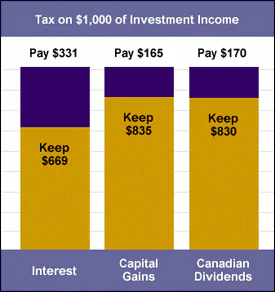
The 3 Main Investment Taxes in Canada
Most investment taxes fall into three categories.
Capital gains
Capital gains occur when you sell an investment for more than you paid.
Only 50% of the gain is taxable.
Capital Gains Tax in Canada Explained
Dividends
Dividend income receives special tax treatment through the dividend tax credit.
Dividend Taxes in Canada Explained
Interest income
Interest from bonds or savings accounts is taxed as regular income.
This is usually the least tax-efficient investment income.
Understanding these three categories is the foundation of tax-efficient investing for Canadians.
Best Tax-Advantaged Accounts in Canada
Canada offers several registered accounts designed to reduce taxes.
TFSA
- Tax-free investment growth
- Tax-free withdrawals
RRSP
- Tax deduction when contributing
- Taxes deferred until withdrawal
FHSA
- Combines tax deduction with tax-free withdrawal for home purchases
These accounts form the backbone of tax-efficient investing for Canadians.
According to CRA registered account overview, these accounts exist specifically to encourage long-term saving and investing.
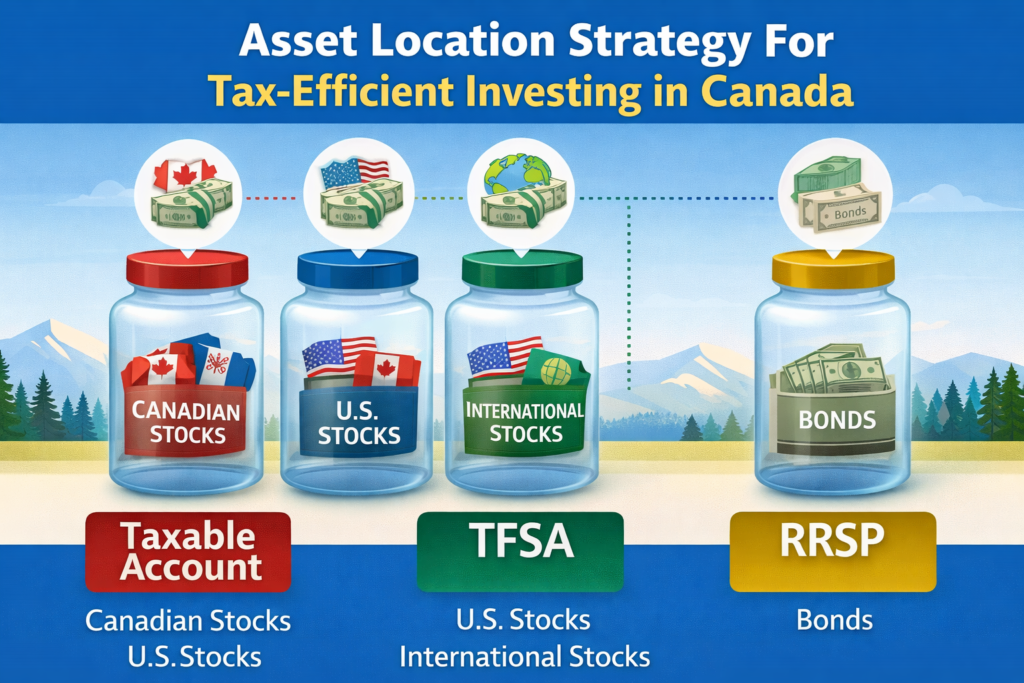
Asset Location Strategy
Asset location means placing different investments in the most tax-efficient accounts.
TFSA
Best for:
- growth ETFs
- dividend-paying stocks
- high-growth investments
RRSP
Often ideal for:
- U.S. dividend stocks
- international ETFs
- long-term retirement investments
Taxable accounts
Better suited for:
- long-term growth investments
- tax-efficient ETFs
- Canadian dividend stocks
Proper asset location is one of the most powerful tools in tax-efficient investing for Canadians.
TFSA Tax Strategy
The TFSA is one of the best accounts for tax-efficient investing.
Tax-free growth
Investments grow without annual taxation.
Best investments inside TFSA
Many investors prioritize:
- growth ETFs
- dividend-paying stocks
- long-term investments
Because withdrawals are tax-free, the TFSA offers incredible long-term compounding potential.
RRSP Tax Strategy
RRSPs follow a different tax structure.
Tax deferral
You receive a tax deduction when contributing.
Contribution timing
RRSP contributions are often most beneficial during high-income years.
Withdrawal strategy
Withdraw funds during retirement when your income is lower.
Proper planning allows RRSPs to become a powerful component of tax-efficient investing for Canadians.
Capital Gains Optimization
Capital gains taxes can often be reduced with simple strategies.
Long-term holding
Delaying sales postpones taxes.
Tax loss harvesting
Selling losing investments can offset capital gains.
Avoiding excessive trading
Frequent trading increases taxable events.
See Capital Gains Tax in Canada Explained.
For a deeper explanation, see Investopedia’s tax-loss harvesting guide.
Dividend Tax Optimization
Dividend income can also be optimized.
Canadian dividend tax credit
Eligible Canadian dividends receive favourable tax treatment.
Eligible dividends
Large public companies usually pay eligible dividends.
Portfolio placement
Dividend investments often perform well inside TFSAs or taxable accounts depending on strategy.
Read Dividend Taxes in Canada Explained.
Dividend planning is another key part of tax-efficient investing for Canadians.
Common Tax-Efficiency Mistakes
Even experienced investors make tax mistakes.
Holding the wrong assets in TFSA
Certain investments may benefit more from other accounts.
Ignoring withholding taxes
Foreign dividends can face withholding tax.
Excessive trading
Frequent buying and selling increases taxable events.
Poor account usage
Not using registered accounts efficiently can reduce long-term returns.
Avoiding these mistakes strengthens tax efficiency.
Simple Tax-Efficient Portfolio Example
Here is a simple example.
TFSA
Growth ETF
Reason: tax-free compounding on long-term growth.
RRSP
International ETF
Reason: potential withholding tax advantages and long retirement horizon.
Taxable account
Canadian dividend ETF
Reason: dividend tax credit helps reduce taxes.
This structure demonstrates how tax-efficient investing for Canadians can improve after-tax returns.
Final Takeaway
Taxes are one of the most overlooked aspects of investing.
Yet over decades, tax efficiency can significantly impact wealth.
By applying the principles of tax-efficient investing for Canadians, investors can:
- reduce unnecessary taxes
- improve compounding
- build wealth more efficiently
Smart tax planning is not about avoiding taxes entirely, but about structuring investments in the most efficient way possible.
Frequently Asked Questions
What is tax-efficient investing?
It means structuring investments to minimize taxes and maximize after-tax returns.
Are TFSAs the most tax-efficient account?
Often yes, because growth and withdrawals are tax-free.
Why does asset location matter?
Different investments are taxed differently.
Can taxes really impact long-term returns?
Yes. Over decades, taxes can reduce total wealth significantly.