
Disclosure: This post may contain affiliate links. We may earn a commission if you sign up through our links, at no extra cost to you.

Dividend investing is extremely popular in Canada. Many investors rely on dividends for passive income and long-term portfolio growth.
However, taxes on dividends work differently from other investment income. That’s why understanding dividend taxes in Canada explained clearly can make a significant difference in your long-term returns.
In this guide, we’ll break down how dividend taxation works in Canada, including the gross-up system, dividend tax credits, and strategies to reduce taxes.
What Are Dividends?
Company profit distribution
Dividends are payments companies distribute to shareholders from profits.
When a company earns money, it can:
- reinvest the profits
- pay dividends to investors
Common income source for investors
Dividend payments are typically distributed quarterly.
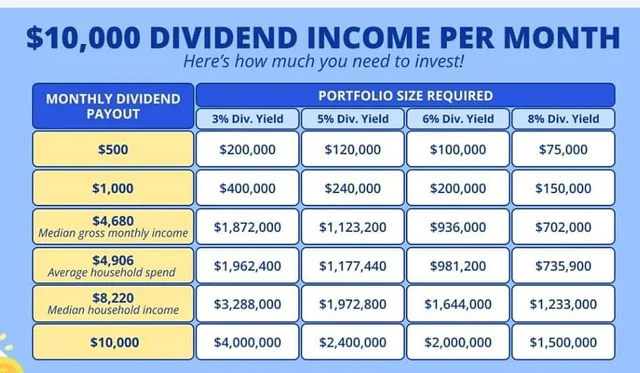
Many Canadian investors use dividends as a source of passive income.
Dividend investing basics
Dividend investors often focus on:
- stable companies
- consistent dividend payments
- long-term income generation
For background on dividend investing, see Investopedia’s dividend definition.
How Dividends Are Taxed in Canada
Canada uses a unique system to tax dividends.
The gross-up mechanism
Dividends are first grossed up to reflect corporate income before taxes.
This increases the taxable amount on your tax return.
Dividend tax credit
After the gross-up, investors receive a dividend tax credit to compensate for corporate taxes already paid by the company.
Federal and provincial taxes
Both federal and provincial dividend tax credits apply.
Because of this system, dividend income is usually taxed more favourably than interest income.
Why Canada designed it this way
The goal is to prevent double taxation on corporate profits.
According to CRA dividend income explanation, dividend tax credits offset taxes already paid at the corporate level.
Understanding this system is central to dividend taxes in Canada explained properly.
Eligible vs Non-Eligible Dividends
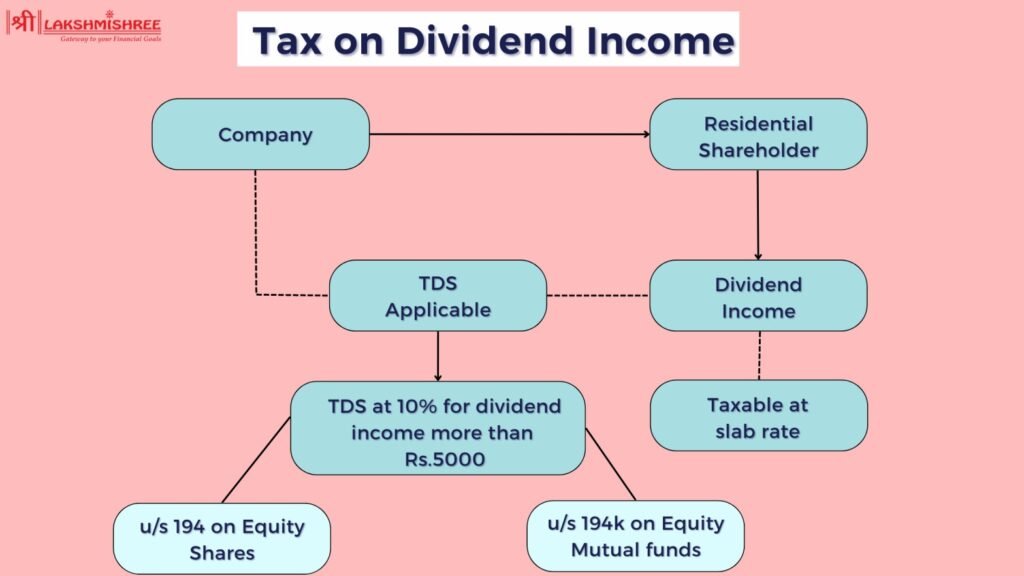
Not all dividends are taxed the same way.
Eligible dividends
Eligible dividends usually come from large public companies.
Examples include:
- major Canadian banks
- telecom companies
- large energy firms
These dividends receive a larger tax credit and therefore a lower effective tax rate.
Non-eligible dividends
Non-eligible dividends often come from small businesses or private corporations.
These dividends receive a smaller tax credit and are taxed at higher rates.
Understanding this distinction is important when learning dividend taxes in Canada explained for investors.
Dividend Tax Example (Simple Scenario)
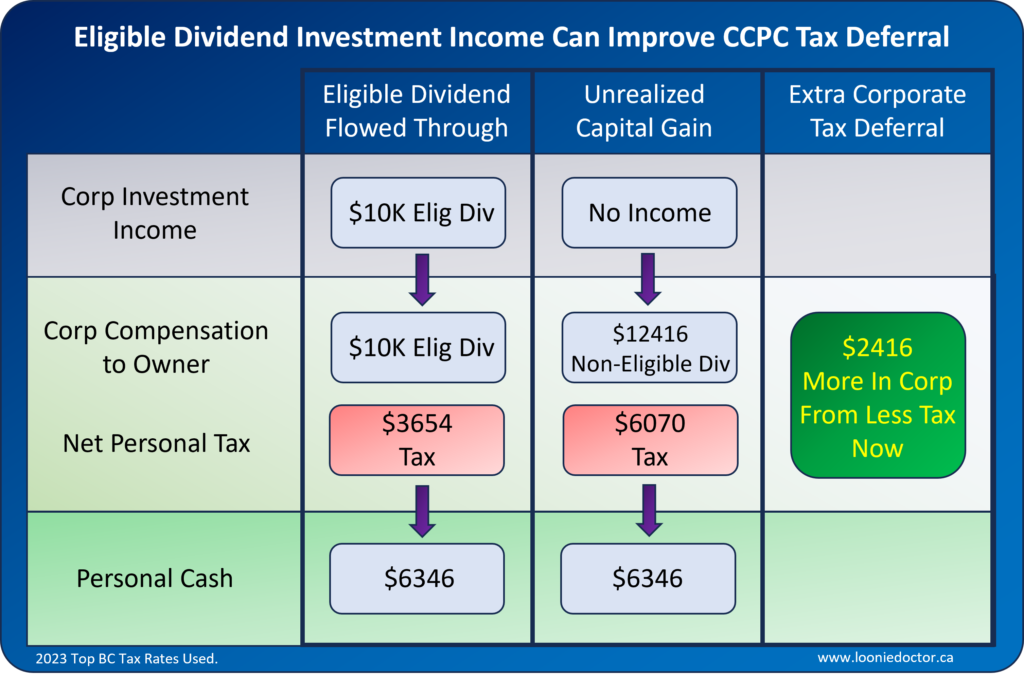
Let’s walk through a simplified example.
Dividend income received = $5,000
Step 1 Gross-up
Eligible dividends are grossed up by approximately 38%.
$5,000 × 1.38 = $6,900 taxable income.
Step 2 Apply marginal tax rate
Assume a 30% marginal tax rate.
$6,900 × 30% = $2,070 tax before credits.
Step 3 Apply dividend tax credit
The dividend tax credit reduces this amount significantly.
Final tax owed becomes much lower than standard income taxation.
This simplified example helps illustrate dividend taxes in Canada explained in practical terms.
Dividend Taxes in a TFSA
One of the biggest advantages of the TFSA is tax-free investment income.
Dividends inside a TFSA have major benefits:
✔ No Canadian tax on dividends
✔ No capital gains tax
✔ Tax-free withdrawals
Because of this structure, many investors prioritize dividend-paying investments inside their TFSA.
The CRA outlines these rules in TFSA tax treatment guidelines.
Dividend Taxes in an RRSP
RRSPs follow a different structure.
Inside an RRSP:
✔ Dividends grow tax-deferred
✔ No tax while investments remain in the account
✔ Withdrawals later taxed as income
RRSPs delay taxation rather than eliminating it entirely.
Foreign Dividend Taxes (Important)
Foreign dividends follow different rules.
U.S. withholding tax
U.S. companies usually apply a 15% withholding tax on dividends paid to Canadian investors.
Treaty rules
The Canada–U.S. tax treaty reduces withholding tax to 15%.
TFSA vs RRSP differences
U.S. dividends held inside an RRSP may avoid withholding tax entirely.
However, dividends inside a TFSA may still face withholding tax.
For a deeper explanation, see Investopedia’s foreign withholding tax guide.
These details are a key part of dividend taxes in Canada explained fully.
Dividend vs Capital Gains Taxes
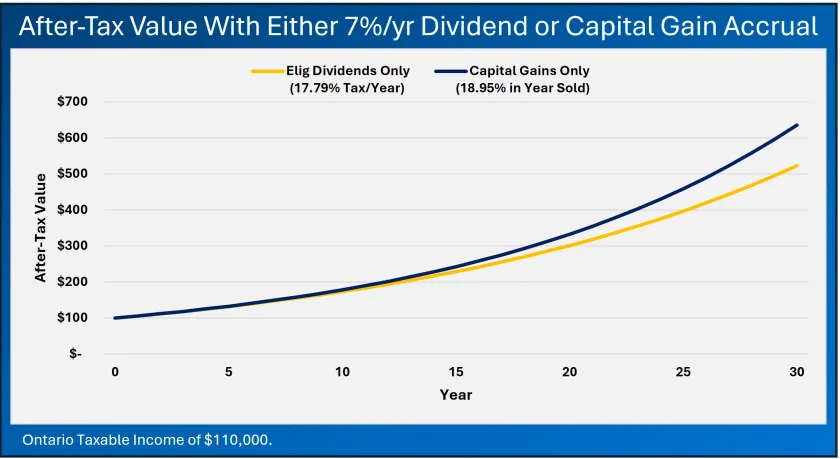
Dividend income and capital gains are taxed differently.
Dividends:
- taxed annually when received
Capital gains:
- taxed only when an investment is sold
Capital Gains Tax in Canada Explained
Because capital gains taxation is deferred, some investors prefer growth-focused portfolios.
Dividend Investing Strategy for Canadians
Smart investors design tax-efficient dividend strategies.
Using TFSA for dividends
Dividend income becomes completely tax-free.
Diversification
Avoid relying on one company or sector.
Avoiding yield traps
Extremely high yields often signal financial problems.
According to Vanguard research on dividend diversification, diversified portfolios reduce income volatility.
Common Dividend Tax Mistakes
Many investors unintentionally increase their tax bill.
Misunderstanding the dividend tax credit
Investors often assume dividends are completely tax-free outside registered accounts.
Holding U.S. dividend stocks in TFSA
Foreign withholding tax may reduce income.
Chasing high yield
High yields can indicate unstable companies.
Ignoring tax efficiency
Account location can significantly impact after-tax income.
Avoiding these mistakes improves long-term results.
Final Takeaway
Taxes play a huge role in investing success.
Understanding dividend taxes in Canada explained clearly helps investors:
- maximize after-tax income
- choose the right accounts
- build more efficient portfolios
In the long run, tax efficiency can be just as important as investment returns.
Frequently Asked Questions
Are Canadian dividends tax-free?
Not always. They are taxed but receive favourable tax credits.
Do TFSAs eliminate dividend taxes?
Yes, Canadian dividends inside a TFSA are tax-free.
Are U.S. dividends taxed differently?
Yes, they may face withholding tax.
Are dividends better than capital gains?
It depends on tax planning and investment strategy.