
Disclosure: This post may contain affiliate links. We may earn a commission if you sign up through our links, at no extra cost to you.
Over time, every portfolio drifts. Even if you started with a perfect mix of stocks and bonds, market movements slowly change your risk level.
That’s why learning how to rebalance your investment portfolio in Canada is essential if you want steady, long-term results without unnecessary stress.
In this guide, you’ll learn exactly when, why, and how to rebalance, using a simple system you can follow for decades.
Why Portfolios Drift Over Time
When markets rise and fall, different parts of your portfolio grow at different speeds.
For example:
- Stocks may surge
- Bonds may lag
- One region may outperform others
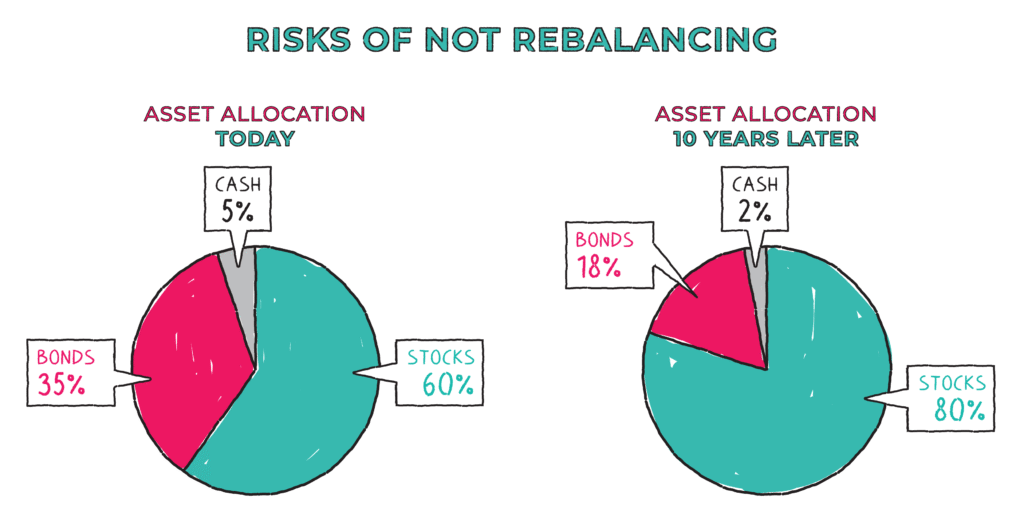
Over time, this creates risk creep, where your portfolio becomes more aggressive than you planned.
Without rebalancing, you may be taking far more risk than you realize.
What Is Portfolio Rebalancing in Canada? (Plain English)
Definition
Portfolio rebalancing means bringing your investments back to your original target allocation.
Why it matters
Rebalancing keeps your risk level aligned with your goals and timeline.
Simple example
Let’s say you start with:
- 70% stocks
- 30% bonds
After a strong stock market run, you might end up at:
- 85% stocks
- 15% bonds
Rebalancing means selling some stocks and buying bonds to return to 70/30.
This is the foundation of how to rebalance your investment portfolio in Canada properly.
Why Canadians Should Rebalance Their Investment Portfolio Regularly
Market volatility
Markets move constantly. Ignoring this leads to unplanned risk.
Risk creep
Your portfolio slowly becomes more aggressive without you noticing.
Emotional investing
Without rules, people tend to buy high and sell low.
Long-term stability
Rebalancing forces you to stay disciplined through market cycles.
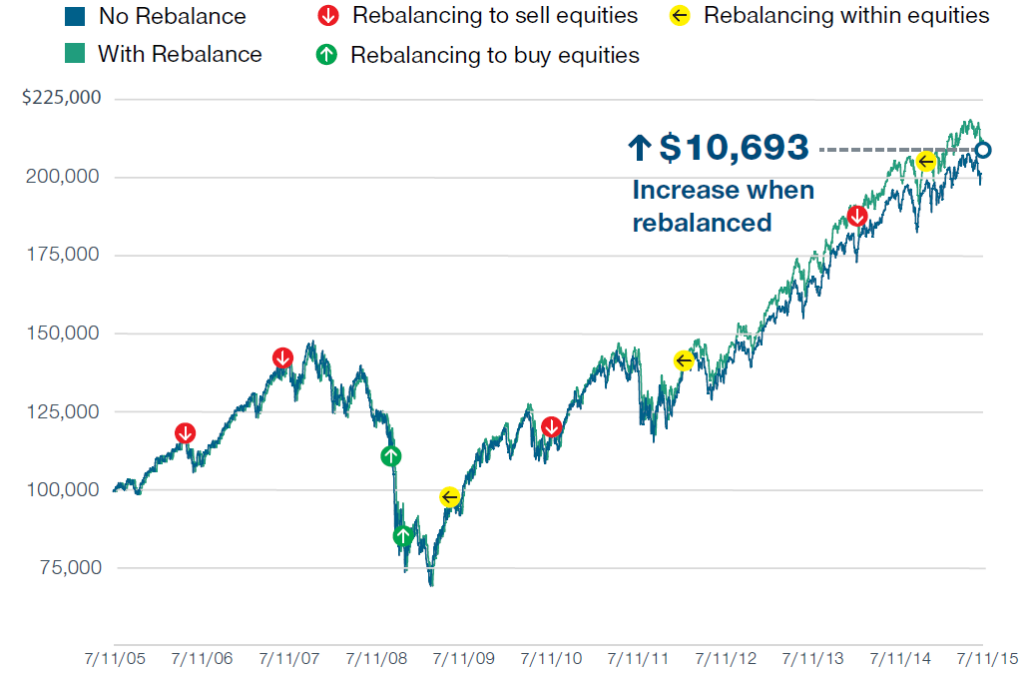
According to Vanguard portfolio research, disciplined rebalancing improves long-term risk-adjusted returns.
When Should You Rebalance Your Investment Portfolio in Canada?
There’s no single perfect method. However, these three work well.
Time-based rebalancing (annual)
Rebalance once per year, usually on the same date.
Best for: beginners who want simplicity.
Threshold-based rebalancing (5–10%)
Rebalance when an asset class drifts more than 5–10% from target.
Best for: more engaged investors.
Hybrid approach
Check yearly and rebalance only if thresholds are crossed.
Best for: most long-term investors.
If you’re learning how to rebalance your investment portfolio in Canada, the hybrid approach is usually ideal.
How to Rebalance Your Investment Portfolio Step-by-Step (Canada)
Step 1 Review Your Allocation
Log into your brokerage and note your current percentages.
Step 2 Compare to Your Target
Compare your current mix to your original plan.
Example:
- Target: 80% stocks / 20% bonds
- Current: 90% stocks / 10% bonds
That’s a rebalance signal.
Step 3 Buy and Sell Strategically
Whenever possible:
- Use new contributions first
- Reinvest dividends strategically
- Sell only when needed
This reduces taxes and fees.
Step 4 Minimize Taxes and Fees
Rebalance inside registered accounts when possible to avoid tax consequences.
Investopedia’s rebalancing guide explains how fees and timing affect returns.
Rebalancing in TFSA vs RRSP vs FHSA (Canada)
Where you rebalance matters.
Tax-free accounts
Inside a TFSA or FHSA, you can rebalance without triggering taxes.
Registered vs non-registered accounts
In taxable accounts, selling may create capital gains.
Avoiding penalties
Always respect withdrawal rules in registered plans.
TFSA vs RRSP vs FHSA explains how each account works for long-term investors.
For official rules, CRA registered plans overview is the authority.
Rebalancing With ETFs in Canada
ETFs make rebalancing much easier.
All-in-one ETFs
These rebalance automatically inside the fund.
If you use one ETF, you usually don’t need to rebalance manually.
Multi-ETF portfolios
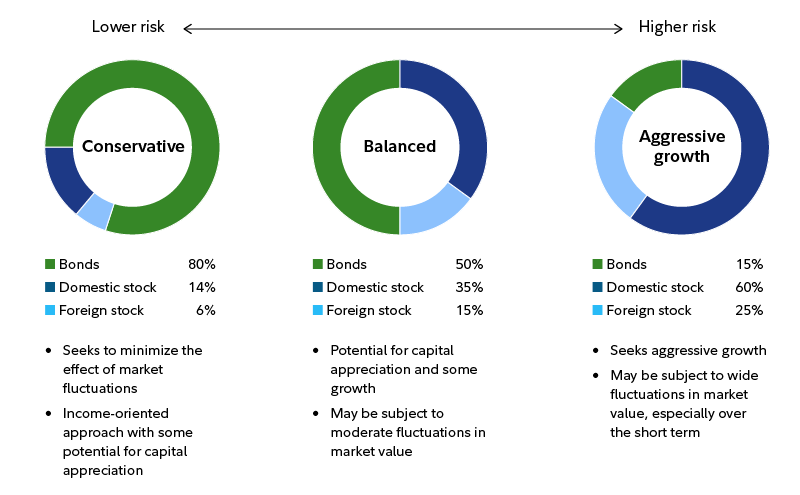
If you hold multiple ETFs, you’ll need to rebalance yourself.
When manual rebalancing is needed
Manual rebalancing is required when:
- One ETF dominates your portfolio
- Your risk level has shifted
- Your timeline changes
Beginner Portfolio Examples (2026) shows how multi-ETF portfolios are structured.
Best ETFs for Beginners (2026) explains which ETFs are easiest to manage.
Rebalancing With Robo-Advisors in Canada
Automatic rebalancing
Robo-advisors rebalance your portfolio for you.
Pros and cons
Pros:
- No effort
- No emotional mistakes
Cons:
- Higher fees
- Less control
Cost tradeoff
You pay for convenience. Over decades, this adds up.
ETF vs Robo-Advisor helps you decide if automation is worth the cost.
Common Investment Portfolio Rebalancing Mistakes
Over-trading
Rebalancing too often increases costs.
Market timing
Trying to “rebalance perfectly” usually backfires.
Emotional selling
Selling winners feels uncomfortable, but it’s necessary.
Ignoring fees
Small transaction fees compound over time.
Rebalancing Example: Real Canadian Investor Scenario
Let’s make this practical.
Before rebalancing
- Portfolio: $50,000
- Stocks: 88%
- Bonds: 12%
- Target: 75% / 25%
Risk level: too high
After rebalancing
- Stocks: 75%
- Bonds: 25%
Risk level: aligned with goals
Long-term effect
Over 20+ years, this discipline reduces major drawdowns and improves consistency.
This is a real-world application of how to rebalance your investment portfolio in Canada.
Final Rebalancing Checklist for Canadian Investors
Before you close this tab, make sure you’ve done this:
Set a target
Choose your stock/bond mix.
Pick a schedule
Annual or hybrid works best.
Automate when possible
Use automatic contributions and rebalancing tools.
Review yearly
One review per year is usually enough.
If you follow this checklist, rebalancing becomes boring, and that’s exactly what you want.
Frequently Asked Questions
How often should I rebalance my portfolio in Canada?
Once per year or when allocations drift 5–10% is usually enough.
Do I need to rebalance if I use one ETF?
No, most all-in-one ETFs rebalance automatically.
Should I rebalance during a market crash?
Yes, if your rules say so. Discipline matters most in downturns.
Is rebalancing risky?
No. It reduces long-term risk when done consistently.